Rehabilitated Loggerhead and Green Sea Turtles Return to the Gulf From Dauphin Island
A loggerhead and a green sea turtle hooked at a Gulf Shores fishing pier were released from Dauphin Island's west end after rehabilitation in Mississippi, and organizers used the moment to teach anglers what to do.
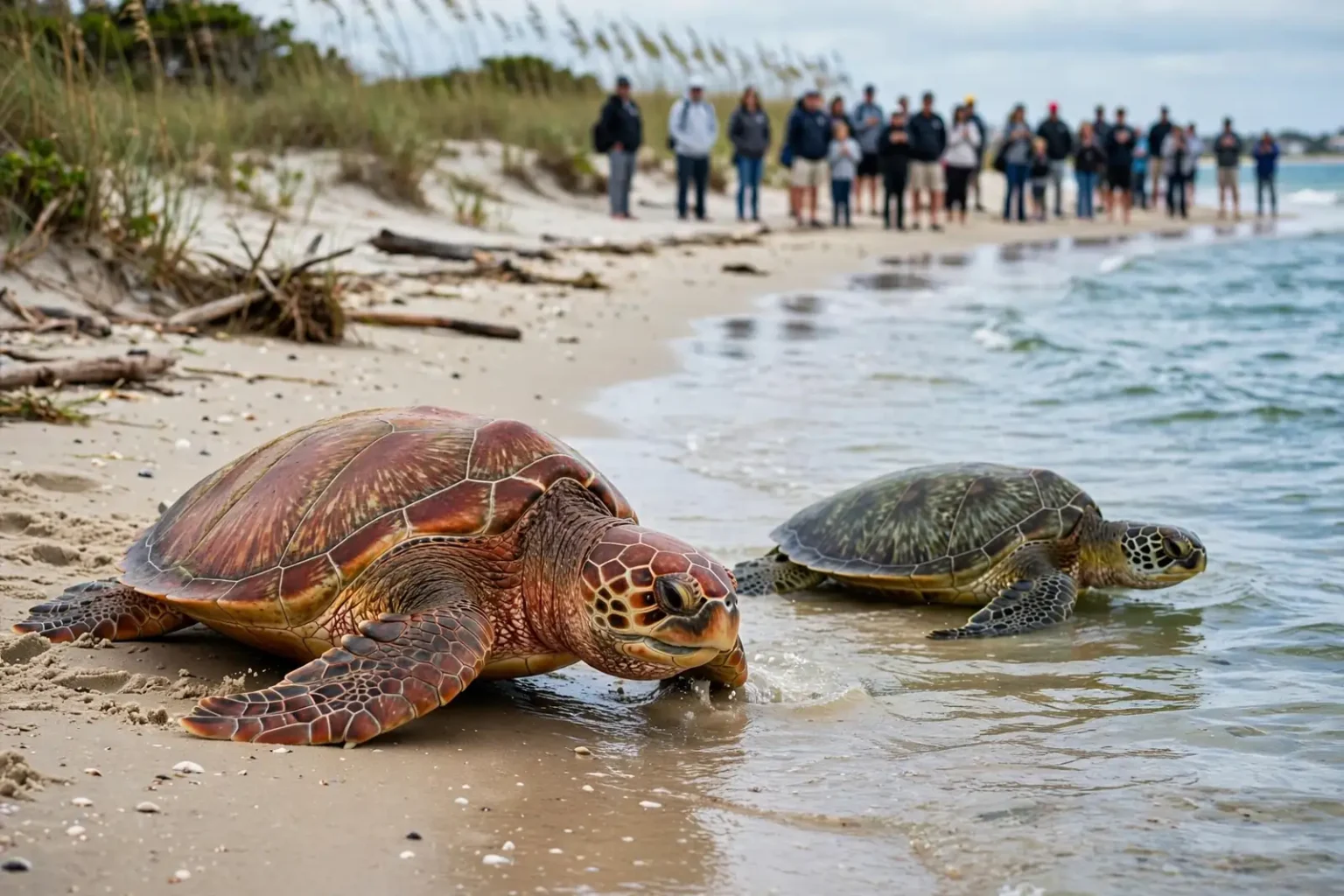
DAUPHIN ISLAND, Ala. — Two sea turtles are back in the Gulf after recovering from their injuries. A loggerhead and a green sea turtle were released from the west end of Dauphin Island, and the families and visitors who came out got to watch both animals make their way back into open water.
Both turtles had been caught at a fishing pier in Gulf Shores. They were taken to the Institute for Marine Mammal Studies in Mississippi, where they were treated and rehabilitated until they were ready to go home.
A release with a lesson
Organizers said the public release had two purposes. One was getting healthy animals back where they belong. The other was education: letting people see the turtles up close so they leave with a better sense of the wildlife around them and know what to do if they hook a sea turtle while fishing.
“The turtles are threatened and endangered and their success after rehab is important to the next generation of sea turtles, nesting turtles,” said an organizer.
“And it’s important also because we get to educate the public and let them actually see the sea turtles themselves, rather than having it be a hypothetical of telling them there are sea turtles out there and we need to protect them,” another organizer said.
The number to know: 1-866-SEA-TURTLE
Anyone who sees a sea turtle in distress on the Alabama coast, whether it’s hooked, tangled, stranded or injured, is asked to call 1-866-SEA-TURTLE (1-866-732-8878). The call goes to the Sea Turtle Stranding and Salvage Network. Depending on the situation, responders will either walk the caller through what to do or send someone to help and take the turtle to a rehabilitation center.
The Sea Turtle Stranding and Salvage Network is a cooperative program coordinated by NOAA Fisheries. It brings together federal and state agencies, universities, rehabilitation facilities and trained volunteers across the Gulf and Atlantic coasts. On the Alabama coast, responders work with park staff, city coastal resources offices and volunteer beach monitors to collect injured turtles and get them into care.
What to do if you hook a sea turtle
Fishing piers are among the most common places for sea turtles to get hooked, because turtles feeding near the pilings may go after bait. Hooking a turtle is not illegal. The important part is how the angler handles it. Wildlife agencies generally give this advice:
- Don’t cut the line. A turtle that swims off with a hook and trailing line can get tangled, swallow more line or suffer injuries that get worse over time.
- Reel it in slowly and carefully. Don’t jerk the line or lift the turtle out of the water by the line.
- Use a net or get help to bring the turtle up, supporting its body and shell. Many piers keep a large landing net for this.
- Call 1-866-SEA-TURTLE right away and follow the responder’s instructions. Keep the turtle shaded and away from crowds while you wait.
- Don’t try to pull out a deeply set hook yourself. Trained responders and veterinarians can remove hooks safely and check for injuries you can’t see.
Rehabilitation staff say quick reporting gives a hooked turtle the best chance of recovery. A turtle that is brought in soon after being hooked can often be treated and returned to the wild.
Meet the species
Loggerhead sea turtle
Loggerheads are named for their large heads and powerful jaws, which they use to crush crabs, conchs and other hard-shelled prey. They are the sea turtle seen most often on Alabama’s beaches, and nearly all of the nests laid on the state’s coast each summer belong to loggerheads. The loggerheads that nest in the Southeast belong to a population listed as threatened under the federal Endangered Species Act.
Green sea turtle
Green sea turtles get their name from the greenish color of their body fat, not their shells. Adults mostly eat seagrass and algae, which makes them important grazers in seagrass beds. Green turtles in the Gulf and the North Atlantic are listed as threatened under the Endangered Species Act. They are seen less often than loggerheads along Alabama’s coast, though they do turn up in the state’s waters and are occasionally caught by anglers.
About the Institute for Marine Mammal Studies
The Institute for Marine Mammal Studies is a nonprofit research and education organization in Gulfport, Mississippi. It was founded in 1984 and has been directed since then by Dr. Moby Solangi. The institute responds to stranded and injured dolphins, sea turtles and other marine animals across the north-central Gulf and treats sea turtles at its facilities before returning them to the wild.
Turtles hooked or stranded on the Alabama coast are often taken to the institute for care. Treatment can include removing hooks, treating wounds and infections, and watching to make sure the animal can swim, dive and feed normally before release. Recovery can take weeks or months, depending on the injury.
Part of a steady stream of rescues
This release is the latest in a string of rescue-and-release stories on the Alabama coast this year. In August, two turtles that had been injured by fishing gear, a loggerhead and a Kemp’s ridley, were released at Gulf Shores after treatment at the same Mississippi institute. In May, four rehabilitated turtles went back into the Gulf after responders, including Orange Beach Coastal Resources and stranding network volunteers, helped get them into care. Three of those four had been tangled in fishing line.
Each of those cases began the same way: someone saw a turtle in trouble and made a call.
Why sea turtles matter to the Gulf Coast
Sea turtles play a critical role in the Gulf Coast ecosystem. Green turtles graze seagrass beds, which helps keep them healthy. Loggerheads feed on shellfish and other bottom-dwelling animals. Nesting females also carry nutrients from the ocean to the beach, where eggshells and unhatched eggs help nourish dune plants that hold the sand in place.
Sea turtles take many years to reach maturity, and only a small share of hatchlings survive to adulthood. That makes every adult and juvenile important to the population. Turtles that are rehabilitated and released can go on to breed and, for females, return to nest on the same stretch of coast where they hatched.
How beachgoers can help
- Dispose of fishing line properly. Use the monofilament recycling bins at many piers, docks and boat launches, and never leave line or tackle on the beach.
- Fill in holes and knock down sandcastles before you leave the beach. Nesting turtles and hatchlings can get trapped in them.
- Keep the beach dark at night during nesting season. Artificial light can confuse hatchlings trying to reach the water.
- Pick up trash, especially plastic bags and balloons, which turtles can mistake for food.
- Give turtles space. Watch nesting turtles and hatchlings from a distance, and never handle them.
- Report problems to 1-866-SEA-TURTLE.
About Dauphin Island
Dauphin Island is a barrier island at the mouth of Mobile Bay in south Mobile County. Its west end is a long, mostly undeveloped stretch of beach and dunes facing the Gulf, which gives turtles a quiet spot to head back into deep water. The island is known for birding, fishing and its marine science programs. For visitors at this release, it also offered a close-up look at two animals that share the coast with them.