Mobile Tree Commission Still Seeks Mayor’s Assurance Months After Michigan Avenue Oaks Cut
A Mobile Tree Commission member says the city still has not promised it will seek approval before removing trees, five months after live oaks were cut on Michigan Avenue.
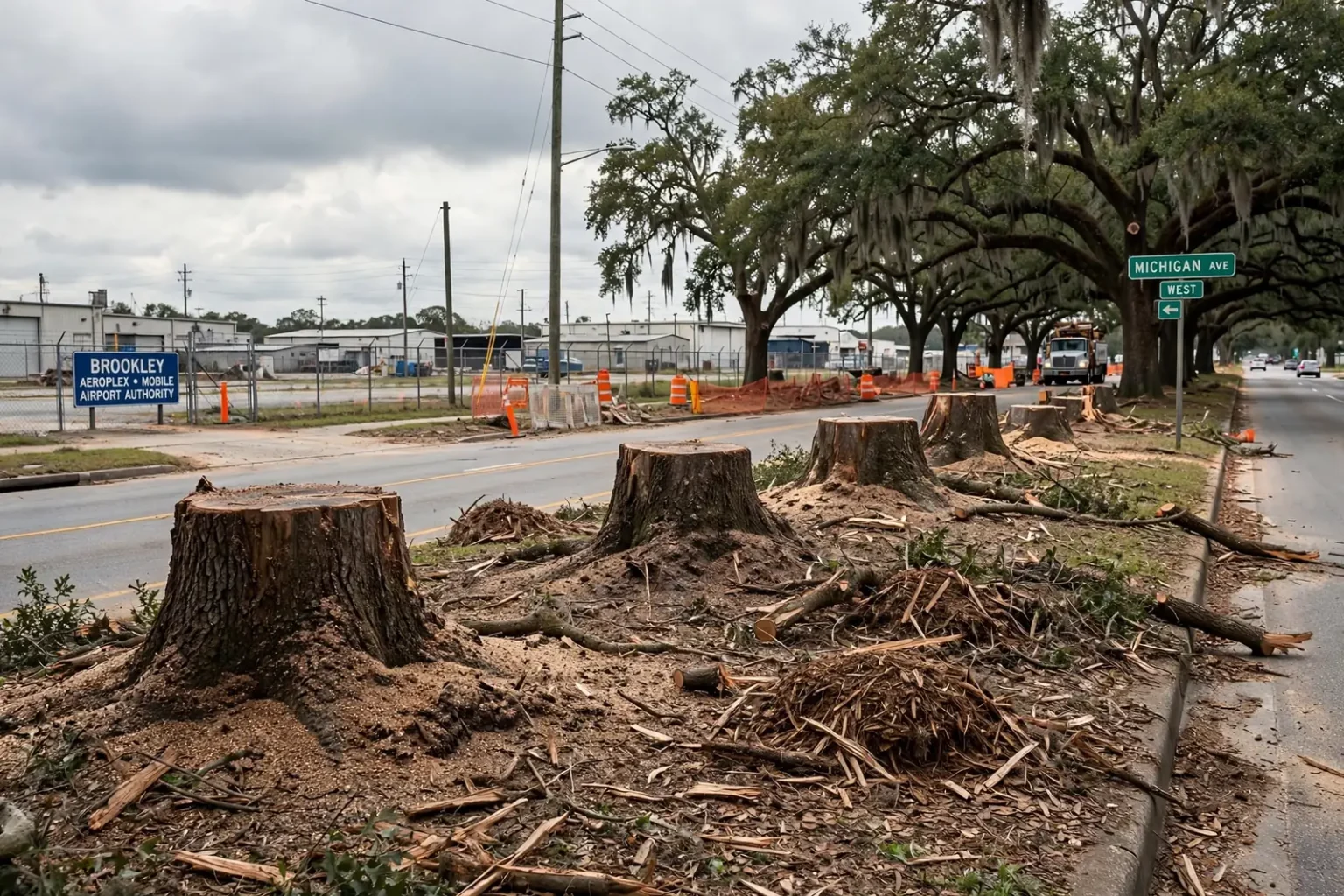
MOBILE, Ala. — Five months after the City of Mobile cut down a row of live oaks in the median of Michigan Avenue, a member of the Mobile Tree Commission says city leaders still have not given the assurance he has been seeking: that city departments will not remove trees again without the commission’s approval.
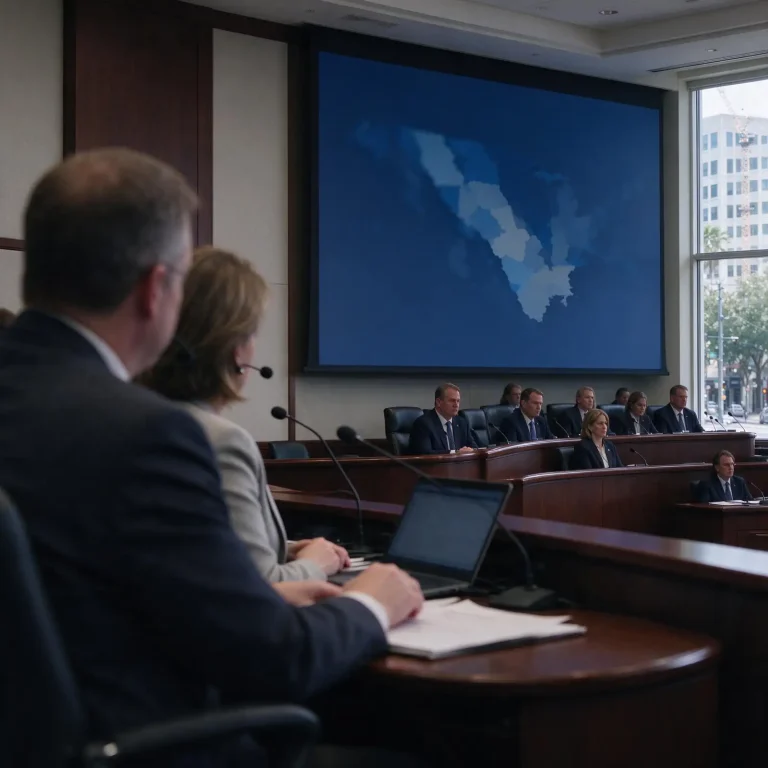
Commissioner Quin Hillyer raised his frustration again at the commission’s meeting on Tuesday afternoon, Oct. 20, where members agreed to put their concerns in writing to Mayor Spiro Cheriogotis rather than wait for a meeting with him.
“It has now been four months since this was brought up at a meeting,” Hillyer said. “It shouldn’t take four months and a letter for us to get this.”
What happened on Michigan Avenue
In May, the city removed a strip of live oaks from the Michigan Avenue median near the Mobile Airport Authority’s Brookley Aeroplex, home of the new Mobile International Airport. The trees were taken down to make room for a new turn lane serving an economic development project involving the airport authority. The project has not been publicly identified.
The removal angered the nonprofit Friends of Mobile Trees and other residents, who said the city violated state law by cutting the trees without first getting clearance from the Mobile Tree Commission.
Hillyer called the decision an “atrocity” at the time and said it was something the commission “should not take lying down.” In June, he called for a meeting with Cheriogotis to remind the mayor and his administration that state law requires tree removals in the city to be approved by the commission first.
City spokesman Dale Liesch has acknowledged that the public was not properly notified before the trees came down. He pledged that the city would “ensure that those processes are properly followed” going forward. New trees are expected to be planted to replace the ones that were removed.
How the issue has unfolded
- May: The city removes a strip of live oaks from the Michigan Avenue median to make way for a turn lane tied to an airport authority economic development project.
- Soon after: Friends of Mobile Trees and other residents object, saying the removal should have gone before the tree commission. Hillyer calls the cutting an “atrocity.”
- June: Hillyer asks for a meeting with Cheriogotis to remind the administration of the state law requiring commission approval.
- Since then: A city spokesman acknowledges the public was not properly notified and says the city will follow the proper process in the future. Replacement trees are expected.
- Oct. 20: With no meeting held, the commission agrees to send the mayor a letter instead.
A letter instead of a meeting
The meeting Hillyer sought has not happened. At Tuesday’s session, attorney Victoria Shoots told members that the mayor’s schedule “is expansive” and that it would be more efficient to send him a letter laying out the commission’s position.
Shoots said a letter would put the commission’s concerns on the record and could be distributed to every city department. That way, each department would have written notice that all tree removals must be permitted by the tree commission.
Hillyer questioned the approach but agreed to draft the letter. He also said Cheriogotis should go further and make a public announcement that “he is taking an interest in making sure the law is followed” and that trees will not again be removed without the commission’s approval.
The Mobile Tree Commission’s role
The Mobile Tree Commission operates under state law, which requires that tree removals in the city first be approved by the commission. The commission reviews requests involving trees on public property, such as street rights-of-way and medians, and issues permits for that work. Hillyer and other members have argued that the requirement applies to city departments just as it does to anyone else.
Mobile’s canopy of live oaks is one of the city’s best-known features, lining historic streets such as Government Street and Dauphin Street and shading neighborhoods across midtown and downtown. Many of the oldest trees are decades or even more than a century old, which is part of why removals draw strong reactions from residents and groups such as Friends of Mobile Trees, a nonprofit that advocates for planting and protecting trees in the city.
Live oaks can take many years to reach the size of the trees that were removed, so replacement plantings, while welcomed by advocates, do not immediately restore the shade, stormwater absorption and appearance that mature trees provide.
Growth and the tree canopy
The dispute comes as the area around Brookley is in the midst of major change. The Mobile Airport Authority has been developing Mobile International Airport at the Brookley Aeroplex as the region’s commercial airport, and the city has been working to attract new economic development to the area. Road improvements such as the Michigan Avenue turn lane are part of that effort.
Tree advocates have said they are not opposed to growth but want the city to follow the review process the law requires, so that the commission can consider alternatives, such as adjusting a design to save trees, before any are removed.
What happens next
Hillyer is expected to draft the letter to Cheriogotis, which the commission plans to share with city departments. The commission’s meetings are open to the public, and residents who want to report a concern about a tree on public property, or who need a permit to remove or trim a tree in a public right-of-way, can contact the Mobile Tree Commission through the City of Mobile.