State Fights Mobile Couple’s Bid to Force Recognition of Adoption in Federal Court
Alabama's Attorney General argued in Mobile federal court that a same-sex couple's stepparent adoption lawsuit should be dismissed entirely.
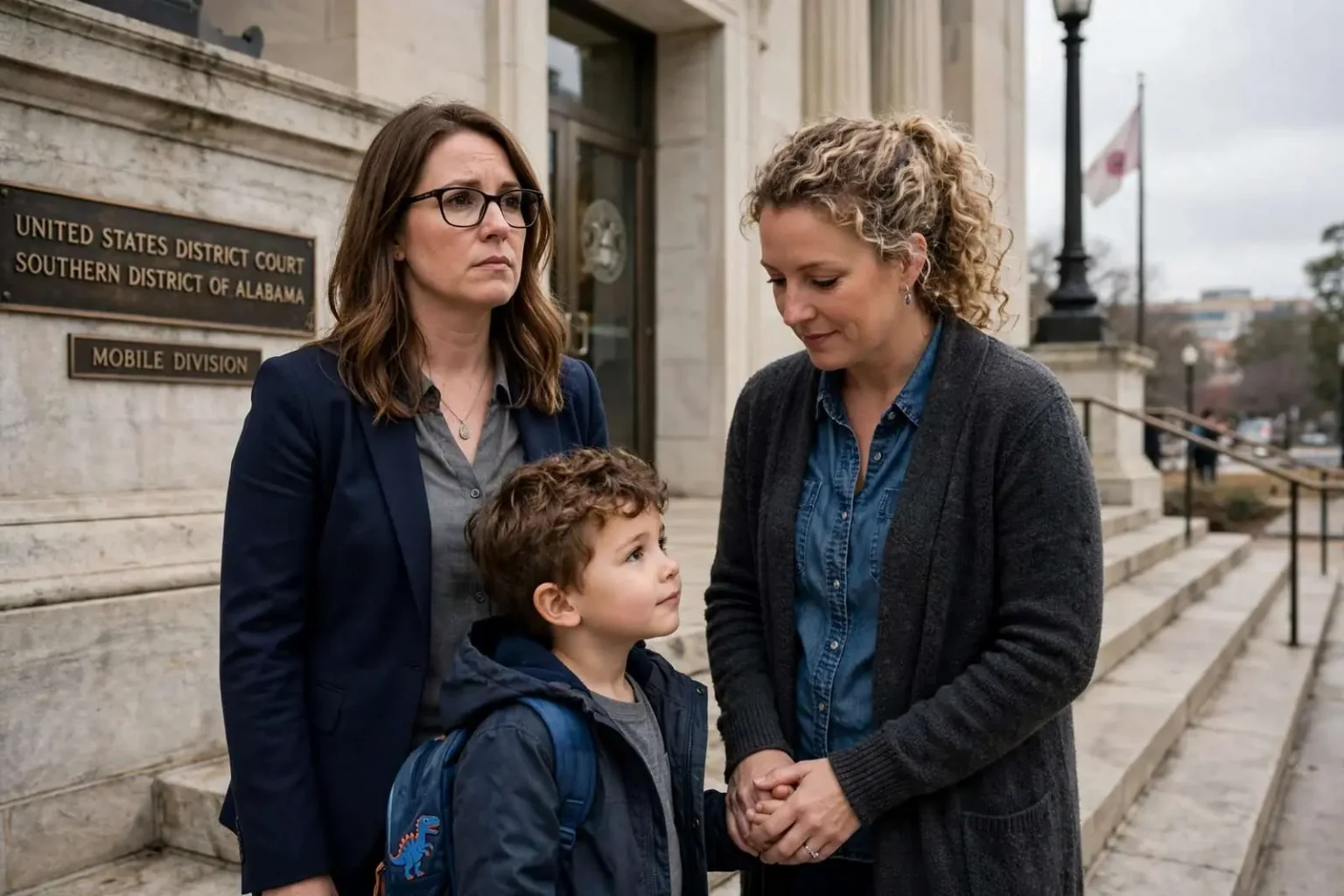
A Mobile federal court case with the potential to reshape adoption law in Alabama moved forward as the state Attorney General’s Office filed its formal defense against a lawsuit brought by two Mobile women seeking recognition of their out-of-state marriage so one of them could legally adopt the son they have raised together since birth.
The couple, Cari Searcy and Kim McKeand, married in California and are asking a federal judge to force Alabama to recognize that union, arguing that the state’s refusal effectively strips their son of a legal relationship with one of his two parents. The state’s brief pushed back hard on that framing, arguing that Alabama has not severed any tie between the boy and a biological parent and suggesting the couple’s real objection is to the state’s adoption statute rather than its marriage law, a law they have not directly challenged in the suit.
The case is one of three same-sex marriage-related lawsuits working through Alabama’s federal courts, and it lands on the docket of U.S. District Judge Ginny Granade, who will issue a ruling that both sides expect will be appealed regardless of the outcome. The timing adds intrigue: the U.S. Supreme Court had just surprised legal observers by declining to take up an appeal of lower court rulings that struck down other states’ same-sex marriage bans, a move the couple’s attorney, David Kennedy, interpreted as the justices deciding to let the issue keep working through the appellate courts, likely the Atlanta-based 11th Circuit in Alabama’s case, before stepping in themselves.
The state’s defense, echoing arguments Alabama’s lawyers raised the previous month in a related Montgomery case but tailored here to the adoption question, leans heavily on the idea that biological parenthood, not adult relationships, is the interest marriage law is meant to protect. The brief argues that recognizing the marriage would require courts to treat mothers and fathers as interchangeable with any other adult, and it warns that removing the two-parent, opposite-sex requirement from the state’s reasoning leaves no clear basis for limiting marriage to two people at all, raising the specter of polygamy and sibling marriage in its argument. It also leans on a 1972 Supreme Court precedent the state contends still controls, since last year’s ruling striking part of the federal Defense of Marriage Act addressed only federal benefits and did not invalidate any state marriage law, in the state’s reading.
Beyond the constitutional argument, the state’s brief raises a string of policy points: that Alabama has a legitimate interest in encouraging biological parents to marry and stay involved in raising their children, that research shows children generally fare best in stable two-parent homes, and that striking down the ban would undermine public confidence in the courts by forcing judges into what the state calls fundamentally moral questions rather than legal ones. The brief also argues that the federal Full Faith and Credit Clause, which normally requires states to honor contracts made elsewhere, does not extend to same-sex marriages performed in other states because of an exception carved out under federal law.
Kennedy said he had not yet had a chance to fully review the state’s filing but confirmed his clients would respond in writing before Judge Granade takes up the matter.
The legal background
The 1972 precedent the state cites is Baker v. Nelson, in which the U.S. Supreme Court dismissed a Minnesota same-sex couple’s marriage appeal “for want of a substantial federal question.” The 2013 ruling that struck down part of the Defense of Marriage Act was United States v. Windsor. The exception to the Full Faith and Credit Clause the state relies on comes from another section of that law, which says states need not recognize same-sex marriages from other states.
Later developments: Judge Granade ruled in the couple’s favor in January 2015, striking down Alabama’s ban on same-sex marriage in Searcy v. Strange. In June 2015, the U.S. Supreme Court held in Obergefell v. Hodges that the Constitution guarantees same-sex couples the right to marry nationwide.