Judge Dismisses Lawsuit Over Oil Pipeline Near Big Creek Lake Watershed
A federal judge dismissed a challenge to an oil pipeline permit near Mobile's Big Creek Lake watershed, disappointing local environmental advocates.
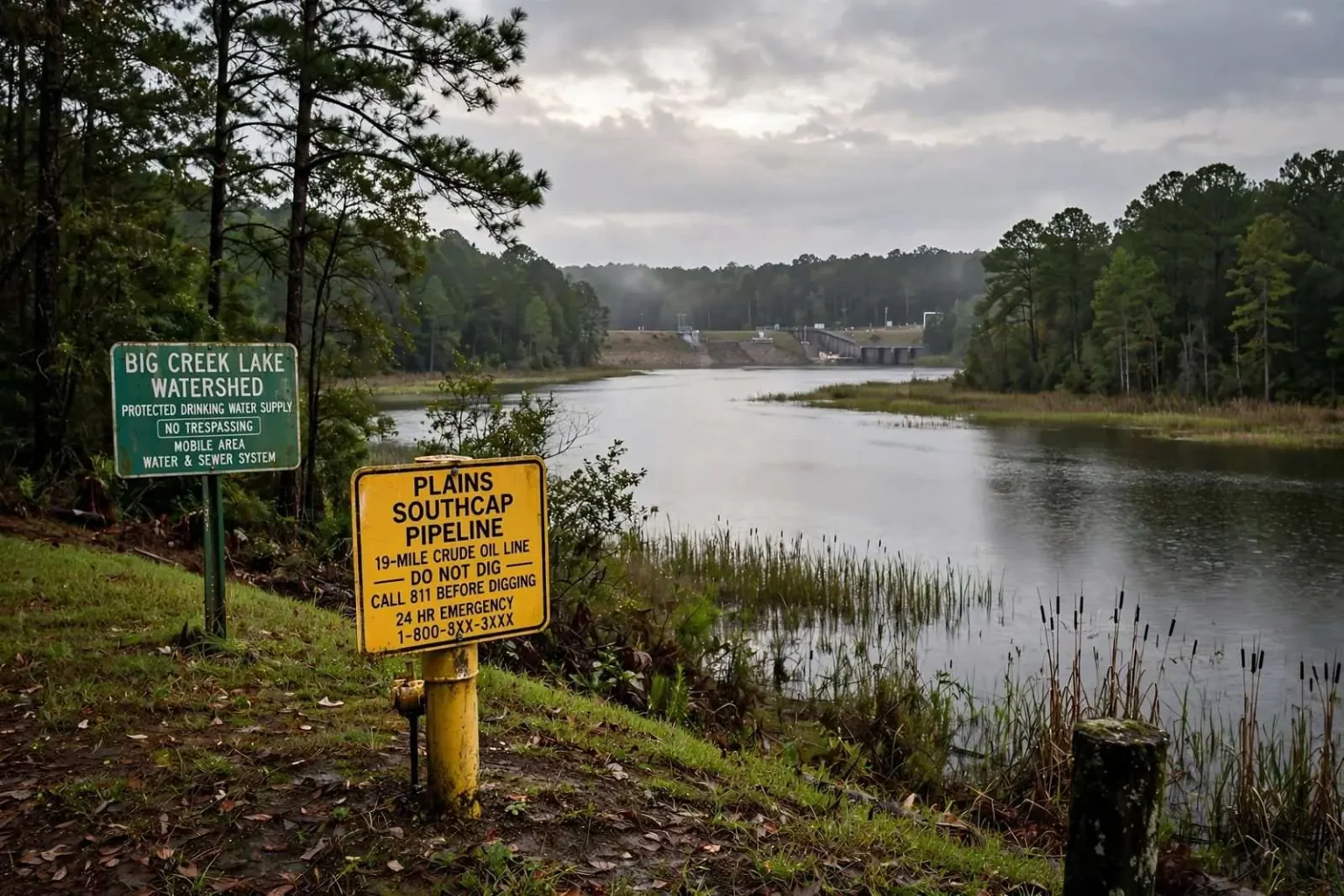
MOBILE, Ala. — A federal judge has dismissed a lawsuit that sought to overturn a permit allowing an oil pipeline to run through the Big Creek Lake watershed, a key source of drinking water for the Mobile area, leaving local environmental advocates weighing their next move.
U.S. District Judge William Steele dismissed the case, which was brought by Mobile Baykeeper and the Southern Environmental Law Center against the U.S. Army Corps of Engineers, finding that the pipeline’s construction relied on activities that fell outside the Corps’ regulatory authority. Keith Johnston, an attorney with the Southern Environmental Law Center based in Birmingham, said the groups were disappointed but still weighing options.
The pipeline in question, a 19-mile Alabama segment built by Plains Southcap, connects to a larger 41-mile route running from the Ten-Mile Terminal crude oil storage facility in Mobile County to a Chevron refinery in Pascagoula, Mississippi. The full pipeline was completed earlier this year. Plains attorney Jarrod White praised the court’s decision, saying the company had followed the rules laid out by federal regulators.
At issue was a 2014 design change in which Plains Southcap shifted to horizontal directional drilling for several stream crossings in the Hamilton Creek watershed — a method the Corps argued removed those crossings from its jurisdiction entirely. Mobile Baykeeper and the Southern Environmental Law Center had argued the Corps’ original 2013 verification of the project violated the Clean Water Act by allowing a pipeline to run close to, and cross through, a public drinking water supply without sufficiently rigorous review.
Mobile Baykeeper Executive Director Casi Callaway said the case highlighted a broader concern about how the Corps handles projects like this one through what she called a streamlined permitting process that lets applicants avoid more demanding environmental scrutiny. She said the group will keep working for clean water and pushing agencies and companies to protect the supply.
The pipeline drew criticism as far back as 2013 amid concerns it could pose a safety hazard to the drinking water supply, and it was separately challenged at the time by the Mobile Area Water and Sewer System. With the federal lawsuit now dismissed, Baykeeper and its legal partners say they are reviewing what legal options, if any, remain to press for additional oversight of the pipeline’s operation.
Background
Big Creek Lake, also known as the J.B. Converse Reservoir, is the Mobile Area Water and Sewer System’s primary source of drinking water for the Mobile area. The Army Corps of Engineers authorizes many pipeline stream crossings under Nationwide Permit 12, a general permit for utility lines that allows projects meeting set conditions to proceed without the individual permit review environmental groups have pressed for in cases like this one.