

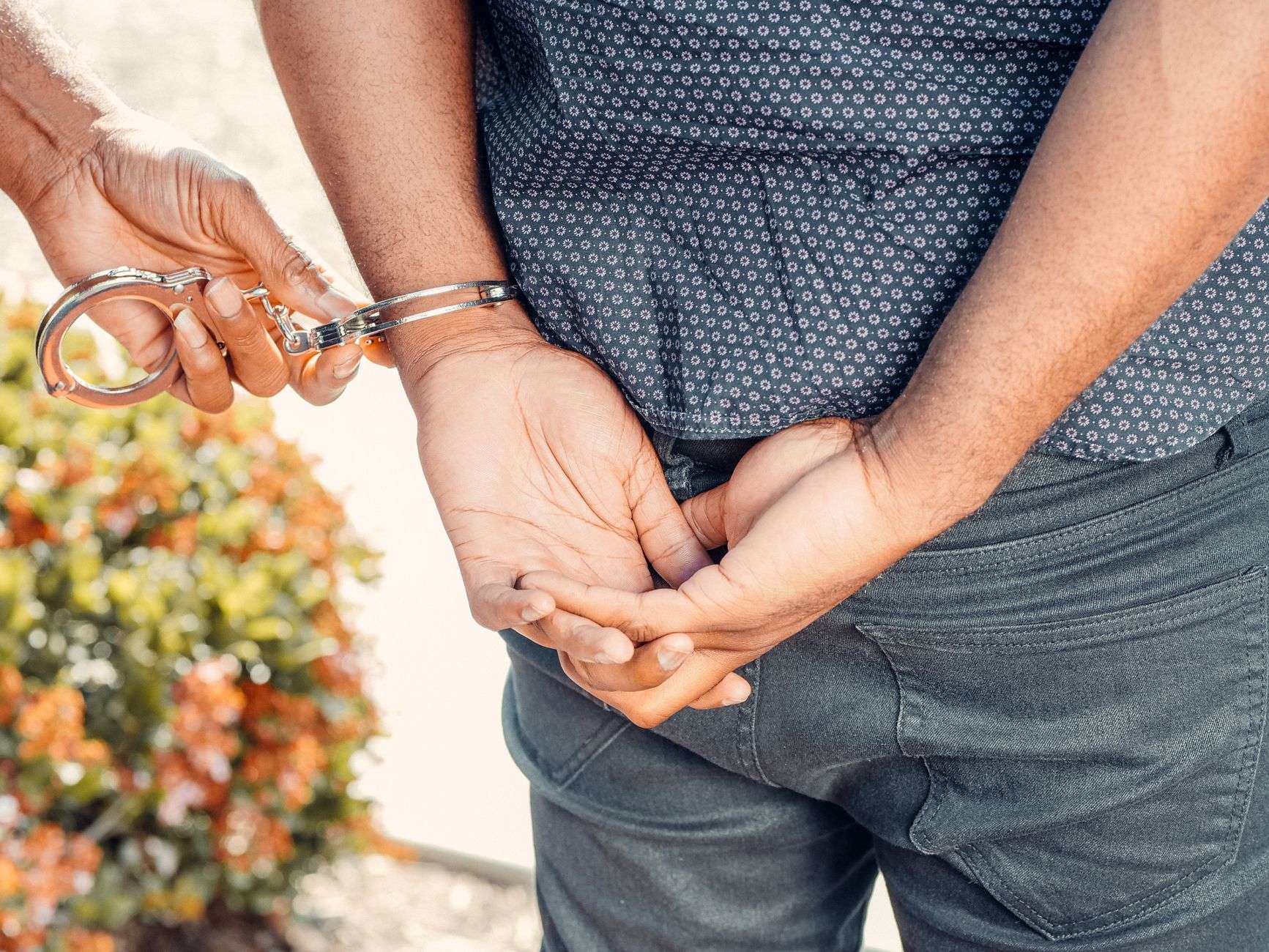
A Semmes police officer who was honored as the department’s 2025 officer of the year has been arrested on a DUI charge, according to a neighboring police chief. The arrest ties an award-winning career in one small Mobile County city to a criminal charge in another, and it has left questions about the officer’s employment status unanswered in the days that followed.
The Arrest
Satsuma Police Chief Troy Willcutt confirmed that Bryan Mims was taken into custody at 1:15 a.m. on July 26 during a traffic stop in Satsuma, a small city in Mobile County near Semmes. The stop, which occurred in the overnight hours on a street in the city of roughly 6,000 residents, led to the DUI charge rather than any other alleged offense, according to the chief’s account.
According to Chief Willcutt, Mims was off duty at the time of his arrest and was not operating his patrol vehicle when he was stopped. That detail matters both legally and professionally. An off-duty arrest in a personal vehicle is treated as a private matter by the courts, but for a sworn officer it almost always triggers attention from his own department, because the conduct alleged — driving under the influence — goes to the same laws the officer is sworn to enforce.
Following the arrest, Mims was processed at a local holding facility in Satsuma before being released. The process, which typically includes booking, documentation of the charge, and release pending formal proceedings, took place without incident, and the case now moves into the court system like any other DUI matter originating in the city.
It is not yet known what specific charge Mims is facing or when he is scheduled to appear in court. DUI cases in Alabama municipalities generally begin with an appearance in municipal court, where a defendant can enter a plea, and the charge can carry license suspension requirements, fines, and possible jail time depending on the outcome. Until court filings clarify the exact charge and any aggravating circumstances, the full scope of the case remains unknown.
An Award-Winning Career
The Semmes Police Department had previously celebrated Mims’ service, naming him officer of the year for 2025 in a social media post recognizing his work with the department. Such recognitions are typically based on a department’s internal assessment of an officer’s performance over the preceding year, and being singled out from a department’s roster marks an officer as one of its most productive or dedicated members.
That recognition is now part of the public record alongside the arrest, a juxtaposition that residents of both cities have had to absorb. An officer-of-the-year honor reflects the view of a police department’s leadership at a moment in time; an arrest reflects allegations that have yet to be tested in court. Both facts are now part of the same public story, and neither erases the other.
Semmes itself is one of the younger cities in Mobile County, incorporated as a city in 2011 after decades as a close-knit community north of Mobile. Its police department is sized to the city it serves, which means each officer’s standing within the department is visible to the community in a way that would be less true in a larger agency. An award announcement on social media reaches neighbors, and news of an arrest travels the same distance just as quickly.
Employment Status Unknown
Semmes Police Chief Todd Freind could not be reached for comment regarding Mims’ current employment status with the department as of publication. The absence of an official statement has left the most immediate question — whether the officer remains on active duty — without a public answer.
It remains unclear whether Mims has been placed on administrative leave or whether any internal disciplinary process has begun following the arrest. Police departments handle off-duty arrests of their own officers in different ways. Some agencies place an officer on administrative leave automatically pending the outcome of criminal proceedings, both to allow the investigation to proceed and to avoid placing the officer in situations that could complicate the case. Others allow an officer to remain on duty until charges are resolved or an internal review is complete, particularly when the alleged conduct occurred off duty and did not involve department equipment or duties.
Internal disciplinary processes run on a separate track from criminal cases. A department can conduct its own investigation into whether an officer violated policy, regardless of what happens in court, and the standards in an internal case differ from the burden of proof in a criminal prosecution. Until the Semmes department confirms which path it has taken, the community is left to watch the criminal case and wait for the department to speak.
Why Officer DUI Arrests Draw Scrutiny
DUI arrests involving sworn law enforcement officers typically draw additional scrutiny, both from the public and from the officer’s own department, given the trust placed in officers to enforce impaired-driving laws. Officers spend much of their careers on the enforcing side of DUI stops, and a charge against one of their own puts that experience in an uncomfortable light.
Departments across the country have generally concluded that how they handle an officer’s off-duty arrest matters as much as the arrest itself. Consistent treatment — applying the same internal review to an award-winning veteran as to a rookie — protects the department’s credibility in every other case it touches. Inconsistent treatment, by contrast, can undermine DUI prosecutions generally, since defense attorneys can and do ask whether the standards applied to their clients are the same ones the department applies internally.
For the Satsuma Police Department, the case is also a test of ordinary process. A small city department making an arrest of an officer from a neighboring agency faces no special rules, but it does face heightened attention, and Chief Willcutt’s public confirmation of the arrest — naming the officer, the time, and the circumstances — reflected a decision to treat the case with the same transparency as any other.
The relationship between the two departments adds a layer of local context. Satsuma and Semmes sit within a short drive of each other in northern Mobile County, and their officers cross paths at mutual aid calls, regional trainings, and multi-agency operations. An arrest that reaches from one agency’s roster into another’s jurisdiction is unusual in communities that size, and both departments are aware that their handling of it will be noticed.
What Happens Next
The criminal case will proceed on its own schedule. A DUI charge filed in municipal court typically moves through an initial appearance, potential pretrial motions, and either a plea agreement or a trial, and cases of this kind can take weeks or months to resolve. Along the way, details that are not yet public — the results of any field sobriety or chemical testing, the stated basis for the traffic stop, and the specific charge filed — may become part of the court record.
The employment question at the Semmes Police Department will likely resolve on a different timeline. If the department opens an internal investigation, that process can conclude before, alongside, or after the criminal case, and its findings can range from no action to suspension, demotion, or termination depending on what the review determines. Departments often wait for key facts before acting, but they are not required to defer entirely to the courts.
The Broader Picture
This is a developing story, and updates will be provided as further details become available from the Semmes and Satsuma police departments. Until then, the known facts are straightforward: an officer recognized as his department’s best for 2025 was arrested in the early morning of July 26 in Satsuma, charged with DUI while off duty and in his personal vehicle, processed and released, and his status with the Semmes department has not been publicly stated.
For residents of both communities, the case is a reminder that accountability in local policing runs on several tracks at once. The courts will determine the outcome of the charge. The department will determine the employment consequences. And the public — which paid for the officer’s badge, honored his service, and shares the roads he is accused of driving impaired — will be watching how carefully both processes are followed.
What happens in the coming weeks, as court dates are set and the Semmes department addresses its officer’s status, will determine whether this remains a single early-morning arrest or becomes a longer story about how two small Mobile County cities handle a hard situation involving one of their own.
How Small Departments Handle These Cases
The situation also highlights the realities of policing in small municipalities. Departments the size of Semmes’ operate with limited command staff, which means the chief personally makes the decisions that a large agency would spread across an internal affairs division, a legal advisor, and a human resources office. There is no bureaucratic distance between an award announcement and an arrest response — both bear the chief’s signature, and the community knows it.
Neighboring departments in Mobile County have long practiced a degree of mutual awareness that bigger metros lack. Officers know colleagues across the county line by name, and cases that cross jurisdictions are handled with an eye toward how the outcome will be read next door. That closeness can be an asset in a case like this one, because it removes any temptation to treat the arrest as an abstraction. The officer charged is a colleague the Satsuma chief may have worked alongside, and the department awaiting the outcome is one it cooperates with regularly.
It also underscores why transparency at the earliest stage matters in small cities. In a community of a few thousand residents, rumors about an officer’s arrest spread within hours, and a department that says nothing creates a vacuum that speculation fills. Confirming the basic facts — who, when, where, and what charge — allows the public conversation to start from a shared foundation while the slower processes of court and internal review run their course.
The coming weeks will show how each of those processes unfolds: whether the court docket clarifies the charge, whether the Semmes department makes its employment decision public, and whether the two agencies’ handling of the case reinforces or tests the working relationship between them. For now, both communities are waiting on answers that only those two institutions can provide.