Severe Storm Threat Prompts Emergency Shelter to Open in Mobile
A strong squall line prompted a severe weather warning for the Mobile area, and the Salvation Army opened an emergency overnight shelter downtown.
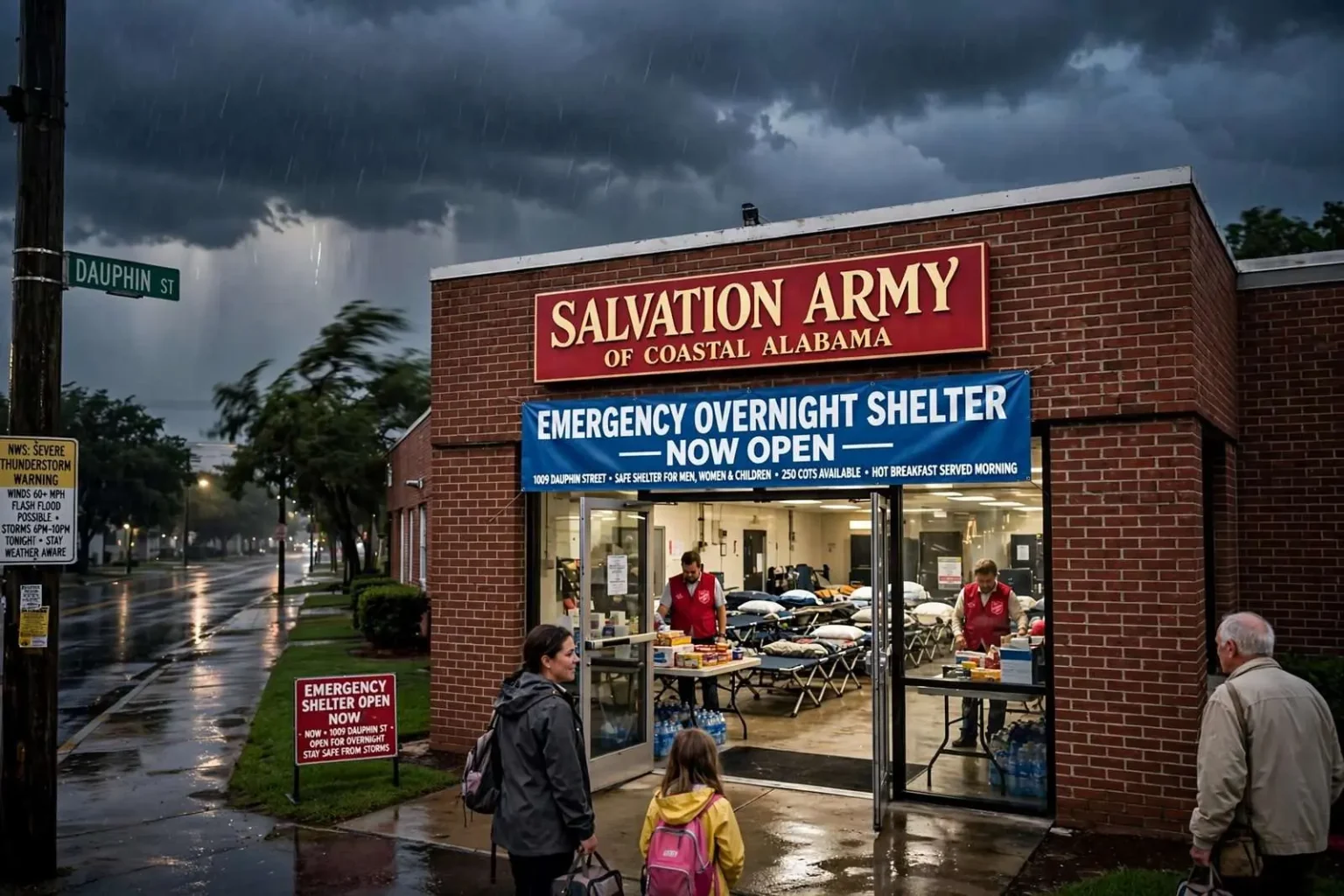
Forecasters warned Mobile-area residents to brace for a strong line of storms moving through the region on a Monday evening in October 2014, prompting the Salvation Army of Coastal Alabama to open an emergency overnight shelter as a precaution.
National Weather Service meteorologist Cody Lindsey said the greatest risk of severe weather would arrive after dark, with a squall line expected to sweep in from southeast Mississippi and cross the Mobile area between roughly 6 p.m. and 10 p.m. Scattered showers and gusty wind that moved through around midday were described as just an early preview of the stronger line still to come that night.
Lindsey said the approaching storms carried the potential for wind gusts topping 60 mph, heavy downpours and isolated tornadoes. He called it a notably strong line of thunderstorms for the time of year, noting that Alabama’s fall severe weather season typically peaks later, in November and December, making this October system an earlier-than-usual concern. Forecasters also flagged a flash flooding risk, with more than two inches of rain possible in a short window as the line moved through.
With the timing uncertain and the potential for damaging wind, Lindsey urged area residents to make sure NOAA weather radios were charged and tuned in, and reminded the public that wireless emergency alerts would automatically sound on cell phones if the National Weather Service issued a warning overnight.
Ahead of the storms, the Salvation Army of Coastal Alabama opened its doors at 1009 Dauphin Street as an emergency shelter for homeless men, women and children who needed a safe place to ride out the weather. The organization set up 250 cots for the night and planned to serve a hot breakfast the following morning for anyone who stayed. Alabama Power also asked customers to report any outages or downed power lines through its customer service line as crews prepared for possible storm damage across the region.
Forecasters said the risk of severe weather would linger into the early morning hours before conditions gradually improved, and encouraged residents across Mobile and Baldwin counties to stay weather-aware through the overnight hours.
About wireless alerts
Wireless Emergency Alerts, launched nationally in 2012, are broadcast to compatible phones connected to cell towers in a warned area. No sign-up is required, and National Weather Service tornado and flash flood warnings are among the alerts sent.