

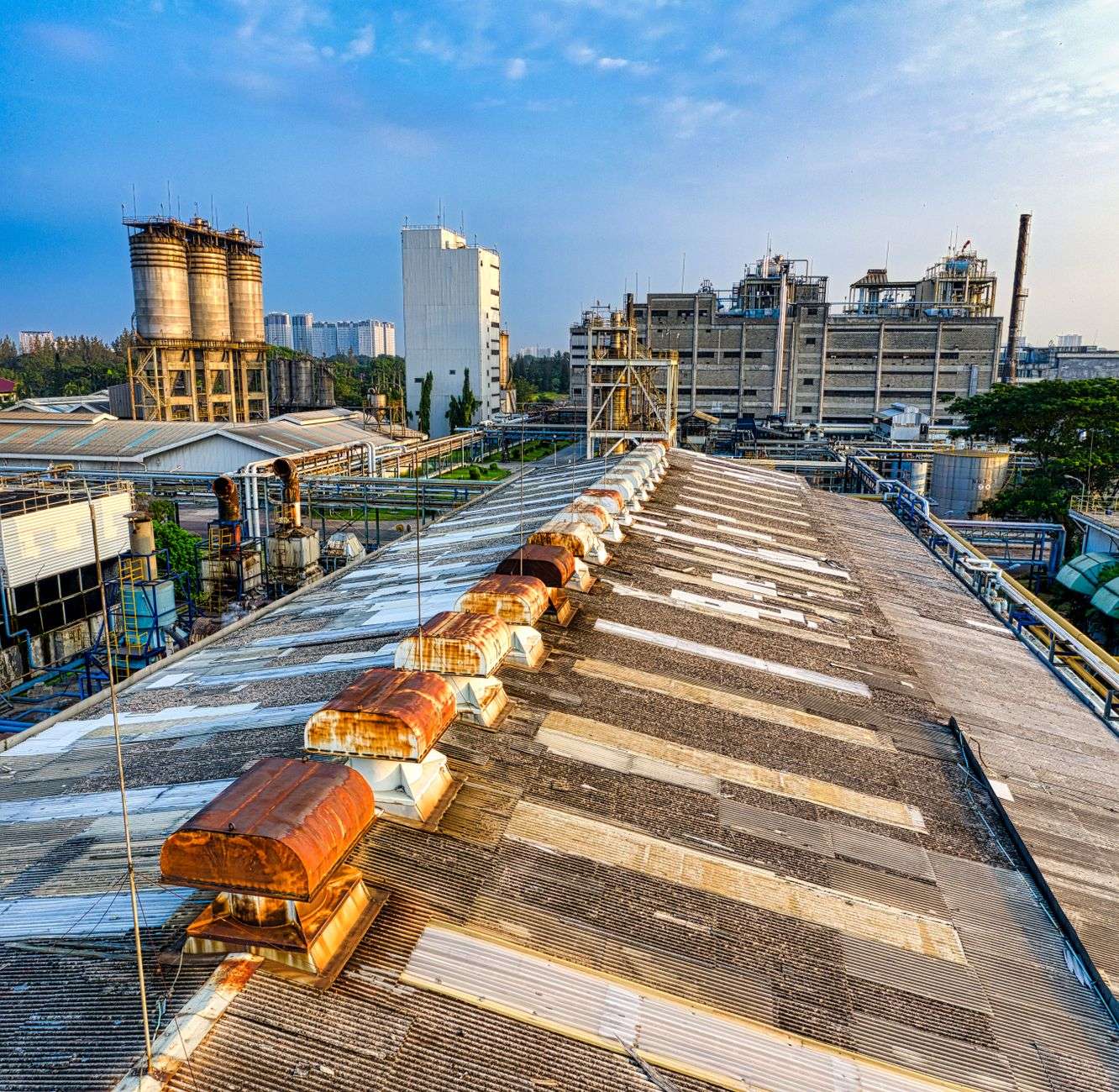
A deal that will determine the future corporate ownership of one of Washington County’s largest industrial employers cleared a major hurdle this week. Shareholders of Tate & Lyle overwhelmingly voted to approve a $5 billion all-cash acquisition offer from Ingredion Incorporated, moving the transaction closer to completion and setting the stage for the company’s McIntosh manufacturing facility to eventually become part of a new corporate parent.
The vote, held Tuesday, saw more than 98% of shares cast at both the court meeting and the general meeting favor the sale, according to figures released by the two companies. The overwhelming margin reflects strong investor confidence in the terms of the deal, which was first announced in June and has been closely watched in southwest Alabama because of the McIntosh plant’s role as a major local employer and one of the state’s few specialty chemical and food ingredient manufacturing sites.
Under British takeover law, a court meeting and a general meeting are both required for a scheme of arrangement — the structure British companies typically use for acquisitions — which explains why shareholders voted twice. Reaching better than 98% at either meeting is unusual; doing so at both leaves little doubt about how the company’s investor base views the offer, even before the formal court process concludes.
What the McIntosh plant means to Washington County
Tate & Lyle’s McIntosh facility has for years been a cornerstone of the local economy in Washington County, providing steady industrial employment in a region where large manufacturing operations are relatively scarce. The plant is notable for being Alabama’s only sucralose processing facility, producing the low-calorie sweetener along with other specialty food ingredients that are shipped to customers across the country and around the world.
For a community the size of McIntosh, a facility of this scale carries outsized economic importance, supporting not only direct jobs at the plant but also a network of suppliers, contractors and local businesses that depend on the steady activity the operation generates. Washington County is one of Alabama’s least populous counties, and its industrial base is thin; the plant sits along the Tombigbee River corridor, where paper and chemical operations have anchored the regional economy for generations. In communities of that size, a single plant’s payroll ripples through everything from the local diner to the school tax base, and rumors of corporate change travel fast even when nothing has actually changed.
Neither Tate & Lyle nor Ingredion has announced any changes to staffing, production or day-to-day operations at the McIntosh site as a result of the pending acquisition, and officials from both companies have so far indicated the plant will simply become part of Ingredion’s broader global manufacturing footprint once the sale closes.
Inside the deal terms
Under the agreement approved by shareholders, Tate & Lyle investors will receive 595 pence in cash for each share they hold, a figure that represents a premium over where the company’s stock traded before the acquisition was first made public. The all-cash structure means no uncertainty about share ratios or market swings between announcement and closing — shareholders are paid a fixed sum, in British currency, for each share surrendered.
Chicago-area-based Ingredion, a major global producer of starches, sweeteners and specialty ingredients, has said the combined company would rank among the largest specialty ingredient makers in the world once the transaction is finalized. Ingredion has projected the merger will yield roughly $130 million in annual cost savings once integration work is complete, a process the company expects to wrap up by the end of 2030.
Cost-savings projections of that size are typically drawn from overlapping corporate functions, duplicated administrative operations and consolidated purchasing — not necessarily from production plants, which is the distinction McIntosh workers and local officials will watch as the integration plan takes shape. Companies pursuing mergers of this kind generally want every capable facility running at capacity; but integration reviews have been known to conclude differently for individual sites, which is why plant-level specifics matter to a community that depends on one facility.
Executives from both firms framed the acquisition as a way to expand capabilities in areas such as texture solutions, sugar reduction and ingredient fortification, positioning the combined business to respond to growing consumer demand for healthier and more affordable food products.
What comes next
While shareholder approval is a significant milestone, it is not the final step. The deal still requires sign-off from the High Court of Justice in England and Wales, along with regulatory clearances in the various jurisdictions where the companies operate, before it can be completed.
Tate & Lyle and Ingredion have said they expect the acquisition to close during the second half of 2027, meaning the McIntosh facility is likely to continue operating under its current ownership structure for well over a year before any formal transition takes place.
Ingredion CEO Jim Zallie has said the combined company will be better positioned to serve customer demand for great-tasting, healthier and more affordable food products, while Tate & Lyle Chairman David Hearn has said the board views the offer as delivering strong value to shareholders while setting the business up for future growth through greater scale and continued investment in innovation.
The court approval process in London, largely a formality once shareholders have voted at the required margins, is expected to proceed on the timetable the companies have outlined, with antitrust and regulatory reviews in other jurisdictions running in parallel. Those reviews — spanning the United States, Europe and the other markets where the two companies sell ingredients — are where delays, if any occur, are most likely to arise.
Watching and waiting in Washington County
For residents and workers connected to the McIntosh plant, the coming months are likely to bring continued attention to how the ownership change might eventually affect operations, even as both companies stress that no immediate changes are planned. Large industrial transitions of this kind often unfold gradually, with integration decisions made well after a deal formally closes.
In the meantime, the sucralose and specialty ingredient production that has long defined the McIntosh facility’s role in the regional economy is expected to continue without interruption as the acquisition works its way through the remaining approval process.
The plant’s specialty is a useful lens on why it has endured. Sucralose production is a technically demanding chemical process, and Alabama’s only such facility has spent years serving food and beverage manufacturers that rely on the sweetener as a sugar substitute. Demand for reduced-sugar products has grown across the food industry, giving the McIntosh operation a product line with durable customers — the kind of asset an acquiring company typically keeps rather than sheds.
A river corridor built on industry
The McIntosh plant sits in a stretch of southwest Alabama where the Tombigbee and Mobile river systems have long supported heavy industry. Paper mills and chemical plants dotted the corridor for much of the twentieth century, and the communities around them — McIntosh, Jackson, Mount Vernon and others — grew around the shift schedules and payrolls those facilities provided. As some of the older operations closed or consolidated over recent decades, the surviving plants became disproportionately important to the local economies around them.
That history shapes how acquisition news lands in Washington County. Residents have seen corporate owners change hands without much visible difference, and they have seen facilities close after promising continuity. Neither outcome is guaranteed by the announcement this week, which is why local attention tends to focus on the practical markers: whether hiring continues, whether maintenance investment flows to the site, whether contractors still have work to bid on.
What employees and the community can expect
Based on what both companies have said so far, the practical answer for the next year is: very little changes. The deal is not expected to close until the second half of 2027, and integration planning — the phase where site-level decisions are typically made — follows closing. Employees remain Tate & Lyle workers until the transaction completes, with the plant continuing its production schedule in the interim.
After closing, the facility becomes part of a much larger ingredient portfolio spanning starches, sweeteners, texturants and nutrition ingredients. For a plant that has specialized in sucralose and other specialty products, membership in a broader network can bring investment in the form of capital spending and expanded product lines; it can also bring reviews of where each product is most efficiently made. Those decisions will be made in corporate conference rooms far from McIntosh, which is precisely why the plant’s workforce, and the county around it, will keep watching the deal’s progress all the way through.
For now, Washington County has its answer to the first question this deal raised: the shareholders have spoken, with near unanimity, and the sale is on track. The next answers — about the plant and its place in a combined company — are still more than a year away.