

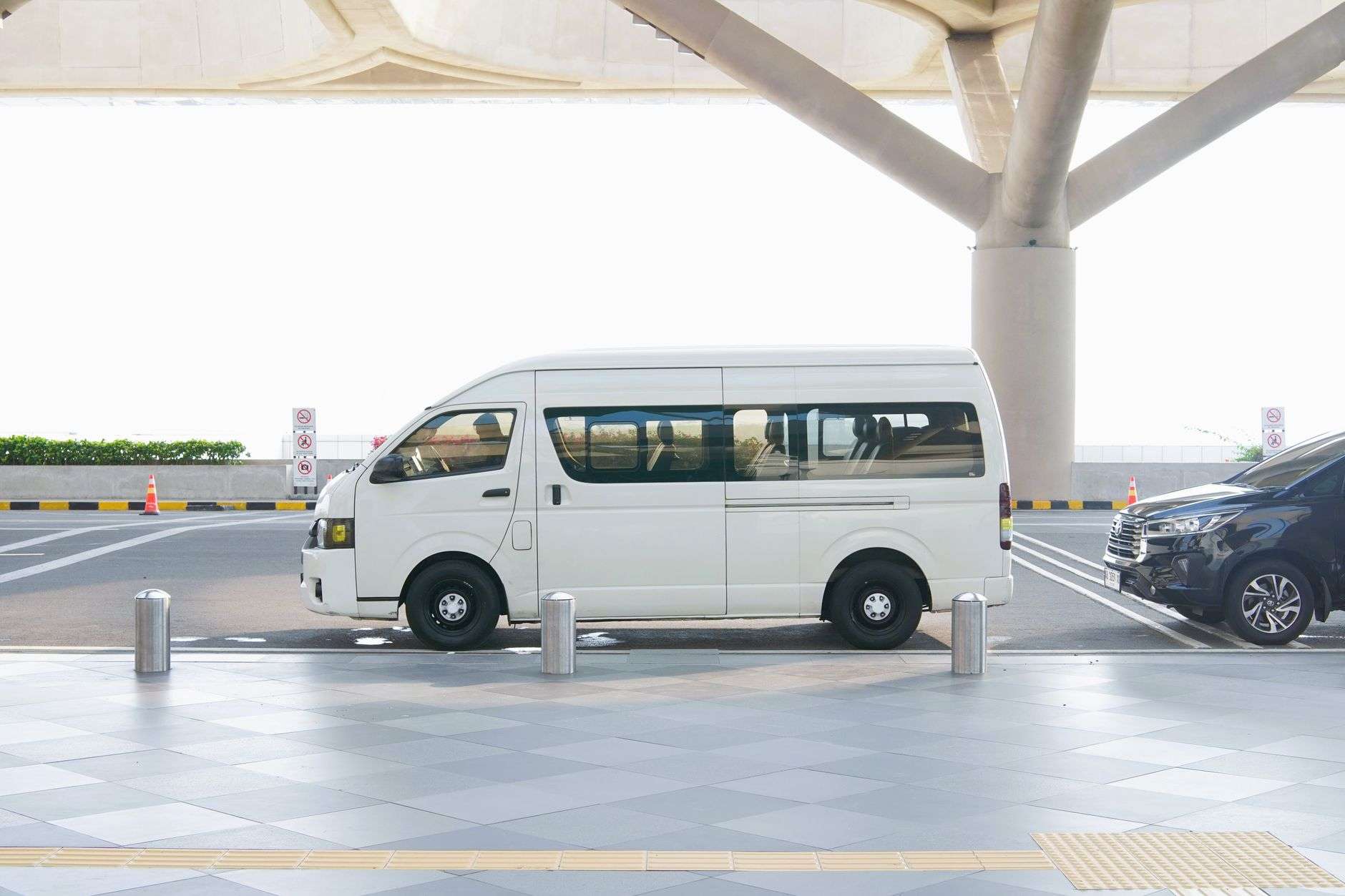
MOBILE, Ala. — A transportation experiment that began two years ago as a way to get Mobile residents to job sites and training classes is about to stop being an experiment.
MoGo Rideshare, the on-demand service launched by the Mobile Area Chamber Foundation, becomes Second Line Microtransit this month, folding into the City of Mobile’s redesigned public transportation network alongside fixed-route buses, trolleys and paratransit.
For riders, the practical change is mostly a name and an app. For the region’s transportation planning, it is something larger: a privately launched pilot has produced enough evidence to be absorbed into the public system it was built to supplement.
What MoGo Was Built to Solve
The Mobile Area Chamber Foundation launched MoGo in 2024 in partnership with Via, structured as an app-based microtransit pilot. The stated problem was narrow and specific: transportation was a barrier keeping Mobile residents from reaching employment, career training and other workforce opportunities.
That framing is unusual for a transit project. Most transit planning starts with geography — where do people live, where do they need to go, what routes connect them. MoGo started with an economic development question that a chamber of commerce is positioned to notice before a transit agency is: employers were unable to fill positions, and some share of the reason was that applicants could not reliably get to the job.
The initial service covered a 17-square-mile area and included connections to major employers and training locations.
The Numbers That Made the Case
Through 2025, MoGo recorded nearly 40,000 completed rides and served more than 1,200 active riders, while maintaining a 95.8% five-star satisfaction rating.
Each of those figures does different work in the argument for expansion.
Forty thousand rides establishes volume — the service was not a curiosity used a handful of times. More than 1,200 active riders establishes breadth: the rides were not concentrated among a few dozen daily commuters, which would suggest a narrow use case rather than a broad need.
The satisfaction rating addresses the objection that most often sinks new transit services. Transit ridership is driven heavily by reliability, and riders who get stranded once frequently do not return. A 95.8% five-star rate indicates the service was doing what it promised often enough to keep people using it.
As usage grew, the pilot expanded. The service area widened, transfer points were added connecting riders to existing bus service, and new destinations were introduced that let commuters combine work trips with everyday errands — a small design change with outsized consequences for people without a car, who otherwise have to choose between a shift and a grocery run.
How Microtransit Actually Works
Microtransit occupies the space between a city bus and a taxi. There is no fixed timetable and no fixed route. A rider requests a trip through an app, and software matches that request to a shared vehicle already moving through a defined service zone, routing it dynamically to pick up multiple passengers heading in compatible directions.
The appeal for a city like Mobile is structural. Conventional fixed-route bus service works best where population density is high enough that a bus passing a given stop will find people waiting. In lower-density cities, the same route produces long headways and near-empty vehicles — expensive service that is also inconvenient, which drives ridership down and makes the service look like a failure worth cutting.
Microtransit inverts that logic. Vehicles go where demand is, when demand exists, rather than running a fixed loop on the chance that someone shows up.
What Changes for Riders on Launch Day
Under the new system, the service riders know as MoGo continues as Second Line Microtransit. Riders will use the new Second Line Transit app to request rides, view estimated arrival times and track vehicles in real time.
Operating hours:
- Monday through Thursday: 4:30 a.m. to 7 p.m.
- Friday and Saturday: 4:30 a.m. to 9 p.m.
- Sunday: no service
The 4:30 a.m. start is worth noting. It is not a convenience hour; it is a shift-start hour, aimed squarely at people whose workday begins before most transit systems are running.
Fares stay where they were. Rides remain $1.25, with reduced fares of 60 cents available for eligible riders.
Free Transfers, and Why That Matters
One of the more consequential changes is easy to overlook: riders will be able to transfer between Second Line bus and microtransit services at no additional charge.
Free transfers convert two separate services into one network. Without them, a rider whose trip requires both a bus and an on-demand vehicle pays twice, and the second fare is often enough to make driving, walking a long distance, or simply not making the trip the rational choice. With them, microtransit can function as a first-mile and last-mile connector to the fixed-route system rather than competing with it.
Accessibility and Paratransit
Wheelchair-accessible vehicles remain available under the new system.
Eligible riders participating in the Mobility Assistance Program will also be able to prebook, manage and track curb-to-curb paratransit trips through the same app. Bringing paratransit into the app is a meaningful upgrade for a service that has traditionally required phone scheduling well in advance, with limited visibility into where a ride is once it has been booked.
Some vehicles may continue carrying The Wave branding while the fleet transitions to the new Second Line identity, so riders should expect a mixed-looking fleet for a period after launch.
A Pilot That Outgrew Its Sponsor
For the Mobile Chamber, the handoff represents the natural end of a pilot’s life cycle. An initiative created to address a workforce need has become a transportation option with a much broader community reach — which is both a success and a reason for a chamber of commerce to step back from operating it.
Business-led pilots can move faster than public agencies, take risks a transit authority cannot easily justify, and test a concept without committing taxpayer dollars to a service that may not work. What they generally cannot do is sustain an essential public service indefinitely, or expand it to the scale a city needs.
Handing a proven concept to the public system is how that gap is normally closed, and it is what is happening here.
The Bigger Picture
The City of Mobile is incorporating microtransit into Second Line Transit, its redesigned public transportation system operated in partnership with Via. The network is designed to better connect fixed-route bus service, on-demand transportation and mobility services while expanding transit access across the city.
Second Line Transit is scheduled to officially launch Sept. 28.