

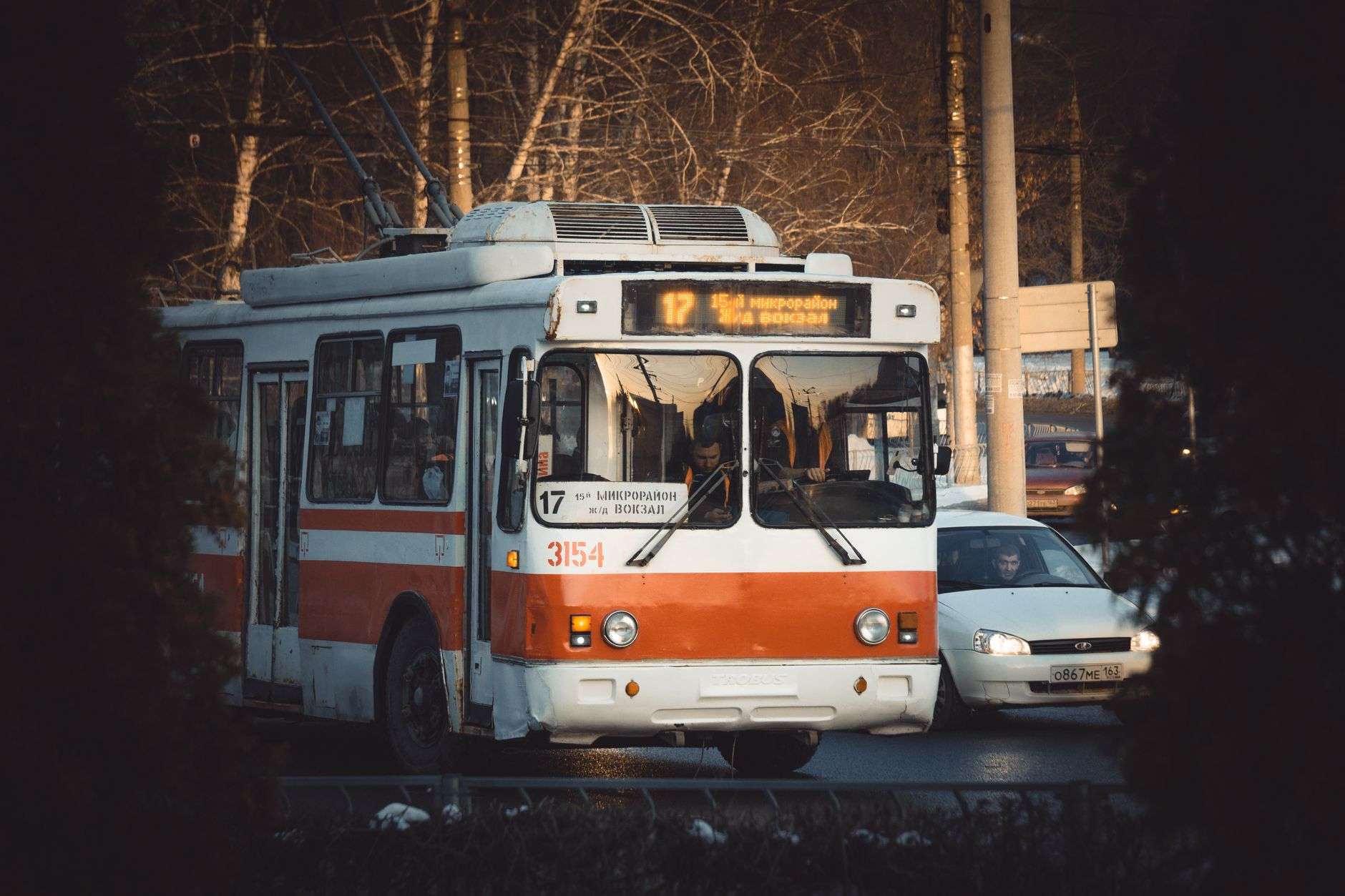
MOBILE, Ala. — Mobile’s rebuilt public transit system has a start date.
Mayor Spiro Cheriogotis announced in his regular “Good Evening, Mobile” email address that Second Line Transit will officially launch on Sept. 28, and that the first of the system’s new trolleys has already arrived in the city.
“The dawn of Mobile’s transportation future is almost here, and it looks pretty bright,” Cheriogotis wrote.
What Arrives Sept. 28
Three things happen at once on the launch date.
The new trolley enters service on the Downtown Circulator route, running that route on Saturdays. During the week, the city plans to rotate the vehicle across various fixed routes rather than parking it — a way of putting the newest piece of equipment in front of riders across the system instead of confining it to a single downtown loop.
New routes take effect at the end of September alongside the vehicle.
And Second Line Transit launches its fleet of microtransit vehicles.
The Microtransit Piece
The microtransit component is the structural change in the announcement, and it is the part least visible from a photograph of a trolley.
Microtransit operates on demand rather than on a fixed timetable. Riders request a trip and are matched to a shared vehicle that routes dynamically within a defined service zone. It is designed to solve the problem that defeats conventional bus networks in low-density cities: a fixed route that runs every 45 minutes through a thinly populated area serves almost no one well, but the same resources deployed as on-demand vehicles can cover the territory without asking riders to organize their day around a timetable.
The tradeoff is that microtransit generally costs more per rider than a well-used fixed route. The approach works best as a complement to a core network — fixed routes where ridership is dense enough to justify them, on-demand service where it is not. Cheriogotis’s description of the launch, which pairs new fixed routes with a microtransit fleet, reflects that hybrid design.
Via and the Rebuild
The mayor credited the city’s transportation partner with the work done to get to this point.
“The work our transportation partner Via has done to improve our system is already remarkable, and I’m excited to see this new era of public transit take shape,” he wrote.
Via is a transit technology company that contracts with cities to operate and route on-demand service, typically supplying the software that handles trip requests and vehicle routing alongside operational support.
“A City That Moves People”
Cheriogotis framed the launch in terms of what a transit system is ultimately for.
“We want to make Mobile a city that moves people, literally, and a more accessible, more efficient, and more user-friendly transit system will do just that,” he wrote.
He added that the changes “will result in more Mobilians being connected to jobs, activities, and attractions throughout the city.”
That last formulation is the one that matters for evaluating the system a year from now. Transit performance is not measured by vehicles delivered or routes drawn on a map. It is measured by whether a person without a car can reach a job interview, a shift, a clinic or a grocery store in a reasonable amount of time — and whether they can do it reliably enough to plan a life around it.
The first trolley is in the city. The rest of the answer arrives after Sept. 28.