

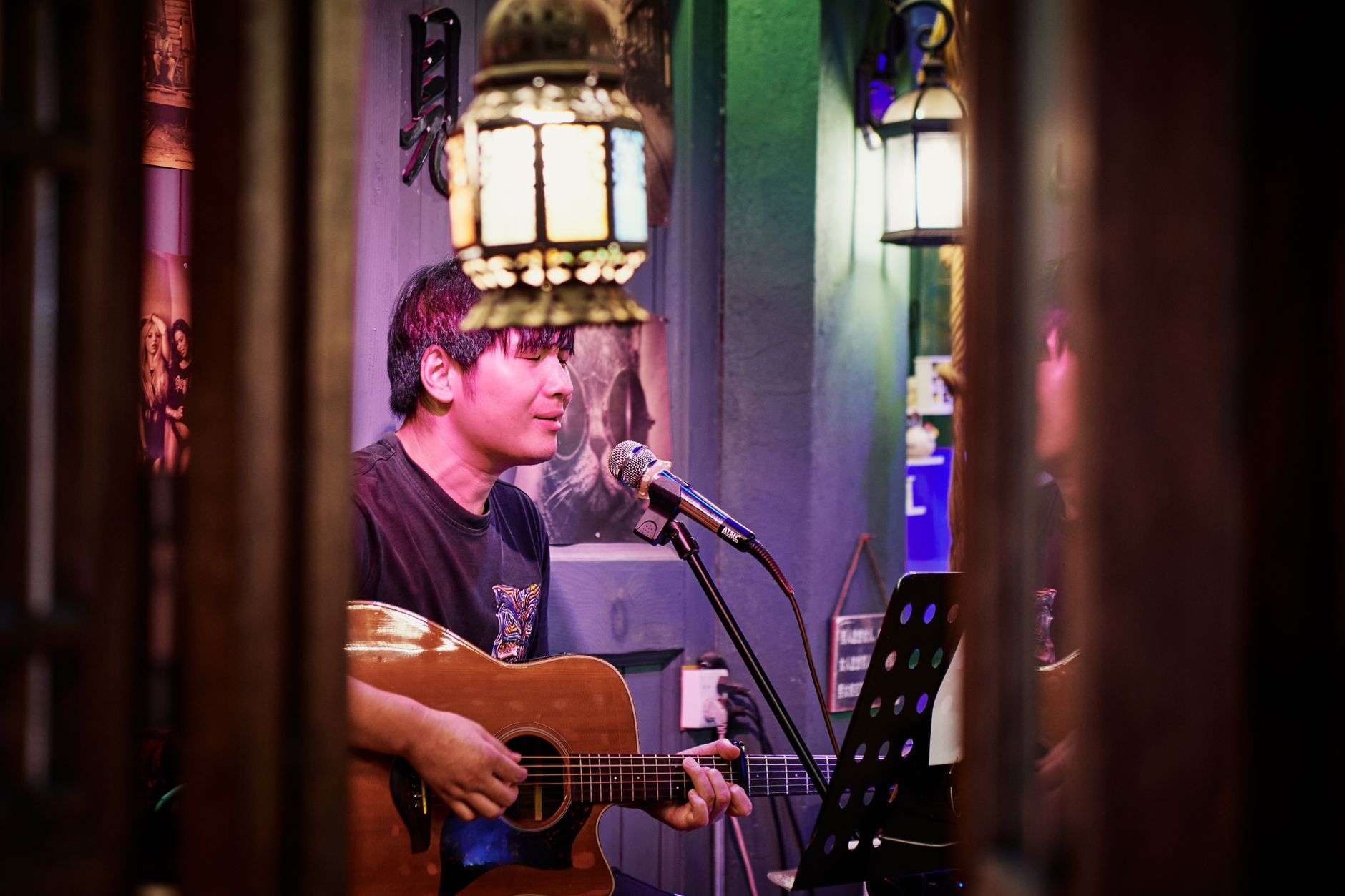
MOBILE, Ala. — Some records are meant to be listened to. This one is meant to be eaten alongside.
A local up-and-coming songwriter performing as Sly is bringing his debut effort to a dinner-and-a-show format, with Chef Varner building a menu around the set.
The Sound
From the downbeat of the first track, Sly’s sound registers as a fresh and welcome addition to the Azalea City’s lineup of musical offerings. His honest exploration of all things Americana has produced a unified sound with an eclectic shine — one that draws on bluegrass, Southern alt-rock, blues, soul and whatever else has connected with his creative drive.
Rolling through the EP’s tracklist makes something else evident: this is a performer who holds his energy in both the solo and the full-band context. That is not a given. Plenty of songwriters who command a room alone get swallowed by a band behind them, and plenty of band frontmen shrink when the arrangement falls away. Sustaining a performance in both settings is a distinct skill, and it is the one that determines whether an artist can work a listening room on Tuesday and a festival stage on Saturday.
Americana as a Category
Americana is an unusually elastic label, and that elasticity is the point. It emerged as a way to describe roots-oriented music that did not fit commercial country radio — music built on acoustic instrumentation, narrative lyrics and the older American traditions of folk, blues, bluegrass, gospel and country.
What holds it together is not a sound so much as an approach: songs that prioritize writing over production, and performers who draw from the full inheritance rather than a single strand of it. An artist working in bluegrass, Southern alt-rock, blues and soul in the same set is not being inconsistent. That is the genre working as designed.
The Gulf Coast has its own contribution to that inheritance. Mobile and the surrounding region sit at a crossroads of musical traditions — the blues coming down from the Delta, gospel from the Black church, country and bluegrass from the hill country to the north, and the brass and rhythm traditions of the Gulf. A songwriter absorbing all of it in one place is drawing on a deep local well.
The Menu
Chef Varner is providing the pairing, and it is a Southern one.
The audience will be served “pig grits” — a combination of braised pork shoulder and white cheddar stone-ground grits. Grilled asparagus and a bourbon cane syrup jus will accompany the entree. The meal closes with s’mores bread pudding.
Each element on that plate is doing recognizable work. Braised pork shoulder is a long, slow, forgiving cut that rewards patience and holds well for a room served at once. Stone-ground grits — coarser and more flavorful than the instant kind — are the Southern starch that anchors the dish. White cheddar adds sharpness against the richness of the pork.
Bourbon cane syrup jus is a particularly regional choice. Cane syrup is a Gulf South staple, thicker and more molasses-forward than maple, and pairing it with bourbon in a pan sauce gives the dish a sweetness that cuts against the salt of the braise. Grilled asparagus provides the acid-and-char contrast the plate needs.
S’mores bread pudding closes with the same logic that governs the rest of the menu: a familiar Southern dessert format crossed with a familiar American one.
Why Pairing Music With a Meal Works
The dinner-and-a-show format is having a moment in mid-sized American cities, and for good reason. A seated, fed audience listens differently than a standing bar crowd. Conversation drops. Attention concentrates. For a songwriter whose material depends on lyrics being heard, that is the difference between performing and being background.
It also changes the economics. A ticket that includes a full meal justifies a higher price than a cover charge would, which means a room with fewer seats can still support a performance. For emerging artists who cannot yet fill a large venue, that math matters.
The format has a long history in the region under other names — supper clubs, house concerts, listening rooms — all built on the same premise: that the meal and the music are meant to be experienced together rather than one serving as accompaniment to the other.
A Debut Worth Watching
First efforts are difficult to judge fairly. They arrive without a catalog behind them and often without the resources that make later records sound polished.
What a debut can show is direction — whether a writer has a point of view and the ability to execute it. On both counts, this one suggests a performer with something to build on, and an eclecticism that reads as range rather than indecision.
The audience, for its part, is likely to leave satisfied on both fronts.