Two South Alabama Exercise Science Seniors Rank Among Top Army ROTC Cadets as Distinguished Military Graduates
Two University of South Alabama exercise science seniors from Thomasville and Fairhope earned Army ROTC Distinguished Military Graduate honors, placing in the top 20% of cadets nationwide.
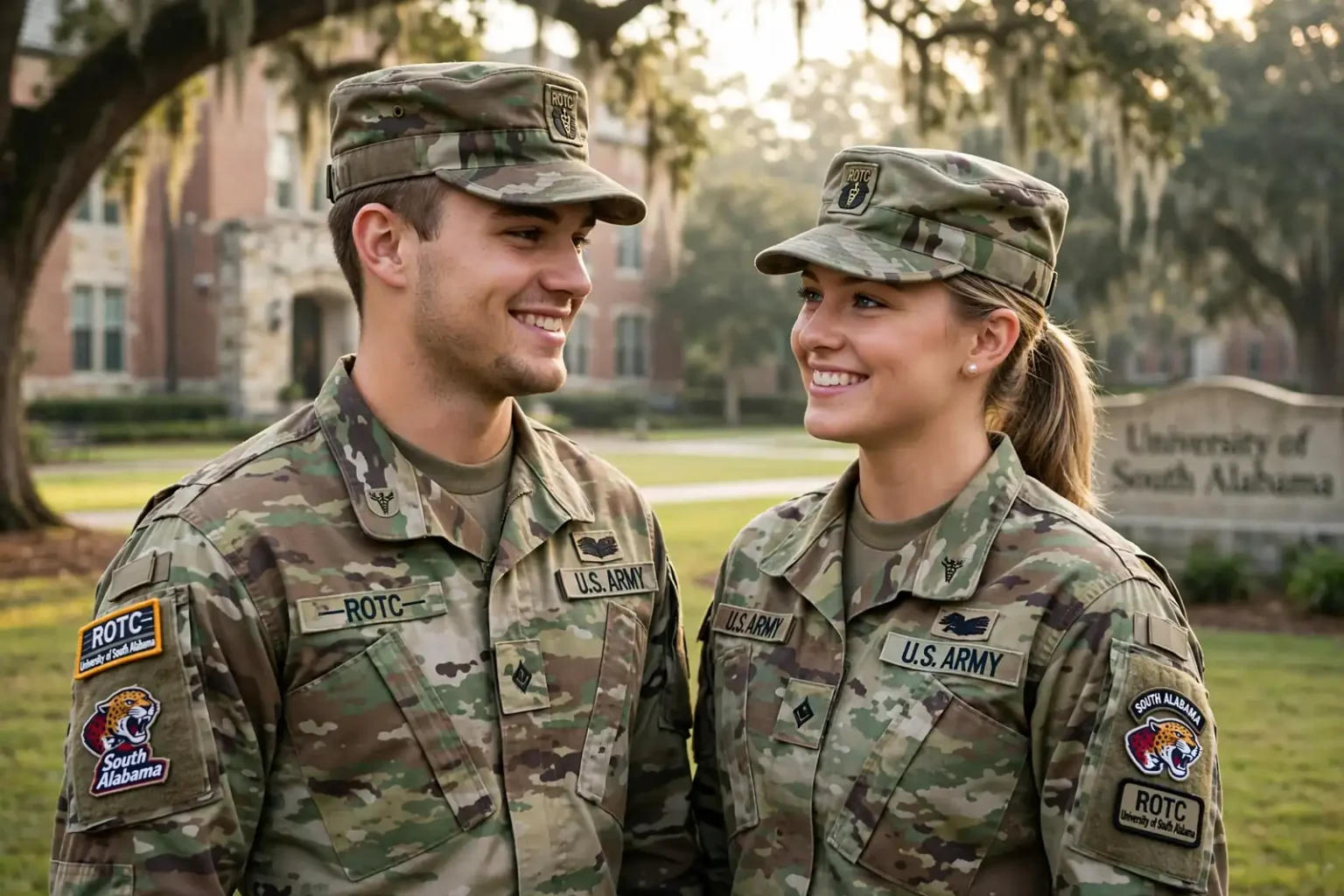
MOBILE, Ala. — Two seniors at the University of South Alabama have landed in the upper tier of Army ROTC cadets across the nation, earning designation as Distinguished Military Graduates. The honor places both students in the top fifth of a national field of more than 5,200 cadets, and both credit a combination of early morning training, demanding coursework in exercise science and lessons in leading people for helping them get there.
One of the cadets grew up in Thomasville, in Clarke County. The other is from Fairhope, on the Eastern Shore of Baldwin County. Their reasons for joining the program could hardly have been more different, yet their paths through South Alabama ended in the same place: recognition as some of the most promising future officers in the country.
Hometown Roots on Both Sides of the Region
For the Thomasville native, Army ROTC began as a test. He had heard for years that he was a natural leader, and he said he joined the program to find out whether that was really true when the demands of military leadership were placed on his shoulders.
For the Fairhope native, the Army was already part of everyday life long before she enrolled at South. Both of her parents served as Army officers. Her father is still serving, while her mother retired after a career as an Army nurse. That family example pointed her toward a similar career, though she said her time at the university allowed her to shape a leadership style that is distinctly her own.
Both students major in exercise science through South’s Department of Health, Kinesiology and Sport, housed within the university’s College of Education and Professional Studies.
What the Distinguished Military Graduate Designation Means
The Army Reserve Officers’ Training Corps is the largest source of new officers for the U.S. Army. College students in the program take military science classes alongside their regular degree coursework, participate in physical training and field exercises, and complete leadership training that prepares them to lead soldiers. Upon graduation and completion of the program, cadets are commissioned as second lieutenants, the Army’s entry-level officer rank, and go on to serve in the active-duty Army, the Army Reserve or the Army National Guard.
Every year, the Army ranks its graduating cadets nationwide using a national order of merit that weighs academic performance, physical fitness and leadership performance during training. Cadets who finish in the top 20% of that list earn the Distinguished Military Graduate title. Because the ranking is national, the two South Alabama seniors were measured against thousands of peers at colleges and universities across the country.
At a glance
- Honor: Distinguished Military Graduate, Army ROTC
- Standing: Top 20% of a national pool exceeding 5,200 cadets
- Students: Two exercise science seniors, from Thomasville and Fairhope
- Academic home: Department of Health, Kinesiology and Sport, College of Education and Professional Studies
- Next step: Commissioning as Army officers
Early Mornings and a Full Schedule
The day for an ROTC cadet often starts in the dark. At South, physical training sessions regularly began at 5:25 a.m., long before most classmates were awake. During his junior year, the Thomasville cadet juggled class assignments, military duties, his own workouts and study time.
He said he eventually concluded that trying to divide his time perfectly evenly was not the answer. Instead, he found that what mattered most was treating each obligation, whether a lab report or a training event, as something worth doing with intention and purpose.
Those early sessions are a core part of ROTC life. The Army measures fitness through a standardized test that includes events designed to gauge strength, endurance and agility, and cadets are expected to meet those standards consistently. Fitness scores also factor into the national ranking that determines Distinguished Military Graduate status, which means the work done before sunrise has a direct effect on a cadet’s standing.
The Fairhope cadet faced a similar balancing act as her responsibilities in the program increased. Taking on roles that put her in charge of fellow cadets meant learning to fit leadership duties around exams, projects and coursework.
How Exercise Science Shaped Their Leadership
Exercise science is the study of how the human body responds and adapts to physical activity. Students in the field typically take courses in anatomy, physiology, biomechanics, nutrition and the principles of strength training, and many go on to careers in fitness, rehabilitation, coaching, health promotion or graduate study in health professions. For a future Army officer, that background has obvious practical value, since physical readiness is central to military life.
For both cadets, though, the major offered more than technical knowledge.
The Thomasville cadet said the rigor of his courses sharpened his self-discipline. An internship working alongside graduate students showed him how to motivate other people and help them reach their goals, a skill that translates directly to leading a platoon. He also pointed to a strength and conditioning course where the instructor’s energy and modesty in the classroom left a lasting impression. That instructor, he said, showed him how to lead with passion and enthusiasm.
The Fairhope cadet said her coursework built leadership skills through group projects and public speaking assignments, while classes in physical training and nutrition gave her knowledge she could apply directly as a cadet. Lessons from the classroom, she said, carried over naturally into her duties in the program.
Listening as a Leadership Skill
Leading her peers taught the Fairhope cadet that authority alone does not build a strong team. She said she came to see listening, understanding the viewpoints of others and earning trust as the foundation of effective leadership. In her view, the surest way to build trust and a sense of camaraderie among peers is to hear them out and work side by side with them to accomplish the mission.
That approach reflects a common thread in military leadership training, which emphasizes that officers must understand the people they lead, communicate clearly and set an example. Cadets practice those skills in leadership labs and field training, where they rotate through positions of responsibility and receive feedback from instructors and peers.
Leadership development in ROTC is deliberately hands-on. Senior cadets usually help run the program’s day-to-day activities, planning training events, mentoring younger cadets and holding them accountable. Those responsibilities give upperclassmen a chance to practice the same planning and decision-making skills they will need as officers, with instructors on hand to coach them along the way.
Her experience growing up in a military family gave her an early window into that world, but she said her years at South helped her develop a philosophy built on her own experiences rather than simply following in her parents’ footsteps.
A Milestone, Not a Finish Line
For both students, the national recognition is the payoff for years of preparation. Yet each described the most important result of their time at South as something harder to measure: a changed way of facing challenges, relating to others and leading with purpose.
The Thomasville cadet, who is set to receive his commission as an Army second lieutenant, described the honor as one chapter in a much longer story. He compared it to the cover of a book filled with the pages of an ordinary person pursuing extraordinary opportunities. To him, the recognition captures a process of growth that is still unfolding.
What Comes Next for New Officers
After commissioning, new second lieutenants typically attend a Basic Officer Leader Course tied to their assigned branch, where they learn the specific technical and tactical skills of that field before reporting to their first unit. Many young officers are then placed in charge of a platoon, often leading a few dozen soldiers along with an experienced noncommissioned officer.
Standing high on the national order of merit list can give cadets a stronger chance of receiving one of their preferred branch and duty assignments, which is one reason the Distinguished Military Graduate designation is valued by cadets and their programs alike.
Army ROTC at South Alabama
The University of South Alabama, based in Mobile, offers Army ROTC as part of its broader commitment to students who want to combine a college degree with military service. Students in the program can pursue nearly any academic major while completing their officer training, and scholarships are available to qualifying students through the Army.
Cadets typically move through the program in stages. Early courses introduce military customs, basic leadership concepts and physical fitness, while advanced coursework in the junior and senior years focuses on planning, ethics and small-unit tactics. Between the junior and senior years, cadets generally attend a summer training course where they are evaluated on their ability to lead in demanding field conditions, an experience that weighs heavily in the national rankings.
The success of these two seniors also reflects the connection between the program and the university’s academic departments. Faculty in exercise science and other fields help shape the knowledge and habits cadets carry into their military careers, while ROTC cadre focus on tactical training and leadership development.
For students from small towns like Thomasville and coastal communities like Fairhope, the program offers a route to a degree and a commission close to home. For these two cadets, it has also offered proof that the habits built at 5:25 a.m. and in the classroom can add up to standing among the best in the nation.