

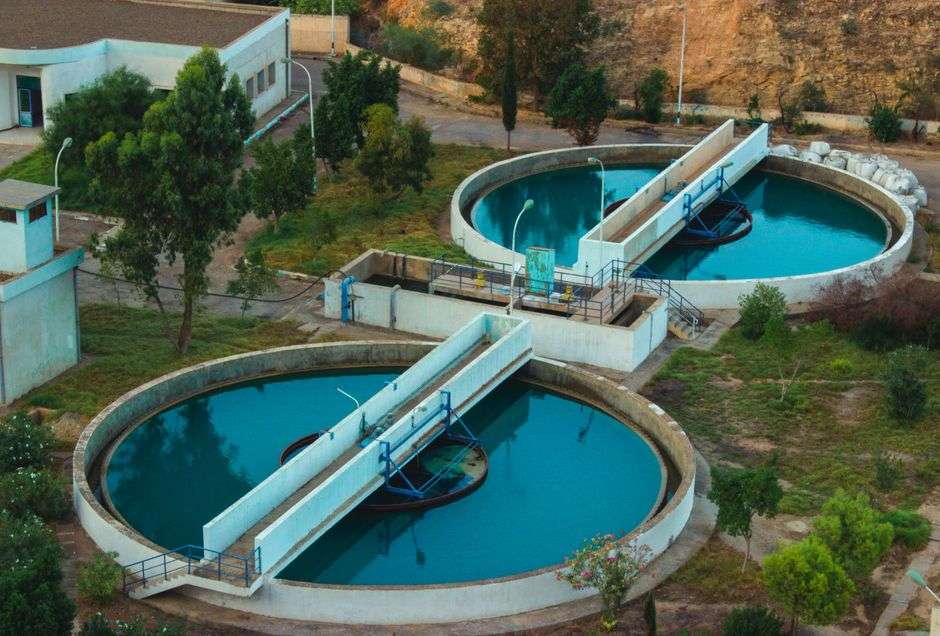
The Alabama Department of Environmental Management has proposed a consent order that would require the Prichard Water Works and Sewer Board to pay nearly a quarter of a million dollars in penalties tied to repeated wastewater violations, according to filings made public this week.
The 16-page proposed order lays out a combined penalty of $234,675 against the utility, which serves thousands of households and businesses in Prichard. The bulk of the fine, $202,350, stems from what regulators describe as severe deficiencies related to sanitary sewer overflows, incidents in which untreated or partially treated sewage escapes the collection system rather than reaching a treatment plant.
An additional $18,400 in penalties was proposed for violations of the utility’s wastewater discharge permit, and ADEM recommended a further $12,500 penalty tied to the water board’s history of past violations. The structure of the penalty tells the story of the case: the largest component addresses the ongoing failures in the collection system itself, a smaller amount covers permit compliance, and a third acknowledges that the utility’s problems are chronic rather than new.
Sanitary sewer overflows can pose public health and environmental risks, potentially contaminating waterways, yards and streets with raw sewage, particularly during heavy rain events when aging or poorly maintained systems become overwhelmed. In a city like Prichard — a compact, older municipality in Mobile County where stormwater and wastewater infrastructure was built decades ago — the pattern is familiar to regulators across the Gulf Coast: infiltration and inflow push rainwater into cracked and aging sewer lines, flows exceed the system’s capacity, and manholes overflow into neighborhoods and creeks that drain toward Mobile Bay.
The overflows are not abstractions for the neighborhoods that experience them. Residents describe standing water in streets after storms that they know to keep children away from, backups into low-lying yards, and odor that lingers along creeks after heavy rain. Public health guidance treats overflow water as a contamination hazard — bacteria, viruses and parasites travel in raw sewage — and municipalities with chronic overflow problems face the compounded cost of cleanup crews, public notices and, over time, the deterioration of the streams and ditches that thread through residential areas. Regulators document each overflow the utility reports; the deficiencies cited in the proposed order are the accumulated record of that documentation.
What the order requires
Under the terms of the proposed order, the Prichard Water Board would have an alternative to paying the fine outright. The utility could elect to fund a supplemental environmental project instead, but only at a steep ratio: any such project would need to be valued at three dollars for every one dollar of penalty relief, meaning a project worth $469,350 to reduce the fine to $78,225. If the board failed to complete the project as approved, ADEM would still require payment of the full original penalty.
Supplemental environmental projects occupy a standard place in environmental enforcement. The idea is to convert a cash penalty into work that benefits the environment directly — in sewer cases, typically rehabilitation of the same failing lines that caused the violations — while the three-to-one ratio ensures the utility pays substantially more than it would have owed in fines. For a financially strapped utility, the trade can still be attractive: money that would have left the system entirely instead repairs infrastructure that must be fixed anyway. The risk, regulators acknowledge, is that a utility unable to complete the project ends up worse off, owing the full penalty plus whatever the incomplete project cost.
Beyond the financial penalty, the proposed consent order would obligate the Prichard Water Board to take a series of corrective actions, including submitting a detailed engineering report addressing the causes of the sewer overflows, filing regular progress reports, developing and implementing a formal sanitary sewer overflow response plan, and ultimately submitting certification that the utility has come into compliance with its permit requirements.
Those requirements are the teeth that outlast the fine. Engineering reports and response plans turn an enforcement action into a management roadmap — identifying which lines are failing, in what order they will be rehabilitated, and how overflows will be detected, reported and cleaned up when they occur. Progress reporting keeps ADEM in the position of overseeing the work long after the settlement’s headlines fade, which is how consent orders are meant to prevent the next violation from becoming the next penalty.
A utility under scrutiny
The Prichard Water Board has faced prior scrutiny as well. Former water board manager Nia Bradley and her husband were arrested after reports alleged illegal spending on company credit cards. When the Mobile County Sheriff’s Office raided Bradley’s home, dozens of bags and boxes from designer stores, including Louis Vuitton and Gucci, were seized as evidence. The couple were released on bonds totaling $450,000. Bradley was also photographed wearing Gucci glasses when leaving the jail, sparking controversy on social media.
The episode landed with particular force in Prichard, a small city where household water bills are a fixed monthly burden for residents of modest means, and where the image of designer purchases allegedly financed by utility credit cards cut against every promise of stewardship a utility board makes. The arrests and the imagery that followed them — the designer evidence, the photo at the jail — circulated widely on social media and became shorthand for the governance problems residents and watchdogs had long alleged at the board.
For regulators, the financial scandal is more than background. A utility whose leadership was distracted by, or implicated in, alleged misuse of funds is a utility whose maintenance obligations went unmet, and ADEM’s citation of the board’s “history of past violations” in calculating the penalty reflects that record. Consent orders of this kind routinely weigh the violator’s compliance history; a clean record earns leniency, and a documented pattern earns the top of the penalty range.
How the process moves from here
The filing of the proposed order opens a 30-business-day public comment period, during which interested parties can submit comments to ADEM or request a public hearing before the order is finalized.
That comment window is the public’s formal opportunity to shape the outcome. Residents, ratepayers, environmental groups and elected officials can file written comments arguing for stronger corrective requirements, questioning the penalty’s size or supporting the supplemental project alternative, and a requested public hearing puts the department’s enforcement staff in a room with the community the overflows have affected. In cases that draw local attention — and this one, arriving after the arrests and the raid, has plenty — the comment period frequently becomes the venue where residents describe the overflows they have lived with and demand that corrective timelines be enforced.
Once the comment period closes, ADEM may revise the order in response to what it receives, or finalize it as proposed. A signed consent order carries the force of law: the board’s corrective deadlines, reporting obligations and penalty terms become binding commitments, and further violations can trigger renewed enforcement with the prior order cited as the baseline.
Prichard’s circumstances add weight to the enforcement action. The city of roughly 20,000 residents has weathered decades of economic difficulty, including a municipal bankruptcy, and its utility’s revenue base reflects that — a limited number of households and businesses sharing the fixed costs of maintaining an old and sprawling collection system. Utilities in this position across Alabama and the Gulf South face the same squeeze: infrastructure that needs replacement costing multiples of what annual revenues can fund, and rate increases that fall on residents least able to absorb them. ADEM’s consent order, whatever its merits as enforcement, lands on a utility whose fundamental problem — paying for the system its city built long ago — no penalty can solve on its own.
What it means for ratepayers
For the thousands of households and businesses the utility serves, the practical questions are cost and reliability. A penalty of nearly $235,000 — or the $469,350 project alternative — is real money for a mid-sized municipal utility, and the repair work the order mandates will require capital spending whether it is financed through the penalty offset, borrowing or future rates. Ratepayers in Prichard, who have watched governance scandals and enforcement actions unfold at the same agency that bills them monthly, can be forgiven for asking who ultimately pays.
The counterweight is the condition of the system itself. Every dollar directed at the overflowing lines is a dollar that reduces the raw sewage reaching yards, streets and streams in the city’s neighborhoods. The engineering report the order requires is, in effect, the first public accounting of how extensive the failures are, and the progress reports that follow will show whether the utility’s new management can convert an enforcement action into a functioning rehabilitation program.
What is decided in the next several weeks — the project election, the final terms, the hearing schedule — will determine whether the Prichard Water Works and Sewer Board’s consent order becomes the turning point its residents have been promised before, or another chapter in a long-running record of violations.