

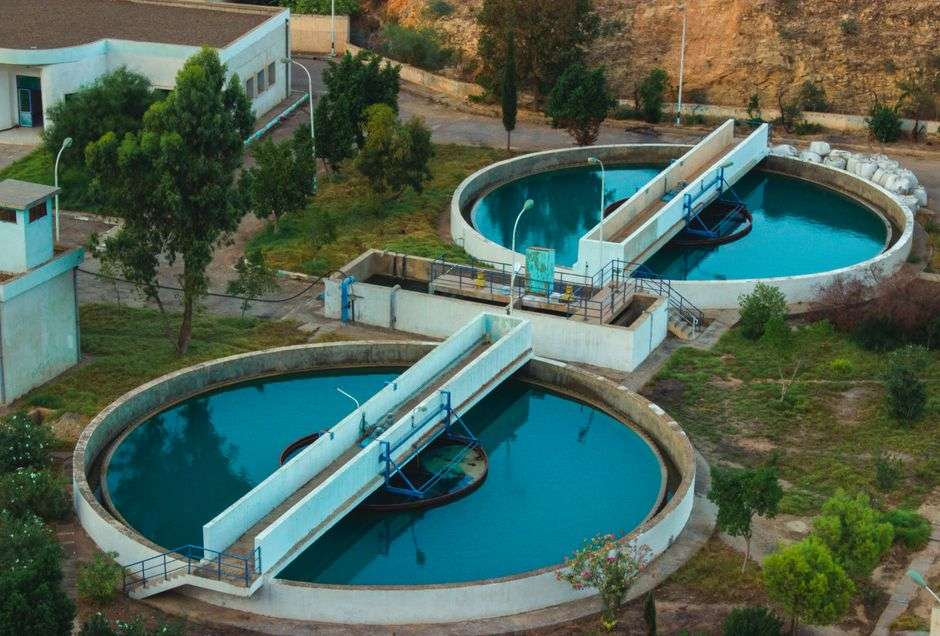
The Mobile Area Water and Sewer System is facing a lawsuit from the Alabama Attorney General’s Office over years of sewage spills that state regulators say went unreported or under-reported, adding the utility to a growing list of South Alabama sewer systems facing legal action over aging infrastructure and stormwater problems.
The complaint, filed in Mobile County Circuit Court, stems from findings by the Alabama Department of Environmental Management that MAWSS repeatedly violated the terms of its discharge permits at two of its largest wastewater treatment plants, the Clifton C. Williams facility and the Wright Smith Jr. plant, between 2015 and 2019. State regulators documented dozens of unpermitted spills at each site during that span, together totaling millions of gallons of untreated or partially treated wastewater released into the environment.
Beyond the volume of the spills themselves, the lawsuit centers heavily on reporting failures. State investigators found that in many instances, ADEM, the public and county health officials were never notified of the sanitary sewer overflows as required under the utility’s permits. In other cases, MAWSS is accused of submitting the mandatory overflow reports well after regulatory deadlines had passed, delays that can leave residents and downstream water users unaware of contamination risks in creeks and waterways near the spill sites.
The reporting requirement is the legal backbone of every sewer permit in Alabama. Utilities are obligated to notify the state environmental agency and local health officials within hours of a significant overflow, precisely so that residents can be warned away from contaminated streams and so that the scale of a spill can be documented while it is still measurable. A spill that is never reported is, in regulatory terms, a spill that never happened — which is why the state treats missed notifications as violations in their own right, separate from the discharge itself.
A familiar pattern on the coast
MAWSS is not the first South Alabama utility to face this kind of action. The Attorney General’s Office previously sued Daphne Utilities in 2017 over similar sewer spill reporting violations; that case has since been resolved, with Daphne Utilities agreeing to pay more than $100,000 in fines and commit to remedial infrastructure work. A separate suit against the city of Fairhope, filed in 2020, remains open.
The three cases trace the same arc along Mobile Bay. Daphne, Fairhope and Mobile all operate collection systems built decades ago for far smaller populations, all sit in a region where summer thunderstorms can drop several inches of rain in an hour, and all have watched stormwater pour into aging sewer lines until the system overflows. Eastern Shore utilities have drawn particular scrutiny because their overflows drain toward Mobile Bay, where the same waters support seafood harvesting, swimming beaches and the bay’s overall ecological health.
MAWSS officials have acknowledged the lawsuit but have largely declined to address the specific allegations while litigation is pending. Assistant Director Bud McCrory, who is set to take over as the utility’s director at the end of the month, said MAWSS works hard to operate within its permit limits, even though many overflow incidents stem from factors outside the utility’s direct control, including grease blockages in aging pipes, heavy stormwater infiltration during rain events, and physical breaks in decades-old sewer lines.
“Not one SSO is acceptable,” McCrory said, using the industry shorthand for sanitary sewer overflows. “We’re working through that litigation with the state to come up with a settlement.”
A new director, an old system
McCrory steps into the director’s role following the retirement of longtime MAWSS Director Charles Hyland, who has led the utility since 2013. McCrory said the utility has already begun addressing the underlying stormwater issues blamed for many of the overflows, pointing to roughly $17 million invested in two new stormwater attenuation tanks along Three Mile Creek and another $18 million spent replacing aging sewer trunk lines in the same watershed, both intended to reduce the kind of infiltration that overwhelms treatment capacity during heavy rain.
Attenuation tanks work like shock absorbers for a sewer system. When a rainstorm floods the network with infiltration, the tanks hold the surge back until the treatment plants can catch up, preventing the overflow that would otherwise discharge into the creek. Three Mile Creek, which drains a broad swath of central Mobile, has been the focus of that work because its watershed collects runoff from some of the city’s oldest and most densely piped neighborhoods.
Those upgrades represent the first phase of a 20-year infrastructure master plan the MAWSS board approved in 2019 following an independent cost-of-service study. The plan is meant to guide future capital spending across the utility’s aging network of pipes and treatment facilities, which together serve roughly 100,000 customers across the Mobile area.
Twenty-year capital plans are the standard response for utilities confronting deferred maintenance. MAWSS’ system includes pipe laid in the early 20th century, treatment plants that have been expanded repeatedly rather than rebuilt, and a service area that stretches from the city’s downtown core to outlying neighborhoods. The master plan’s premise — confirmed by the independent cost study — was that ratepayers would have to fund the repair cycle steadily rather than in emergency bursts.
Who pays for the pipes
Funding that work has meant steadily rising bills for MAWSS ratepayers. The utility’s board approved a four-year rate increase in 2019, and customers have already seen a 6.5 percent increase this year, with additional 4 percent increases scheduled for both 2022 and 2023.
McCrory said any future increases beyond what has already been approved would require separate action by the MAWSS board, whose members are appointed by the Mobile City Council.
That governance detail carries weight in a lawsuit over spills. MAWSS is not a private company but a city-created board, so the ultimate accountability for both the spills and the rates runs back to the City Council that appoints the board — and through it to Mobile voters. When the state’s case is resolved, whatever penalties or consent decree requirements it imposes will land on the same budget that the rate increases are already straining to fill.
“There’s a lot of reasoning that goes into the rates we charge,” McCrory said, adding that the utility is continually evaluating its financial needs against the cost of maintaining and upgrading its system. “We have a plan for rehabilitation, and we’re going to continue to provide a quality service while meeting all of our regulatory requirements. My goal is to try to make us as efficient as we can be in all we do, and by doing that, it can help us control rates.”
How the case is likely to end
No trial date has yet been set in the state’s case against MAWSS. As with the Daphne Utilities and Fairhope cases, the lawsuit is expected to be resolved either through a negotiated consent decree, which typically includes financial penalties and a binding timeline for infrastructure repairs, or through further court proceedings.
Consent decrees have become the standard instrument for fixing municipal sewer systems across the country. Under one, a utility admits the violations, pays a penalty, and commits to a court-enforced schedule of rehabilitation projects — with deadlines and reporting requirements that survive changes in management. The Daphne agreement followed that shape, pairing fines with infrastructure commitments, and Mobile’s case, given the size of its system, would likely produce the largest such commitment of the three.
What is different in Mobile is scale. Daphne and Fairhope operate small systems serving their own populations; MAWSS serves roughly 100,000 customers, runs two major treatment plants on the Mobile River system, and manages collection lines beneath most of the city. A consent decree there would govern hundreds of millions of dollars in spending decisions over decades — decisions that intersect with the master plan the board adopted in 2019 and with the rate path already approved through 2023.
The lawsuit also lands at a moment of leadership transition. McCrory takes the director’s job as the case opens, meaning the utility’s response — the negotiation posture, the reporting fixes, the capital sequencing — will be built by the person now describing a settlement as the goal. His position has been consistent: every overflow is unacceptable, the utility is investing to reduce them, and the state’s case should end in an agreement that funds repair rather than a judgment that merely punishes.
For residents, the practical stakes are straightforward. Cleaner creeks and a system that holds during heavy rain are the promised end of the litigation; higher water bills are the certain cost of getting there. The open question, likely to be answered over the next several years of negotiations, is how the two are balanced — and how fast the oldest pipes beneath Mobile are replaced.
There is also a public-health dimension that the reporting failures put in sharper relief. Overflows discharge bacteria and nutrients into streams that flow through city neighborhoods and toward the bay, and health advisories for contaminated water work only if officials learn of a spill in time to post them. The state’s complaint about missed notifications is, at bottom, a complaint about missing warnings — and any settlement is expected to include not just pipe repairs but the real-time reporting systems that let residents know when the water in their own drainage ditch is not safe.