

MOBILE — Mobile Area Water and Sewer System crews are pulling a steady stream of grease, wipes and other debris out of the pipes and lift stations that keep the region’s sewage moving, and the utility says the cleanup is starting to carry a hefty price tag that ultimately lands on customers’ bills.
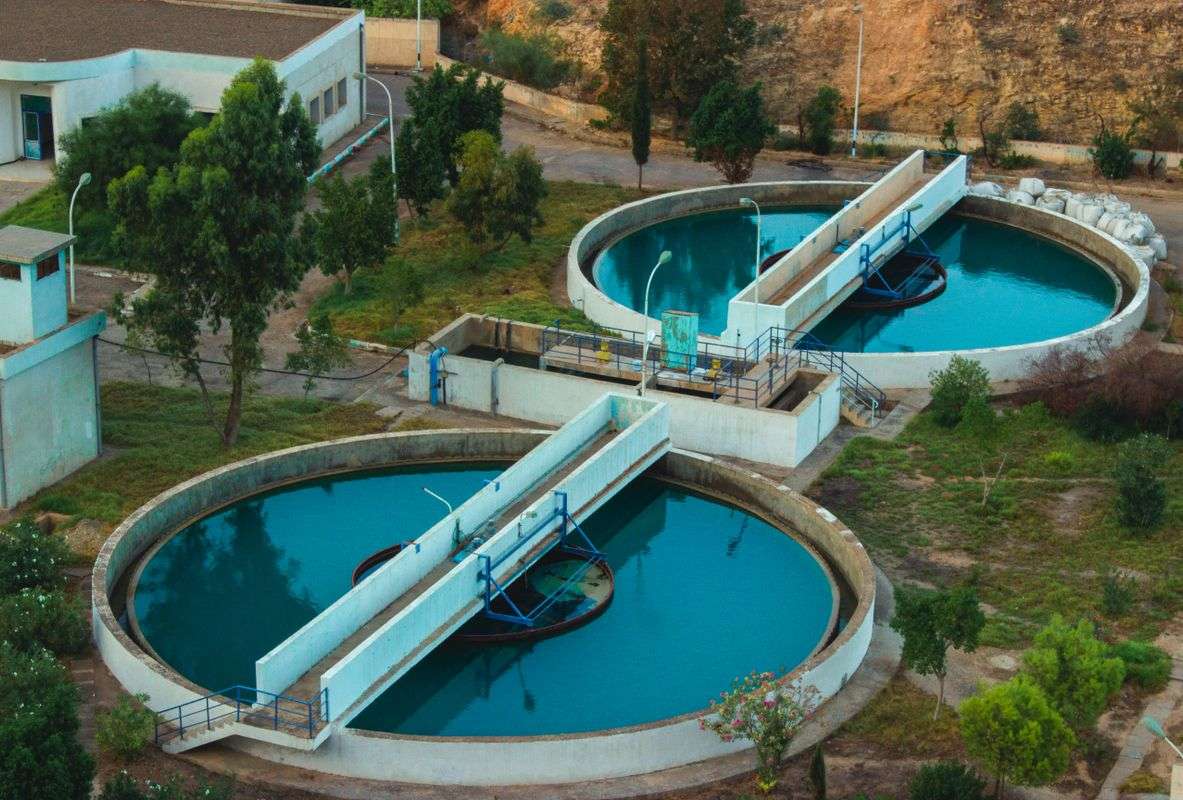
At the Eslava Creek lift station, one of dozens of pumping facilities that push wastewater through MAWSS’s network before it reaches treatment, workers recently pulled a sample from below the surface to show what has been building up inside the system. What looks from above like a routine holding pool for roughly 6 million gallons of sanitary sewer water is, just beneath the surface, choked with a thick mat of grease and debris.
“It looks like dirt, but it’s grease and debris,” said Terry Herman, a MAWSS lift station supervisor who oversees the Eslava Creek facility. Herman said the material has hardened into a mat six to eight inches thick sitting atop roughly 12 feet of wastewater, an accumulation that should not be there at all.
Pulled apart, the mat reveals a wide mix of items that never should have gone down a toilet or drain in the first place: grease, cotton balls, cotton swabs, condoms, toothbrushes, towels and a wide range of so-called flushable wipes. Herman said crews regularly find syringes, feminine hygiene products, hair, fishing line, plastic bottles, wash rags and shop towels tangled into the mass as well.
Two culprits that make each other worse
According to Herman, two culprits are doing most of the damage, and they make each other worse. Disposable wipes, even those marketed as flushable, do not break down the way toilet paper does. Once a wipe catches or snags on a seam or joint inside a pipe, grease poured down kitchen drains begins to cling to it, and the clump grows.
“When a disposable wipe is flushed and it catches or snags on the inside of a pipe, then fats and grease leach onto it, and then you have a perpetuating snowball effect,” Herman said.
Toilet paper is engineered to fall apart in water within seconds; a wipe is engineered to hold together while it is wet. That difference is the whole problem. A single wipe riding through a sewer line will usually pass harmlessly out of the system, but a wipe that snags on a pipe joint, a root intrusion or a pump impeller becomes an anchor point. Grease congeals on it in layers, the mass catches the next wipe, and the snowball grows until it blocks the pipe or fouls a pump. Utilities across the country have pulled fatbergs the size of buses out of their mains, and while Mobile’s collections are more modest, the physics are identical.
That snowball effect is not just a maintenance headache, it is an expensive one. Crews already have to manually vacuum accumulated grease and debris out of lift stations like Eslava Creek twice a year, a labor-intensive process that pulls staff and equipment away from other system upkeep.
MAWSS is now in the design phase of a larger fix: installing screening equipment at lift stations to catch rags and debris before they can build into the kind of mat crews found at Eslava Creek. Officials say that project, for just one station, is expected to cost about $1.5 million.
Herman said the bottom line is straightforward, and it is not good news for ratepayers. “The end result is it’s the customer that has to pay for maintenance of what we do,” he said. Every dollar spent vacuuming lift stations or engineering new filtration systems is a dollar that ultimately shows up in the rates MAWSS customers pay for sewer service.
Lift stations like Eslava Creek are the unglamorous backbone of the region’s sewer system. Because Mobile’s terrain slopes gently toward the bay and much of the city sits barely above sea level, gravity alone cannot always move wastewater the miles it needs to travel, so the utility’s pumps do the lifting — pushing sewage through force mains toward treatment facilities before discharge. When a pump clogs or a wet well fills with debris, backups threaten homes and businesses in the surrounding neighborhoods, which is why MAWSS treats the buildup as more than a housekeeping problem.
MAWSS, which serves most of the city of Mobile and surrounding areas of Mobile County, is funded almost entirely by the rates its customers pay rather than by tax dollars, so there is no outside budget to absorb the added cost. Rate regulators and utility boards have long noted that sewer systems are among the most expensive public assets a city maintains — buried, invisible and largely ignored until they fail — and every avoidable expense, from vacuum truck time to pump repairs to screening equipment, competes with the pipe replacements and treatment upgrades the system genuinely needs as it ages.
A campaign to change habits at the kitchen sink
To try to get ahead of the problem, MAWSS has launched a public education campaign called “It’s Easy to be Ungreasy,” encouraging households to stop pouring cooking grease and fats down sink drains. Customers can pick up a free grease collection container at participating distribution locations, fill it with used cooking oil and grease, and return it rather than sending the fats into the sewer system, where they combine with wipes and other debris to clog pipes and equipment.
The campaign targets one of the most persistent habits in home cooking. Bacon fat, frying oil, gravy drippings and pan grease go down the drain as liquids, especially when flushed with hot water and dish soap, but they re-solidify as they cool inside the sewer line, coating the pipe walls the way cholesterol coats an artery. Commercial kitchens are required to install grease traps that intercept the fats before they reach the sewer, but no such requirement exists for household drains, which is why utilities increasingly appeal directly to home cooks: pour grease into an empty can, let it harden, and put it in the trash.
Free collection containers have become a standard tool for utilities fighting grease blockages, and MAWSS’s distribution points make the habit practical — a resident collecting frying oil in a lidded container has an easy, mess-free alternative to the drain. The utility’s message pairs the grease campaign with a parallel warning about wipes: even products stamped “flushable” on the packaging do not dissolve the way toilet paper does, and no wipe belongs in a toilet regardless of what the label says.
A nationwide plumbing pandemic
Utility officials across the country have increasingly flagged wipes, even ones labeled “flushable,” as a leading cause of sewer blockages and costly equipment damage, a problem the wastewater industry has taken to calling a plumbing pandemic.
The wipes problem has grown alongside the products themselves. Disposable disinfecting wipes, baby wipes, makeup remover cloths and flushable moist towelettes have proliferated on store shelves over the past two decades, and sales surged further as households leaned on cleaning products during health scares. Wastewater associations, plumbing standards groups and independent testing labs have repeatedly found that wipes marketed as flushable fail to meet the dispersibility standard that toilet paper meets, and several utilities have posted video of shredded wipes pulled straight from their pump stations to make the point in the most visceral way possible.
The financial toll is not trivial anywhere. Utilities in major American cities report millions of dollars a year spent on pump repairs, screening equipment and extra crew time attributable to wipes, and several have pushed legislation requiring clearer “do not flush” labeling. For a mid-sized system like MAWSS, the arithmetic is simpler and starker: a single $1.5 million screening installation at one station is real money, and it is multiplied across the dozens of lift stations that keep the network moving.
MAWSS’s experience at Eslava Creek mirrors what other utilities have reported: wipes do not disintegrate in water the way toilet paper is designed to, and once snagged inside a pipe or pump, they become a magnet for grease and other debris moving through the system.
MAWSS officials say the message to customers is simple. Only human waste and toilet paper should go down a toilet, and cooking grease, fats and oils should be collected and disposed of separately rather than poured down a sink. Following those two rules, the utility says, would go a long way toward keeping pipes clear and holding down the maintenance costs that otherwise get passed along to customers across the Mobile area.
The utility’s crews, meanwhile, will keep doing the unglamorous work — vacuuming out wet wells, hauling away mats of grease and rags, and pulling whatever the pipes send down — because the system cannot stop moving while anyone’s habits change. Every container of grease that goes in the trash instead of the drain, and every wipe that lands in a garbage can rather than a toilet, is one less snowball for the next crew to dig out of an Eslava Creek pump station six months from now.