University of South Alabama Mobile
Mobile’s Fairgrounds Steps Up Giving to Local Nonprofits
The Grounds, Mobile's fairgrounds complex, gave $3,000 to the Crescent Theater and $300,000 total to area nonprofits over the past year.
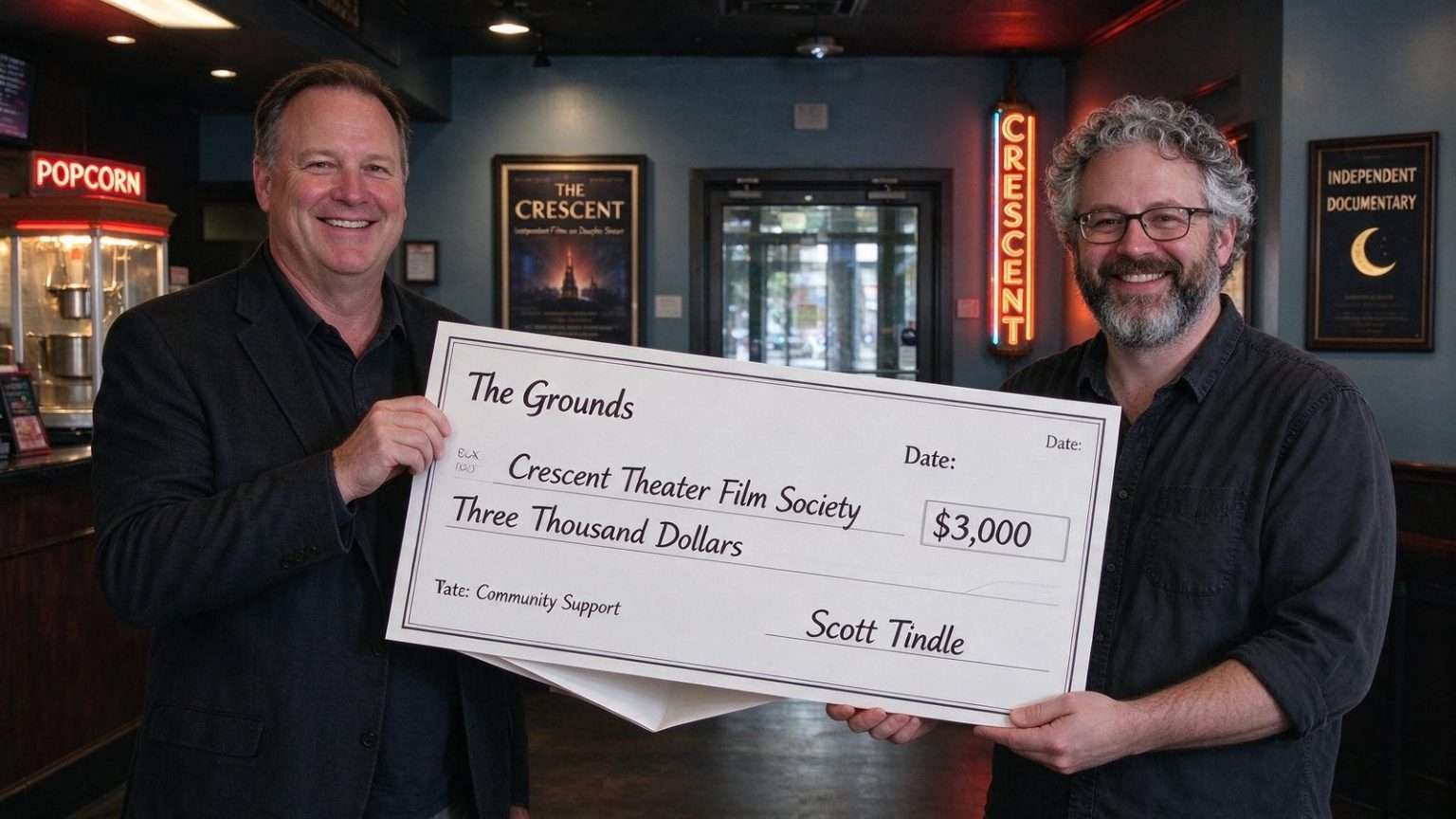
Mobile’s fairgrounds complex, known these days simply as The Grounds, is putting real money behind a pledge to become more than a once-a-year attraction. Last week, the venue handed a $3,000 check to the nonprofit that keeps the Crescent Theater running in downtown Mobile – the largest single donation of its kind the facility has made to date. The gift pairs the city’s biggest annual-events campus with one of its smallest and most beloved cultural venues, and it signals how the fairgrounds’ leadership has redefined the property’s mission in the years since it stopped being merely a fairground.
Max Morey, who operates the Crescent – the small single-screen cinema known for its buttery popcorn and personal introductions before every showing – said the gift will help offset a recent spike in the theater’s rent. The nonprofit Crescent Theater Film Society plans to use the funds to keep ticket prices affordable and the marquee lit. For a theater that operates on margins measured in single tickets, a $3,000 infusion arrives as genuine survival money rather than a symbolic gesture.
The Crescent has weathered tight finances since it opened in 2008, including a 2012 campaign that asked loyal moviegoers to help fund a new digital projector. That campaign became a local cause when the industry’s shift to digital projection threatened small theaters nationwide with equipment costs no single-screen operator could absorb, and Mobile’s film community responded. Morey said the theater’s fortunes have improved since, but support from community partners still matters — the theater remains dependent on the loyalty of the audiences who fill its handful of seats for independent films, documentaries and the occasional first-run title the multiplexes overlook.
In exchange, The Grounds – situated at Zeigler Boulevard and Cody Road, and still recognized by many under its former name, the Greater Gulf State Fairgrounds – will begin running short advertisements before movies at the Crescent, testing whether the partnership can become a model for other local sponsors. The exchange gives the fairgrounds a screen in the heart of downtown to promote its concerts, expos and fair-season events, and it hands the theater a recurring revenue stream that does not raise ticket prices. If the arrangement performs for both sides, The Grounds’ leaders expect similar sponsorships to follow with other organizations.
The donation is one piece of a broader shift under executive director Scott Tindle, who took over the venue in 2012 and has pushed it to build year-round relationships with community groups rather than operating solely around the annual fair each fall. Tindle, who gained some national attention pitching a necktie-swap idea on a reality investing show before taking the job, said the venue has funneled roughly $300,000 back into the community over the past year.
A Venue Rethinking Its Role
The math behind that $300,000 covers a wide range of programs, and each piece serves the same strategic purpose: giving Mobile County residents a reason to think of the Zeigler Boulevard campus twelve months a year rather than one week in the fall. Recent examples include a fundraiser that let Mobile County students sell fair tickets and keep a cut of the proceeds for their school libraries, raising $30,000; a repeat of that program is planned for September with a goal of $100,000.
The ticket-selling model works on the same logic as the school fundraisers generations of students have run with candy bars or wrapping paper, except the product is the fair itself. Students earn money for their libraries with every booklet sold, the schools build enthusiasm that fills the gates in October, and The Grounds converts community goodwill into attendance — the currency a fairgrounds ultimately runs on.
The Grounds has also let the Mobile County school system park roughly 380 buses on its lots at no charge while pavement work was underway elsewhere, and hosted a February fundraiser for McKemie Place, a shelter for homeless women, that brought in $20,000. The bus parking episode is small in dollar terms — it produced no revenue at all — but it illustrates the operating philosophy: a fairgrounds has hundreds of paved acres that sit empty most of the year, and lending them costs the venue little while solving a real problem for a partner institution.
Other groups that have received support or discounted use of the facility include Victory Health Partners, the American Cancer Society, Light of the Village, the Alabama Coastal Foundation and the University of South Alabama, among others. The list spans health care, cancer research, west Mobile community outreach, coastal conservation and higher education — a deliberately broad cross-section of the institutions a major venue encounters when it starts saying yes to community requests. ROTC units from area high schools can also use the grounds for free in return for helping staff turnstiles during the fair, an arrangement that gives cadets volunteer hours and event experience while the venue gains reliable gate staffing from groups it has already invested in.
The Economics of a Modern Fairground
The shift under Tindle reflects the economics of American fairgrounds generally. The grandstand-and-midway model that sustained venues like the Greater Gulf State Fairgrounds for decades has faced pressure from theme parks, streaming entertainment and the rising cost of carnival contracts, and venues that depend on a single October week have struggled to carry their facilities the other eleven months. The answers have come from diversification: concert series, trade shows and expos, festival bookings, market events and community partnerships that keep the halls and grounds in use — and in the public eye — year-round.
The rebrand to The Grounds was part of that repositioning, replacing a name that tied the property to two weeks of October with one that could hold the whole calendar. Under the new identity the venue has chased a schedule of events that gives it revenue through every season, and the community giving program Tindle has built doubles as marketing: every donated check, free bus lot and discounted hall rental plants the venue’s name with an organization whose members then buy fair tickets, attend concerts and book the space for their own events.
The Crescent’s Place in Downtown Mobile
The recipient side of the partnership is its own story in Mobile’s cultural landscape. The Crescent Theater opened in 2008 on Dauphin Street’s block of shops and restaurants, and it quickly became the kind of venue a city cannot manufacture: a single screen programmed by operators who knew their audiences, introduced every film personally and popped what regulars insisted was the best popcorn on the Gulf Coast. In a market dominated by multiplexes, the Crescent specialized in the films the big theaters skipped — independent features, documentaries, Southern premieres and festival titles — and built a devoted following one membership and one concession sale at a time.
Operating a one-screen house in the streaming era is a tightrope under the best circumstances, and the rent spike that prompted The Grounds’ gift illustrates the particular squeeze downtown theaters face: as a district revitalizes, the commercial rents rise, which can push out the very businesses that made the district worth visiting. The Film Society’s nonprofit structure exists precisely to manage that tension — accepting donations, running membership drives and folding community support into a budget that commercial rents and modest ticket sales cannot balance alone.
The advertising exchange formalizes what had been an informal affinity between two Mobile institutions. The Grounds’ pre-movie spots put the fair, the concerts and the expo calendar in front of a downtown audience of filmgoers — a different demographic than the fair’s marketing usually reaches — while the theater banks a sponsor relationship with one of the city’s largest venues. Both sides have framed the arrangement as a test: if the ads produce measurable response and the sponsorship stabilizes the theater’s budget, the model becomes a template The Grounds can replicate with other nonprofits and attractions across the city.
Looking to the Fall
This year’s Greater Gulf State Fair is scheduled to run Oct. 24 through Nov. 2, and Tindle said boosting community goodwill is now as much a priority as boosting attendance. The two goals, in the venue’s current strategy, are the same goal: the fair remains the anchor event that pays the property’s bills, and every library fundraiser, bus lot, shelter benefit and ROTC partnership between now and then builds the audience that walks through the gates in late October.
The September student ticket drive with its $100,000 goal will be the biggest test of that equation this year — tripling the previous effort’s $30,000 for school libraries would put the community-giving program on a new scale and validate the year-round approach in a single number. Between now and the fair, the ads at the Crescent will have run for months, the McKemie Place fundraiser’s $20,000 will have been spent, and the $3,000 that keeps the marquee lit on Dauphin Street will have done its quiet work. Together they sketch what The Grounds intends to be: not a fairground that hosts other things, but a community institution whose fair is the capstone of a year of giving back.