

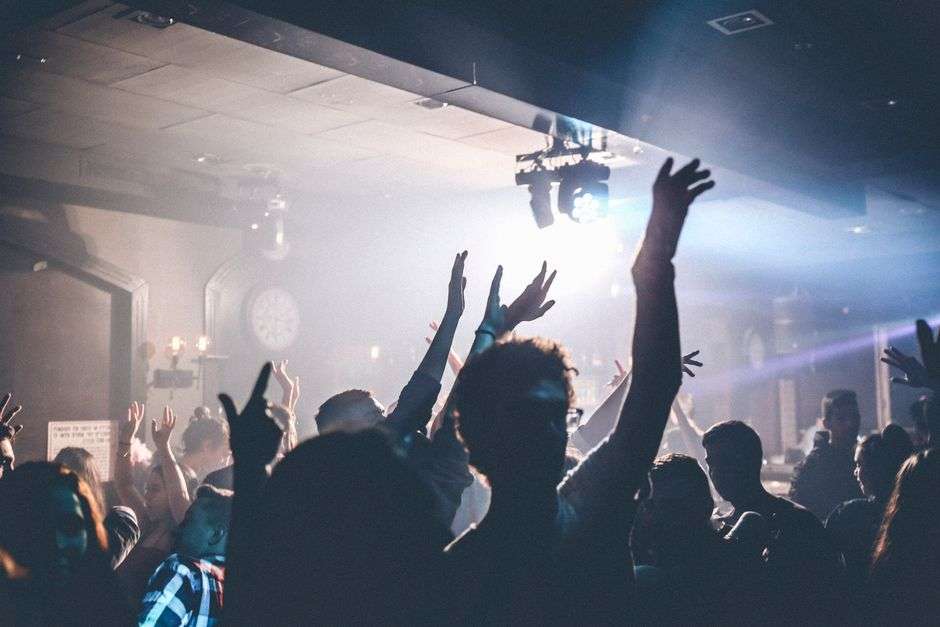
The biggest smile Jeff DuBois is likely to crack comes when the dance floor at his Lucky Horseshoe Saloon is full — and on weekends lately, it usually is. The one-of-a-kind nightclub on U.S. 98 in Barnwell, just south of Fairhope, has been packing people in for thirty-five years, and its current owners are the reason the big barn on the highway still hums well past midnight.
Step inside and the focal point is immediate: a wide hardwood dance floor, certainly one of the largest in the region, polished by decades of boots and sneakers. Across it sits a broad, elevated stage that has hosted countless bands over the club’s 35-year history. These days, though, the biggest draw is not the bands. It is line dancing, taught and danced on Friday and Saturday nights while a DJ spins nonstop dance grooves — not the country music you might expect from a building that looks exactly like what it once was: a barn, painted white and trimmed in red.
“Seeing people enjoying themselves is what makes me happy,” DuBois says of a typical Saturday-night scene. “If they’re not enjoying themselves, I don’t enjoy my work.” He rarely smiles even when he’s having a good time — that’s just how he is — but a packed floor comes close.
From Paw’s Barn to the Lucky Horseshoe
The building has lived several lives under several neon names. Fred Nolte built it and ran it as Paw’s Barn, the name scripted in neon atop the roof. DuBois, an Illinois native, started there as a bouncer in 1990, and when he bought the place in 2000 he could not afford a new sign — so he climbed up and knocked the “Paw’s” off with a hammer, painting “The” in its place. The sign read “The Barn” for a long stretch after that.
Then came a Patrick Swayze moment. Watching the 1989 bar-room film “Roadhouse,” DuBois decided the club should carry the movie’s fictional bar’s name, and it became the Double Deuce. He leased it out briefly — during that spell it was Club 98 — then took the reins back as Double Deuce II before finally rebranding as the Lucky Horseshoe. Nolte, who still lives next door, went on to open the popular Mr. Spud’s restaurant in Fairhope.
The rebrand came with the landmark that now makes the place unmistakable from the road: a giant horseshoe standing on the north side of the highway, a little west of Fish River and Weeks Bay, arched over the entrance like a rustic Gateway Arch to the barn. DuBois, Nolte, and Nolte’s son built it themselves in the yard next door — thirty-five feet tall and nearly as wide, framed in square tubing and angle iron and skinned with plywood. Curving the wood was its own trick: spray it with water, put tension on it, spray it again until it bends. They assembled the horseshoe as a complete circle before cutting away the lower portion. Red neon accented it for years, right up until Hurricane Sally slammed it to the ground in 2020.
Sally’s swipe at the sign was a small piece of a much larger blow. The hurricane, a Category 2 storm that came ashore near Gulf Shores on September 16, 2020, with winds around 105 mph, moved slowly enough to drop torrential rain across Baldwin and Mobile counties, flooding homes, snapping hardwoods, and knocking out power for days. Barnwell sits squarely in that path, between the Fish River bottomlands and Weeks Bay, where storm surge pushed far up the rivers and creeks. The horseshoe — a steel-and-plywood sculpture facing decades of weather — took the direct hit, and the neon that had outlined it since the rebranding went with it.
The landmark has outlasted worse than weather, too. Route 98 south of Fairhope has changed around the barn over three decades — new subdivisions, new traffic, new generations of weekend crowds — but the white building with the horseshoe remains fixed, the way old honky-tonks tend to be in growing places: a constant that everybody in the area has seen, whether or not they have ever walked through the door. Even the smaller landmarks carry stories — the pond next door where the horseshoe was built, the restaurant in Fairhope that the original owner went on to run after handing the barn over.
Line dancing lessons and late nights
The schedule has evolved with the clientele. Under Nolte, the club ran country line dancing on Thursday nights with live bands on Fridays and Saturdays. Today the line dancing has moved to the weekend: lessons run from 6:30 to 8:30 p.m., and from 8:30 until 2 a.m. the DJ keeps the floor moving. The nights stay packed, and the dance floor is the reason people come back.
Live music remains part of the club’s identity. Local acts such as Gretsch and the Modern Eldorados, Journey 2 Mars, and the Groovinators have been mainstays in recent years. And the stage has carried bigger names than most bars five times its size can claim: Confederate Railroad, the Little River Band, the Marshall Tucker Band, and, as DuBois puts it, “the ‘Ice, Ice Baby’ guy” — Vanilla Ice. He pauses, then adds one more with obvious satisfaction: the Red Clay Strays played here back when they were affordable.
That last booking says more about the venue than it first appears. The Red Clay Strays, formed in Mobile in 2016, cut their teeth on exactly the kind of sticky barroom floors the Horseshoe offers before “Wondering Why” went viral and carried them to a major label deal, the Ryman Auditorium, and national television. Every honky-tonk in the Gulf South has its story about the night a future star played for pocket money; at the Lucky Horseshoe, that story is recent enough to remember.
A quarter-century behind the bar
DuBois has owned the club for more than two decades now, long enough to have professional observations about how nightlife has changed. “People don’t stay out as late as they used to,” he says. Part of it is simple demographics — his clientele has aged with him. Part of it, he believes, is the stricter enforcement of drunken-driving laws, which he understands from a professional angle few bar owners share: his day job is the bail bonding business, which means he spends his weeks getting people out of jail and making sure they show up in court. He sees both sides of a night out better than most.
His wife, Fancy, works beside him every weekend, steadily pouring drinks behind a bar that runs almost the entire length of the building while Jeff checks IDs and takes money at the door. The division of labor is well worn after all these years, and so are the ground rules. The club sits in an unincorporated pocket of the county, so there are no legal restrictions on how late it can stay open and serve alcohol — but the DuBoises have deliberately steered it away from the rowdy reputation it once carried. Smoking inside ended years ago, a change Jeff made after cardiac problems and a doctor’s blunt warning that secondhand smoke could kill him.
“People say it’s a rough place, but it’s not,” DuBois insists. “My wife and I work hard to keep this place clean and nice for people. It’s a very calm bar. We don’t have riff-raff and trouble.” Online reviews from visitors, he notes, back that up.
The barn at the edge of the river
Part of the Horseshoe’s staying power is geography. The stretch of U.S. 98 between Fish River and Weeks Bay is Old South Baldwin — canopy roads, farm stands, freshwater bayous — and the white barn with the giant horseshoe out front has been a landmark there long enough that most locals have seen it even if they have never been inside. In a county growing as fast as Baldwin, a thirty-five-year-old music venue with its original dance floor is genuinely rare.
The bigger names give the venue its folklore, but the week-to-week rhythm is what pays the bills. Weekend line dancing nights have proven durable in a way that one-off concerts have not: lessons lower the barrier for newcomers who have never two-stepped, regulars anchor the floor by 9 p.m., and the DJ format keeps overhead low between live bookings. The stage still gets used when the right act comes through, but the floor does the heavy lifting — and on a Saturday night in Baldwin County, there are few places left where that floor fills this completely, this consistently, this far past midnight.
The formula that keeps it going is unglamorous: work the door, pour the drinks, keep the floor clean and safe, and give people a reason to come back next weekend. Right now, that reason is line dancing — two nights a week of lessons, then hours of grooves under the lights. If the people are having fun, the man at the door almost smiles. At the Lucky Horseshoe Saloon, that has always been the whole business plan.