Former Mobile County Corrections Officer Timothy Scarbrough Indicted on Federal Civil Rights Charge
A federal grand jury has indicted former Mobile County Sheriff's Office corrections officer Timothy Lee Scarbrough on a civil rights charge alleging he sexually abused a person in his custody in 2024.
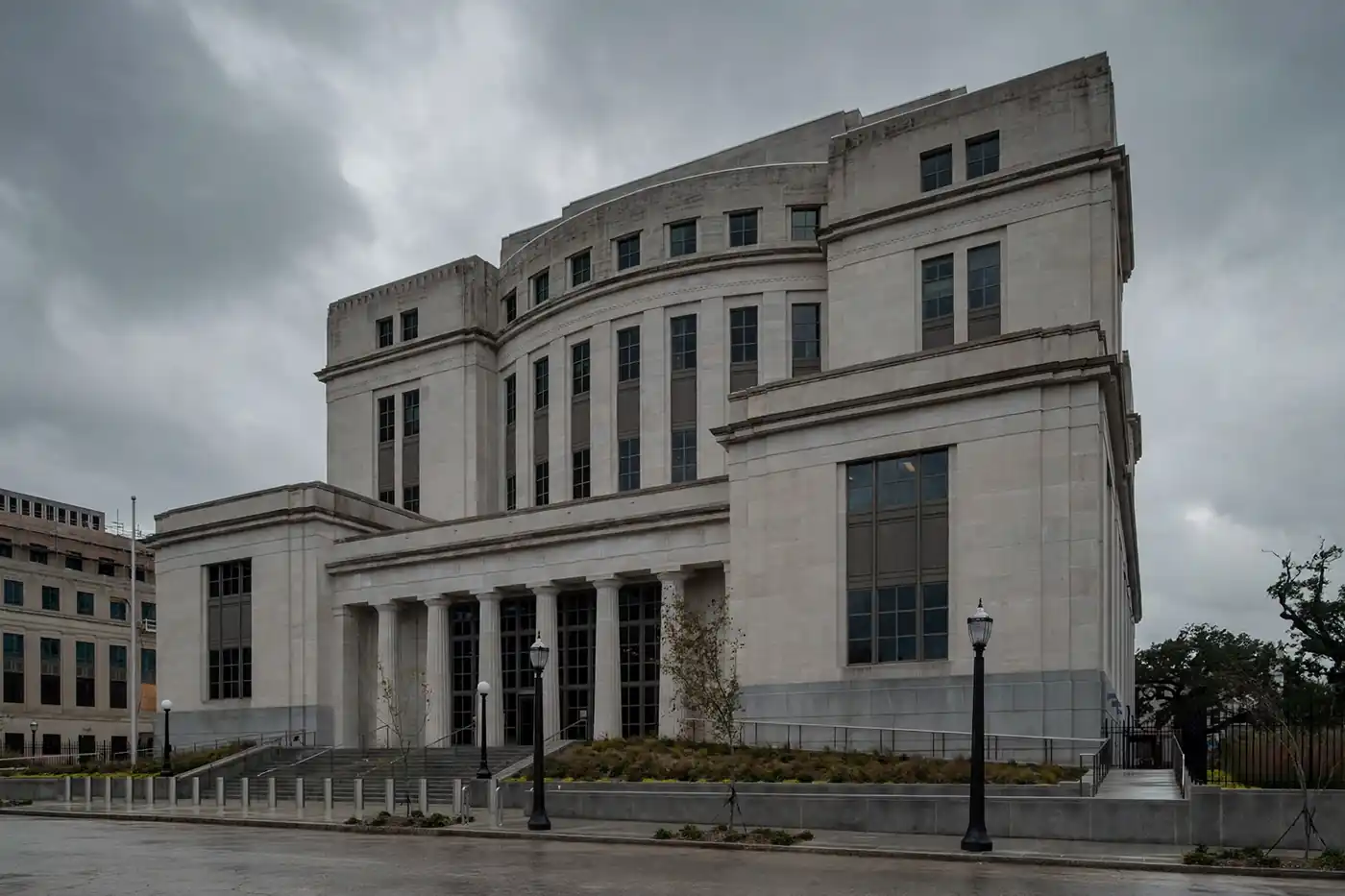
MOBILE, Ala. — A former Mobile County Sheriff’s Office corrections officer has been indicted on a federal civil rights charge accusing him of sexually abusing a person in his custody, more than two years after he was arrested on a related state charge and fired.
A federal grand jury in the Southern District of Alabama returned the indictment against Timothy Lee Scarbrough, which was filed Oct. 28. It charges him with one count of deprivation of rights under color of law, a federal crime that applies when someone acting with government authority willfully violates another person’s constitutional rights.
An indictment is a formal accusation, not a finding of guilt. Scarbrough is presumed innocent unless and until he is proven guilty in court.
What the indictment alleges
According to the indictment, Scarbrough was acting under color of law, meaning in his official capacity as a corrections officer, when he violated the constitutional right to bodily integrity of a person in his custody. The indictment identifies that person only by the initials R.T.
The indictment alleges that on Sept. 4, 2024, Scarbrough engaged in a sexual act with R.T. without that person’s consent and without any legitimate law enforcement purpose.
South AL News does not identify people who report being victims of sexual abuse, and the indictment itself refers to the person only by initials.
A 2024 arrest and firing
The federal case follows action the sheriff’s office took in 2024. At the time, the Mobile County Sheriff’s Office said Scarbrough had been arrested on a state charge of first-degree sodomy and that he was fired immediately.
Scarbrough began working for the sheriff’s office in October 2023, according to earlier reports, meaning he had been with the agency for less than a year at the time of the alleged incident.
The federal indictment does not describe the current status of the state charge. A state prosecution and a federal prosecution for related conduct can proceed separately, because they are brought by different governments under different laws.
What ‘color of law’ means
The charge against Scarbrough is brought under a federal civil rights statute that dates to the Reconstruction era. It makes it a crime for anyone acting under color of law to willfully deprive a person of rights protected by the Constitution or federal law.
“Color of law” refers to authority that comes from a government position. It covers not only police officers and sheriff’s deputies, but also corrections officers, jailers, probation officers and other public employees, whenever they use or misuse the power their job gives them. The law applies even when an official’s conduct goes beyond, or directly violates, what the job permits, so long as the person was acting with the authority of the position.
Federal courts have long recognized that the Due Process Clause of the Constitution protects a person’s right to bodily integrity, which includes the right to be free from sexual abuse by government officials. People who are held in jails and prisons depend entirely on staff for their safety and cannot leave, and courts have treated sexual abuse by officers who control them as a serious violation of that right.
Cases of this kind are often investigated by the FBI and prosecuted by the local U.S. Attorney’s Office, sometimes in partnership with the Justice Department’s Civil Rights Division in Washington.
Possible penalties
The penalty for deprivation of rights under color of law depends on what the government proves. When the offense involves bodily injury, it can carry up to 10 years in prison, and when it involves certain aggravating factors, including aggravated sexual abuse, the maximum rises to life.
The charge against Scarbrough carries a maximum penalty of life in prison, a fine of up to $250,000 and up to five years of supervised release. Maximum penalties are set by Congress. Any actual sentence, if he were convicted, would be decided by a federal judge after considering the federal sentencing guidelines and other factors, and is often lower than the maximum.
Sexual abuse in custody and federal law
Sexual abuse of people behind bars has been the focus of federal attention for more than two decades. In 2003, Congress passed the Prison Rape Elimination Act, known as PREA, which led to national standards for preventing, detecting and responding to sexual abuse in prisons, jails and other confinement facilities. Those standards call for zero-tolerance policies, staff training, ways for incarcerated people to report abuse confidentially, and investigations of allegations.
Because people in custody are under the control of the staff who supervise them, the law generally treats sexual contact between a corrections officer and a person in custody as abuse of authority. Federal law makes sexual contact between staff and people in federal custody a crime regardless of claimed consent, and Alabama law likewise criminalizes sexual conduct by jail and corrections employees with people in their custody. In this case, the indictment specifically alleges that the person did not consent.
What happens next
Scarbrough will be expected to appear before a federal magistrate judge in Mobile for an initial appearance and arraignment, where he will be formally advised of the charge and enter a plea. A judge will also address whether he will be released while the case is pending and under what conditions.
After arraignment, the case would move into discovery, when prosecutors share their evidence with the defense, followed by any pretrial motions. Federal criminal cases are resolved either by trial before a jury or through a plea.
No court dates had been publicly announced as of the filing of the indictment.
Reporting abuse or civil rights violations
Anyone who believes they have experienced abuse or a civil rights violation by a law enforcement or corrections officer can report it to the FBI at tips.fbi.gov or by calling 1-800-CALL-FBI (1-800-225-5324). The U.S. Department of Justice’s Civil Rights Division also accepts reports online at civilrights.justice.gov.
Survivors of sexual violence can reach the National Sexual Assault Hotline, operated by RAINN, at 1-800-656-4673 or online at rainn.org, any time of day.