

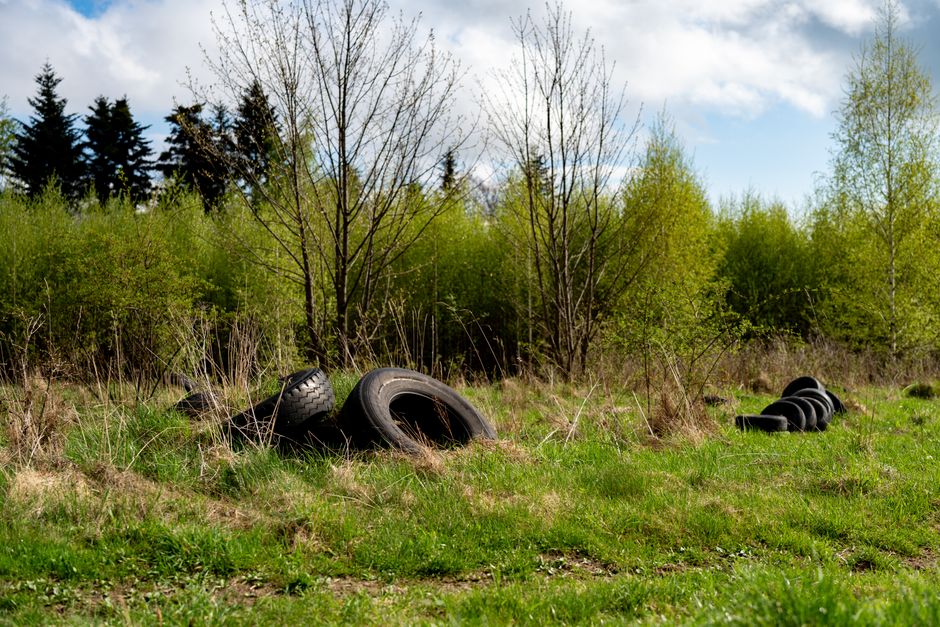
The discarded tires were everywhere. That sight — repeated across neighborhoods during a recent community clean-up — has Mobile city councilors talking about a more aggressive response to illegal dumping, from airing surveillance footage of litterers on the evening news to letting the city haul junk off private property and bill the owner.
During the council’s pre-meeting work session on June 30, District 1 Councilman Cory Penn said the city needs to act after he noticed a string of shabby residences and businesses during a recent community clean-up trip. District 2 Councilwoman Samantha Ingram piled on with a specific complaint: everywhere she went during the clean-up event, she saw old and worn-out tires dumped wherever someone wished to leave them.
“I don’t understand why we don’t turn them over to the news media,” said District 3 Council President C.J. Small, proposing that the city publicly shame the people its cameras catch. “If I know I’m going to be on the news for dumping some tires, I’m not going to do it.”
Cameras are already catching dumpers
The city has, in fact, already started catching people in the act. Chief of operations James Barber told councilors that Mobile recently installed cameras in certain areas to capture people tossing tires, and that some of those caught have been held accountable.
The bigger obstacle is legal authority over enforcement. Barber said the city has the legal authority to enforce laws against tire dumping, but only through an agreement with the Alabama Department of Environmental Management — an agreement the city has been trying to enter. Under state law, ADEM oversees solid waste enforcement, and municipalities that want to prosecute dumping cases under state statutes typically need that formal partnership in place.
A weed-lien model for junk
District 4 Councilman Ben Reynolds said he will soon introduce an ordinance giving the city the power to remove excessive junk and debris from private property. The proposal would mirror the city’s existing weed-lien process, under which the city mows tall grass on overgrown private lots and sends the owner the bill — attaching a lien to the property if it goes unpaid.
Applied to junk and debris, the same mechanism would let the city clear properties that have become dumping grounds, then recover the cost from the owner rather than leaving the debris in place indefinitely.
Councilors framed the proposals as part economic development, part public health: littered lots and dumped tires depress neighboring property values, breed mosquitoes in standing water and signal neglect that invites more dumping. Clean-up volunteers, who see the problem up close, have pressed the city for years to make dumping harder and consequences more visible.
What happens next
Reynolds’ ordinance has not yet been filed, and any changes will come before the full council for introduction and a public vote. Whether Small’s proposal to release camera footage of dumpers to television stations moves forward depends on the city attorney’s review — releasing enforcement video raises fewer legal questions than police footage, but the city would still want to make sure any public shaming does not complicate pending prosecutions.
For now, the message from the work session was clear: the city intends to make illegal dumping harder, more visible and more expensive — for the people who do it and, in some cases, for the property owners whose land becomes the dump.