

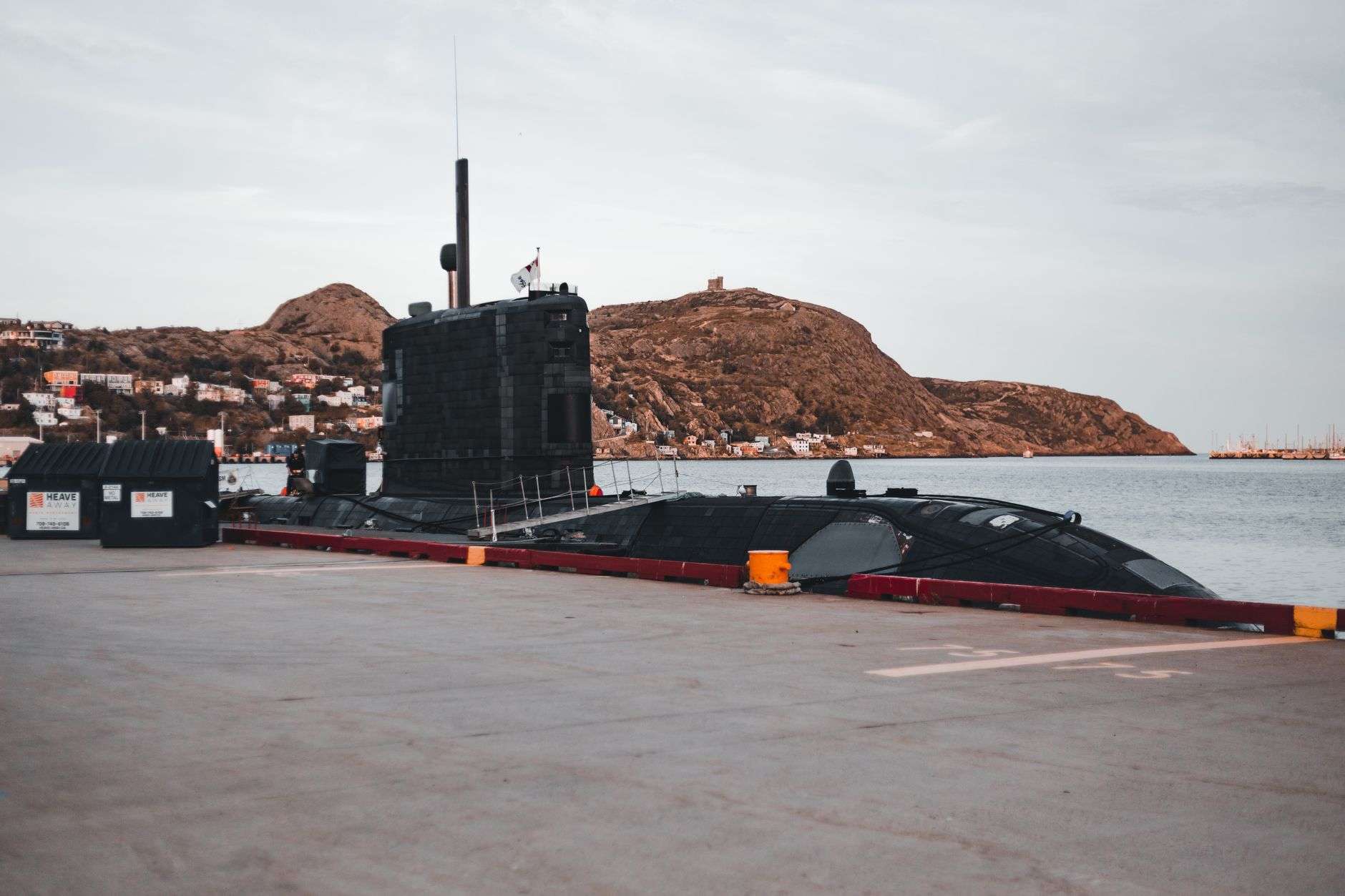
ATMORE, Ala. — Tyanthony Dailey watched submarines in movies growing up in a small Alabama town and thought he could do that. Two years into a Navy career, he is doing it.
Dailey, a seaman and a 2023 graduate of Escambia County High School, serves aboard the Ohio-class ballistic-missile submarine USS Kentucky, according to the Navy Office of Community Outreach.
Atmore
Dailey credits the town he came from with preparing him for what came next.
“Growing up in Atmore, it’s a small town; everyone knew each other,” he said. “It helped me get started. I talked to a lot of people who supported me with real examples of military life. Coach G (Gonzalez), my wrestling coach, helped build my toughness. I was in wrestling and football, and he helped me get to state championships. Also, my mom helped me a lot. She brought us up by herself and took care of us. She taught me the importance of independence, and that has helped me in my career so far.”
The wrestling reference is more relevant than it might appear. Submarine service demands tolerance for confinement, discomfort and sustained effort under conditions most people would not choose — qualities a wrestling room tends to build.
Why He Joined
“I joined to do something different,” Dailey said. “Everyone around me was going to college. That wasn’t really my thing. I always saw submarines in the movies and thought, I can do that! I wanted to be an information systems technician, but there was an opportunity to start my Navy journey quickly by taking the yeoman rate, so I signed up.”
Today he serves as a yeoman (submarine) — the rating responsible for administrative and clerical functions aboard a boat, including personnel records, correspondence and the documentation that keeps a crew’s careers and qualifications in order. Aboard a submarine, where crews are small and every sailor carries responsibilities beyond their rating, a yeoman is also a watchstander.
The Dolphins
Dailey’s proudest accomplishment is the qualification that marks a sailor as a submariner.
“My proudest accomplishment so far is becoming senior in rate and earning my dolphins (submariner qualification),” he said. “That’s a big one because it’s so challenging. Learning each system on the boat and being a competent sailor is important. A lot of people depend on me to do my job. Driving a nuclear submarine is another big accomplishment and a huge responsibility.”
The submarine warfare insignia — the dolphins — is earned rather than issued. Qualification requires a sailor to learn the boat’s systems well beyond their own specialty: propulsion, hydraulics, atmosphere control, damage control, weapons, navigation. A yeoman must be able to respond correctly to a casualty in a system they do not otherwise operate, because in a sealed vessel underwater there is no one else to call.
That is what Dailey means by saying a lot of people depend on him.
A Small Fraction of the Fleet
Submariners are volunteers, and they represent a small percentage of Navy personnel.
The Navy’s submarine force operates three basic types of boats:
Fast-attack submarines hunt enemy submarines and surface ships, strike targets ashore with cruise missiles, support special operations, conduct intelligence and reconnaissance missions, and engage in mine warfare. The Virginia class is the most advanced in service.
Ballistic-missile submarines — called “boomers” — serve as a strategic deterrent, providing an undetectable platform for submarine-launched ballistic missiles. They are designed for stealth, extended patrols and precise missile delivery. The Columbia class, now in development, will replace the current Ohio class and is intended to sustain continuous sea-based deterrence into the 2080s.
Guided-missile submarines provide strike and special operations capability from a clandestine platform. Each can carry 154 Tomahawk cruise missiles plus heavyweight torpedoes fired through four tubes.
USS Kentucky, Dailey’s boat, is in the second category. Its mission is deterrence — described by Navy officials as the nation’s ultimate insurance program — carried out on extended patrols during which the boat’s whereabouts are its principal protection.
126 Years Under the Sea
The U.S. Navy has operated submarines for 126 years, and the force has grown into what Navy officials describe as the service’s most versatile weapons platform.
The Pacific Submarine Force provides strategic deterrence, anti-submarine warfare, anti-surface warfare, precision land strike, intelligence, surveillance, reconnaissance, early warning and special warfare capabilities worldwide. A major component of that maritime security is homeported at Naval Base Kitsap-Bangor in Washington state.
Navy officials frame the strategic stakes in economic terms: with 90% of global commerce traveling by sea, and internet access depending on the security of undersea fiber-optic cables, the prosperity of the United States is directly linked to maritime security — and, they emphasize, to recruiting and retaining talented people from across the country.
What Service Means to Him
“Serving in the Navy means I’m doing something that most people wouldn’t do,” Dailey said. “It’s different than everyone else. I could be doing anything from shooting missiles, evading torpedoes or a number of other things. It’s a great job. If someone had the chance to serve four years, they should at least try. If asked what I did for my country, I can be proud to talk about what I’ve done in the Navy.”
The People Behind It
Dailey returns repeatedly to the people who made the career possible.
“I’d like to thank my mom,” he said. “She has helped me every step of the way with everything from cars to owning a home. She helped me grow up. My brother joined the Navy, too. We talk all the time and help each other. My wife has been amazing. She has loved and supported me the entire time and always has my back.”
Family service patterns are common in the military, and a sibling in the same branch provides something particular — someone who understands the deployment schedules, the administrative frustrations and the specific texture of the job without needing it explained.
Education Ahead
Dailey, who left high school uninterested in college, plans to pursue it through the Navy.
“I plan to go to college using Tuition Assistance, which will help me in my career and post-Navy life,” he said.
Navy Tuition Assistance covers a substantial share of tuition costs for active-duty sailors taking courses while serving, and it is separate from the GI Bill benefits available afterward. It is one of the more concrete returns on enlistment, and it routinely produces degrees for people who did not see themselves as college students at 18.
Escambia County
Atmore sits in Escambia County in south Alabama, near the Florida line. Like much of rural Alabama, it has a long tradition of military service, and Dailey’s path — high school, enlistment, a technical rating, a specialized qualification — is a familiar one in the county.
What distinguishes it is where it led: a small percentage of the Navy volunteers for submarines, and a smaller number still come from towns where, as Dailey put it, everyone knew each other.