

From the parking lot, The Fisherman’s Corner on Perdido Key does not look like much. The old bait shop sits under the Theo Baars Bridge, where Perdido Key Drive crosses the Intracoastal Waterway from Perdido Key to Innerarity Point, and it would be easy to drive past. Inside is a seafood kitchen with a Creole accent, and the dinner can be a real surprise. A Friday night visit in June 2023 showed why it has a loyal following.
Pulling up recalls the old river shack restaurants of the region, such as Meme’s River House Restaurant on the Bon Secour River or Mary’s Place in Coden, Alabama. Along the Gulf Coast, places like that usually mean the food is good. The Fisherman’s Corner holds up.
An Old Bait Shop With a New Purpose
For decades, bait-and-tackle shops sat at bridges and landings up and down the coast wherever anglers put in or passed by. The Fisherman’s Corner started as one of them before becoming a restaurant, and its setting still reflects that working-waterfront past. Its spot below the Theo Baars Bridge places it right on the Intracoastal Waterway, the protected inland channel that runs along much of the Gulf Coast and carries barges, fishing boats and pleasure craft away from the open Gulf.
That part of the waterway separates Perdido Key from the mainland neighborhoods southwest of Pensacola. Innerarity Point, on the mainland side, is a mostly residential area of waterfront homes along the bays and bayous west of Big Lagoon. The Theo Baars Bridge is the only road connection onto the key from the Florida side, so almost everyone headed to the beaches crosses it and passes the restaurant.
Inside: Butcher Paper, Fresh Flowers and a Friendly Crew
The unassuming outside does not prepare you for the inside. Walking in, diners get the smell of fresh seafood cooked the old-fashioned way, the kind of kitchen that reminds you of your grandmother’s. The room is casual and unpretentious yet a notch above a typical seafood joint. White butcher paper covers the tables, fresh flowers sit on each one, and on a busy Friday night the place is full.
The staff stood out that evening. The host said the wait would be short and confirmed that guests could bring their own wine for a $10 corkage fee. Another staff member walked the party to a service counter, opened a bottle and poured four glasses to enjoy while they waited. A small bar is reached by stepping back outside.
The restaurant serves beer and has a small but nice wine list, with no liquor. The bring-your-own option is popular with regulars. That night’s party stopped first at Red or White, the wine shop in Orange Beach, a short drive west across the state line.
For diners who do not often bring their own wine, corkage is the fee a restaurant charges to open and serve a bottle a guest brings in. It covers the service, glassware and the table, and lets diners enjoy a favorite bottle without buying from the restaurant’s list. Policies vary widely, and some restaurants do not allow outside wine at all, so it is always worth asking ahead. When The Fisherman’s Corner was visited, the fee was $10. Diners should confirm the current policy before they go.
The Menu: Seafood First, With a Creole Twist
With so many dishes to pick from, deciding took a while. The table started with two appetizers, both very good:
- Crispy Shrimp with Pepper Jelly, a sweet-and-heat pairing that is a Southern classic.
- Jim’s Spicy Oysters, a house specialty.
Penny, the server, wrote her name on the butcher paper so the table would remember it. She was friendly, patient and helpful with the menu. “Our seafood is what we are known for, but don’t overlook the steaks and pork chop,” she said.
That night the daily fish was mahi-mahi, with snapper available as an upgrade, prepared grilled, blackened or fried. The entrees ordered around the table included:
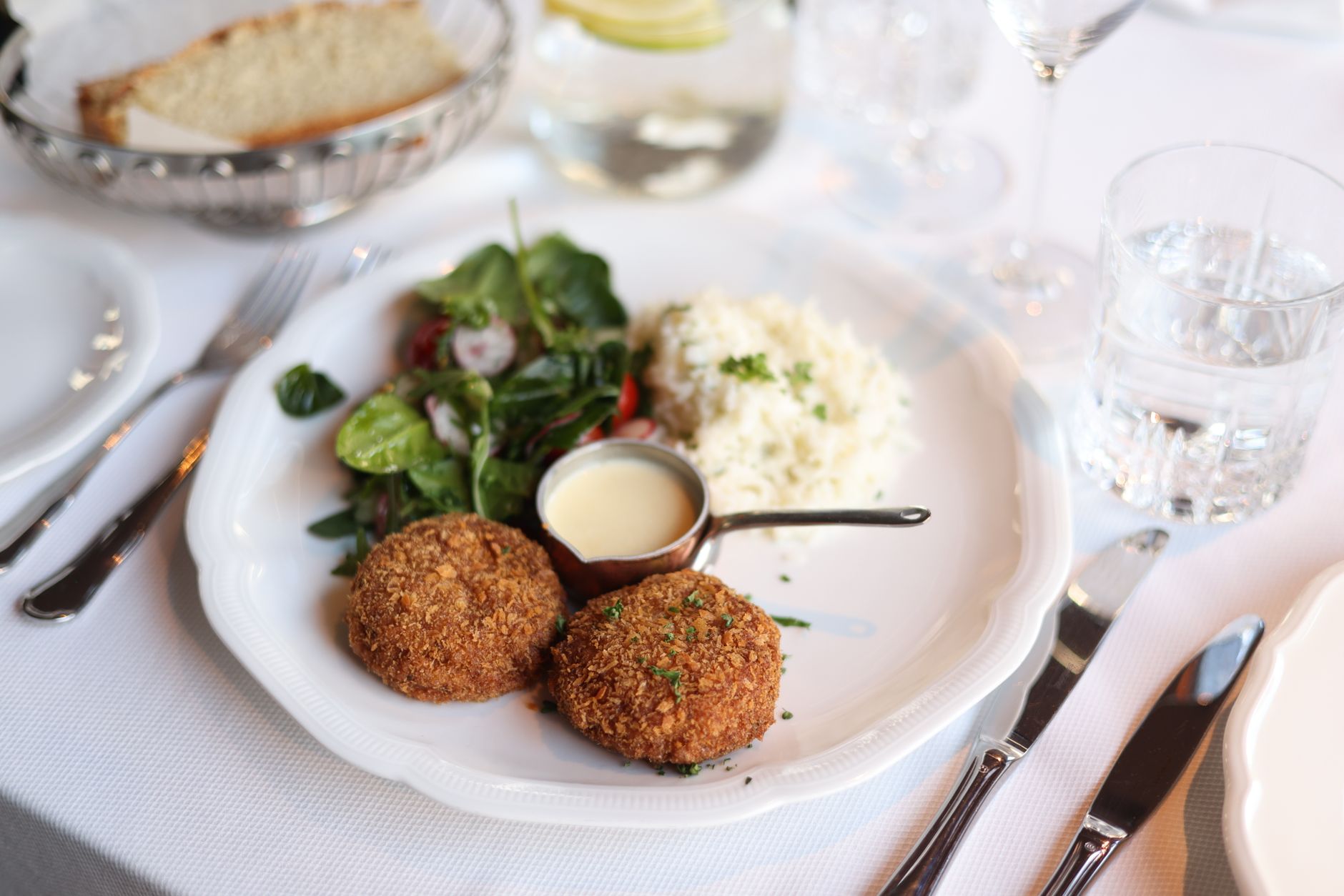
- Crab Cakes with the kitchen’s housemade remoulade, ordered by two diners, one with a cup of gumbo on the side.
- Snapper, the upgrade from the daily fish.
- Creekstone Bone-In Pork Chop with Blackberry BBQ Sauce, a standout that proved Penny’s point about the non-seafood side of the menu.
Sides included fried okra, a small Caesar salad and housemade onion rings that were crisp, fresh and sweet. Nobody saved room for dessert, though the bread pudding has a strong reputation.
Several of those dishes have deep roots in the cooking of the Gulf Coast and South Louisiana:
- Gumbo is the signature stew of the region, built on a roux of flour and fat cooked slowly to a deep brown, then simmered with the “holy trinity” of onion, celery and bell pepper, plus seafood, sausage or chicken. Every kitchen along the coast has its own version.
- Remoulade is a French sauce that took a spicier, tangier form in New Orleans, usually with mustard, paprika or cayenne, herbs and pickles. It is the standard partner for crab cakes and fried seafood.
- Blackened fish is coated in a heavy layer of spices and seared in a very hot skillet until the crust darkens. New Orleans chef Paul Prudhomme made the technique famous in the 1980s, and it has been a Gulf Coast restaurant staple ever since.
- Pepper jelly, sweet and mildly hot, is a Southern pantry staple, served over cream cheese with crackers or as a glaze and dipping sauce for fried shrimp.
Creekstone Farms, the name on the pork chop, is a Kansas-based producer known for premium meats. Restaurants use the name to signal the quality of the cut.
About That Fish: Snapper and Mahi-Mahi
The two fish on the menu that night are among the most popular catches off this stretch of coast. Red snapper, with its rosy skin and firm, mild white meat, is probably the best-known Gulf reef fish. It lives around natural and artificial reefs offshore, and recreational seasons are set and managed closely by state and federal regulators. Snapper often costs extra on local menus because demand is high and supplies are limited.
Mahi-mahi, also called dolphinfish (it is not related to dolphins), is a fast, brightly colored fish of the open ocean, often found near floating weeds and debris offshore. It grows quickly and is a favorite of charter captains in the warm months. The meat is sweet and moist and holds up to grilling or blackening, which makes it a common daily fish at coastal restaurants.
A Tradition of Waterside Seafood Joints
The comparison to Meme’s River House and Mary’s Place points to a long Gulf Coast tradition. Across coastal Alabama, northwest Florida and Mississippi, some of the most loved seafood restaurants started as modest buildings at the water’s edge, including fish camps, bait shops and marina kitchens, where the catch came in close by and the cooking was simple. Many were family-run for generations. What they have in common is informality, generous portions and cooking that puts the seafood first. The Fisherman’s Corner, with butcher paper on the tables and a kitchen that cooks the old way, belongs to that tradition while adding a few more refined touches.
Perdido Key: The Setting
Perdido Key is a barrier island in Escambia County, Florida, stretching between Pensacola Pass to the east and Perdido Pass at Orange Beach to the west. Much of it is protected, with the Perdido Key Area of Gulf Islands National Seashore, including Johnson Beach, and Perdido Key State Park preserving miles of white-sand beach and dunes. The island is also home to the endangered Perdido Key beach mouse, one reason so much of its dune habitat is protected.
At the west end, the Flora-Bama sits on the Florida-Alabama state line, the island’s best-known landmark and a gathering place for music and beach culture. Between the protected lands are condominiums, rental homes and a handful of restaurants, and the key feels quieter than the busier resort strips nearby.
Planning Your Visit
The main thing that stood out that night was the mood. Everyone in the room seemed happy, glad to be out for a good meal with family and friends, and the staff clearly worked hard to make sure guests had a good time. The menu is varied and leans Creole, enough to call for more than one visit.
A few practical tips for first-time visitors:
- Expect a wait on weekends. Friday and Saturday nights are busy, especially during the summer beach season.
- Ask about the bring-your-own-wine policy. Corkage fees and rules can change, so confirm before you bring a bottle.
- Remember there is no full bar. The restaurant serves beer and wine but no spirits.
- Ask about the fish of the day. Daily specials depend on what is fresh, and the server can walk you through preparations.
- Check hours before you go. Menus, prices and hours at coastal restaurants often change with the season, so call ahead or check the restaurant’s official listings.
For anyone crossing the Theo Baars Bridge on the way to or from the beach, The Fisherman’s Corner is worth a stop, even though it is easy to miss.