

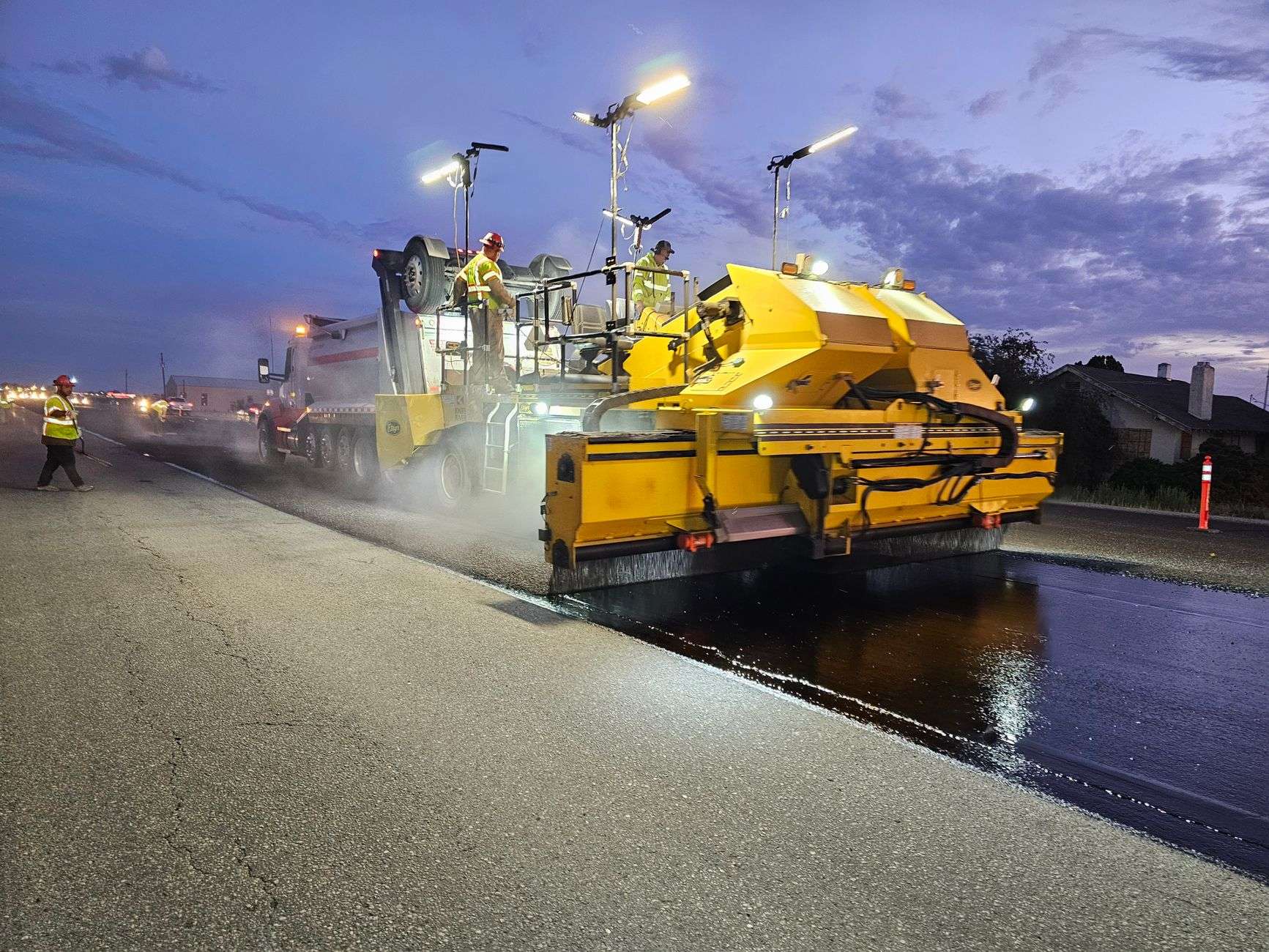
BREWTON, Ala. — Drivers using U.S. 31 through Brewton should plan for nighttime lane closures beginning Sunday.
APAC-Alabama, Inc. will begin planing, resurfacing and traffic signal upgrades on U.S. 31 from Evergreen Avenue to Underwood Avenue.
The Schedule
When: Sunday, Sept. 20 through Thursday, Sept. 24, from 7 p.m. to 6 a.m. each night.
What to expect: One-lane closures with flagging operations when workers are present.
Weekend: No work or lane closures are planned Friday or Saturday.
Drivers should use caution and watch for workers in the area, and should allow extra time and expect changing traffic conditions during nighttime work.
Why the Work Happens Overnight
Night work on an urban arterial is a deliberate tradeoff.
U.S. 31 through Brewton carries local traffic, commercial traffic and through movement. Closing a lane during daylight hours would push that volume into a single lane at the times of day when the road is busiest, producing delays well beyond the work zone.
Overnight, the volume drops sharply. A one-lane configuration that would be untenable at 5 p.m. is manageable at midnight, and the work can proceed at a pace that daytime conditions would not allow.
The cost is borne elsewhere: residents and businesses near the corridor contend with equipment noise for five consecutive nights, and crews work on a schedule that is harder on them than daylight work would be.
What “Planing” Means
Planing — also called milling or cold planing — is the removal of the existing asphalt surface layer with a rotating drum fitted with cutting teeth.
It is the necessary first step before resurfacing. Simply adding new asphalt on top of old would raise the road surface relative to curbs, gutters, drainage inlets and adjoining driveways, and would trap the cracking and deformation in the old layer beneath the new one. Planing removes the damaged surface so the new layer can be placed at the correct elevation on sound material underneath.
There is an intermediate condition drivers should anticipate. Between planing and resurfacing, the road surface is grooved and rough, with a distinctive milled texture. That surface is safe to drive but noticeably louder and less smooth, and it can be slick when wet. It is temporary.
Traffic Signal Upgrades
The project also includes traffic signal upgrades along the corridor.
Signal work on an arterial can involve a range of improvements: replacing aging signal heads with LED units, upgrading controllers, improving vehicle detection, adding or updating pedestrian signals and push buttons, or retiming the corridor so that signals coordinate with one another.
Corridor coordination is often the most consequential of these for drivers, since progression through a series of signals affects travel time along the whole route rather than at a single intersection.
Flagging Operations
The alert specifies flagging operations when workers are present, which means traffic will be directed manually through the work area.
Flaggers control alternating one-way movement through a single open lane. For drivers, the rules are straightforward: follow the flagger’s direction, stop when signaled, proceed only when directed, and do not attempt to pass a stopped queue.
Flaggers stand in an active roadway with no protection other than visibility and driver compliance. They are among the most exposed workers in any highway operation.
Night Driving in a Work Zone
Nighttime work zones present a specific set of hazards. Reduced visibility, glare from work lighting, unfamiliar lane configurations and the higher prevalence of impaired driving after dark all compound the ordinary risks of a construction area.
The practical guidance is consistent: reduce speed on approach, increase following distance, put the phone down, watch for flaggers and equipment entering the travel lane, and expect the configuration to be different from the night before as work progresses along the corridor.
Alabama, like most states, applies increased penalties for traffic violations in active work zones.
Brewton and U.S. 31
Brewton is the seat of Escambia County, in south Alabama near the Florida line. U.S. 31 is one of the older north-south routes through the state, predating the interstate system and running roughly parallel to I-65 for much of its length.
Through towns like Brewton, U.S. 31 functions as a main street as well as a highway — carrying local trips, serving businesses along the corridor, and handling traffic that has left the interstate. Resurfacing a route of that kind affects daily movement within the community, not only through traffic.
Planning Around the Work
Drivers who regularly use the segment between Evergreen Avenue and Underwood Avenue during evening or overnight hours should allow extra time from Sunday through Thursday. The Friday and Saturday exemption means weekend travel through the corridor should be unaffected.
As with all outdoor paving work, weather can shift the schedule. Asphalt placement requires dry conditions and appropriate temperatures, and rain can push a night’s work to a later date.