

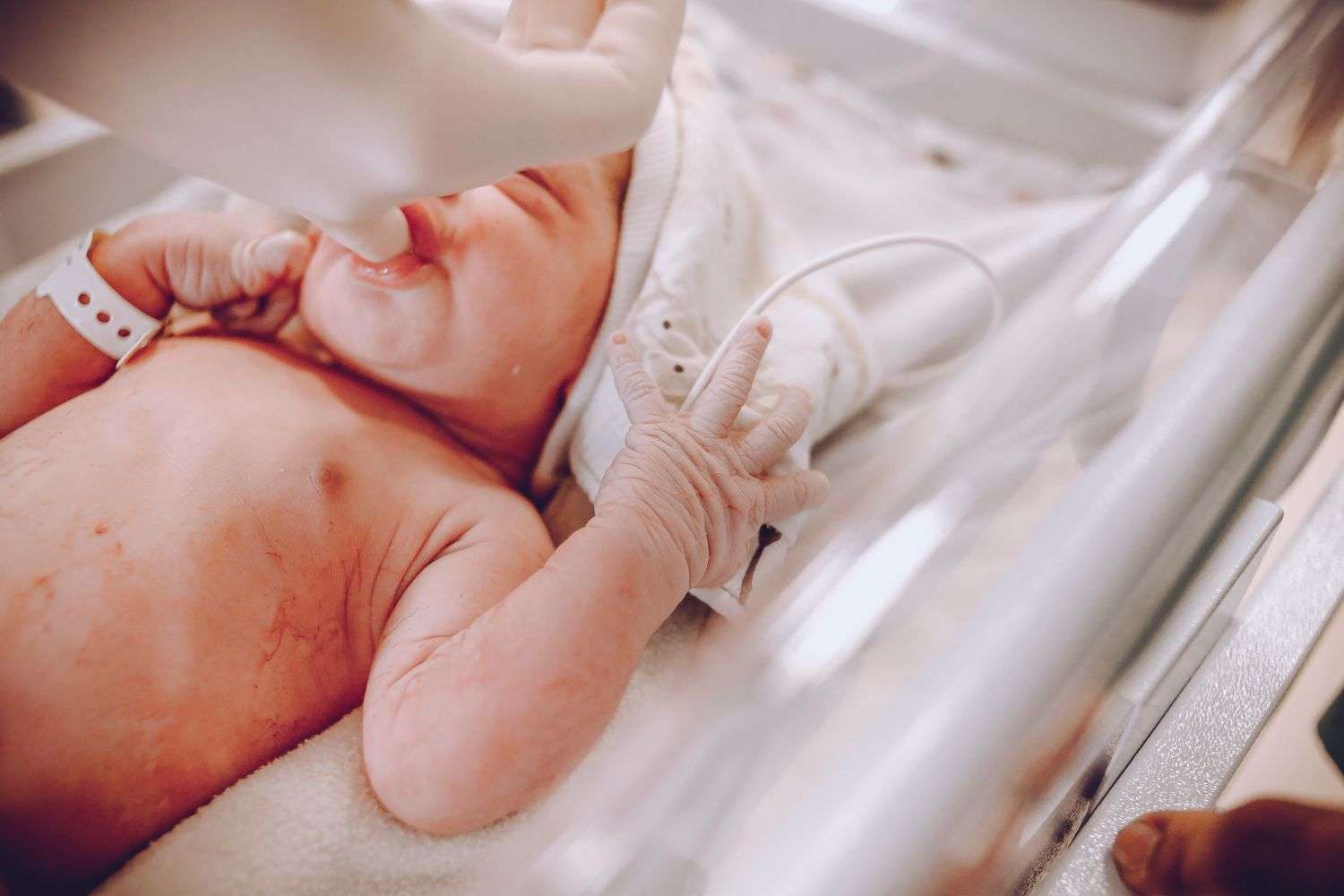
MOBILE, Ala. — July was a month for the record books at USA Health Children’s and Women’s Hospital in Mobile, where caregivers delivered 324 babies — including 18 sets of twins — the busiest single month for births in the hospital’s history. According to a USA Health news release announcing the milestone, the total broke a previous single-month birth record that had stood since 2017.
The hospital marked the moment not with statistics but with congratulations. “We’re honored to be part of so many unforgettable moments,” USA Health said in the release. “Congratulations to all of our growing families, and thank you to our incredible physicians, nurses and staff who help make these special arrivals possible every day of the year.”
Averages tell the story of how unusual the month was. A 324-baby total works out to more than ten deliveries per day, every day, across a 31-day span — and that figure counts only the births themselves, not the hundreds of prenatal visits, ultrasounds, lab draws and inductions that surround them. For a labor-and-delivery operation, a month like that means every postpartum room, every nursery bed and every shift schedule is running at full stretch, with little margin between discharges and new admissions.
The Gulf Coast’s Regional Birth Hospital
USA Health Children’s and Women’s Hospital serves as a major regional center for maternity and newborn care along the Gulf Coast, drawing patients from across south Alabama and the surrounding region. Mothers travel to the Mobile campus from Baldwin County, from the rural counties of southwest Alabama, and from the Mississippi Gulf Coast and the Florida Panhandle — particularly when a pregnancy carries complications that smaller community hospitals are not equipped to manage.
That regional role is built into the hospital’s design. As the teaching hospital of the University of South Alabama’s health system, it combines labor and delivery with a neonatal intensive care unit under the same roof, so that newborns who arrive early or with medical problems do not have to be transferred across town or across state lines. Obstetricians, maternal-fetal medicine specialists, neonatologists and pediatric specialists all work on one campus, an arrangement that matters most on the busiest days.
The hospital’s July surge reflects a pattern common to regional referral centers: birth volume is not driven only by the size of the immediate population but by geography. In south Alabama, where long stretches of the region are served by small hospitals with limited obstetric coverage, Mobile’s children’s and women’s hospital functions as the destination for a wide swath of the central Gulf Coast. When fertility, demographics and referral patterns align, months like July happen.
Planning a Record Month
For parents planning deliveries at the hospital, a record-setting month is also a sign to prepare early. High-volume periods make prenatal classes, maternity tours and pediatrician selection worth arranging well before the due date, and families driving in from Baldwin County, Washington County or the Mississippi line are wise to plan their route and timing with a margin. The hospital’s own advice, delivered through the congratulations of its release, was the simplest takeaway: the units are busy, the staff are ready, and the doors are open every day of the year.
Eighteen Sets of Twins in One Month
Among the 324 July deliveries were 18 sets of twins — nearly one multiple birth every other day. Twin pregnancies carry higher risks than single pregnancies at every stage, and they place additional demands on delivery teams, who must prepare simultaneously for two babies and, in some cases, two very different courses of care in the same room.
Twins are also more likely to deliver early and more likely to require neonatal intensive care, which makes the hospital’s combination of high-volume obstetrics and an on-site NICU central to how it handles them. A mother carrying twins who develops complications mid-pregnancy can be monitored, delivered and have her newborns cared for without leaving the campus — a continuity that smaller facilities cannot replicate and one of the main reasons families from across the region plan their deliveries in Mobile.
The concentration of twin births in a single record-setting month underscores the referral effect. Multiples are a small share of pregnancies everywhere, but when a hospital is the regional center for complicated obstetrics, those pregnancies concentrate there — and a 324-baby month with 18 sets of twins is exactly what that concentration looks like in practice.
What a Record Month Means for Families
For the families involved, the milestone is experienced one delivery at a time. Behind the 324 total are first-time parents seeing their newborn for the first hour, families adding a second or third child, grandparents crowding waiting rooms, and staff who mark these arrivals as the routine-but-never-routine core of their work. Hospital births are among the most personal events in any community’s life, and the release struck that note deliberately, thanking “our incredible physicians, nurses and staff who help make these special arrivals possible every day of the year.”
Record months also carry a practical message for expectant families in the region. Volume of this size means the hospital’s obstetric units, anesthesia coverage and newborn services are exercised constantly, and its teams see the full range of deliveries — uncomplicated births, preterm arrivals, multiples and high-risk cases — in rapid succession. For mothers with high-risk pregnancies, that depth of daily experience is often the deciding factor in choosing where to deliver.
The hospital did not immediately provide additional details on what may have contributed to the increase in births last month. Birth volumes rise and fall with seasonal patterns, demographic shifts in the service area and referral trends among outlying hospitals, and institutions rarely attribute a single record month to any one cause. What the total confirms is capacity: the hospital absorbed its busiest month ever while continuing normal operations.
A Century-Old Mission in Modern Form
Women’s and children’s care has been part of Mobile’s medical landscape for well over a century, but the modern chapter began in the early 1980s, when the University of South Alabama opened a dedicated children’s and women’s hospital — an institution designed from the ground up around the needs of mothers, newborns and children rather than adapted from a general adult hospital. The facility has grown with the region ever since, adding pediatric subspecialties, expanding women’s services and serving as the training ground for generations of obstetricians, neonatologists and nurses who remain in Gulf Coast practice.
As the teaching hospital of USA Health, the institution trains University of South Alabama physicians and nurses, meaning the same campus that delivers a record number of babies is also where the region’s next obstetric and pediatric workforce learns the craft. That teaching role feeds directly into quality of care: high-volume, academically affiliated birth hospitals consistently show the ability to manage complicated deliveries that lower-volume facilities refer out.
The combination also matters for rural health. In counties across south Alabama where obstetric units have grown scarce, the presence of a large, stable regional birth center determines whether expectant mothers must drive an hour or more for prenatal care and delivery. Every record month at the Mobile hospital is, in part, a reflection of that regional dependence.
Looking Ahead
Behind the Numbers on the Unit
A record month is also felt most sharply by the people working the floor. Labor and delivery nurses see their patient loads rise and their turnover quicken; anesthesia teams cover more epidurals and cesarean sections per shift; housekeepers, unit clerks and lactation consultants all move faster to keep beds and services cycling. Nurses and staff were singled out in the release for good reason — a month like July does not happen without sustained, coordinated effort across every unit the hospital touches.
The logistics ripple outward as well. Registration, security, dietary services and the hospital’s volunteer corps all absorb the extra traffic, and obstetricians’ call schedules tighten. Records are pleasant milestones for communications offices, but on the units themselves they are measured in steady rounds, well-timed inductions and the small daily victories of mothers and babies heading home healthy.
Whether July’s record stands or falls, the conditions behind it — a growing regional service area, continued consolidation of obstetric care, and the hospital’s role as both a community birth hospital and a referral center — are structural, not seasonal. Records of this kind tend to be revisited sooner than their holders expect; the previous mark, after all, dated only to 2017.
For now, the announcement served its simplest purpose: honoring 324 new arrivals, 18 sets of twins and the staff who cared for them. USA Health framed the milestone as a shared achievement with the families it serves, and the numbers speak to the scale of that daily work on the Gulf Coast — more babies born in a single month than at any other time in the hospital’s history.
The quotes in this article are from a USA Health news release announcing the record. Additional details on factors behind the birth increase were not immediately available from the hospital.