University of South Alabama Mobile
USA Parking Pass Dispute Over Mississippi State Game Falls to Student Government
A scramble for free Ladd-Peebles Stadium parking passes ahead of USA's SEC opener has left the dean of students calling on the SGA to fix the process.
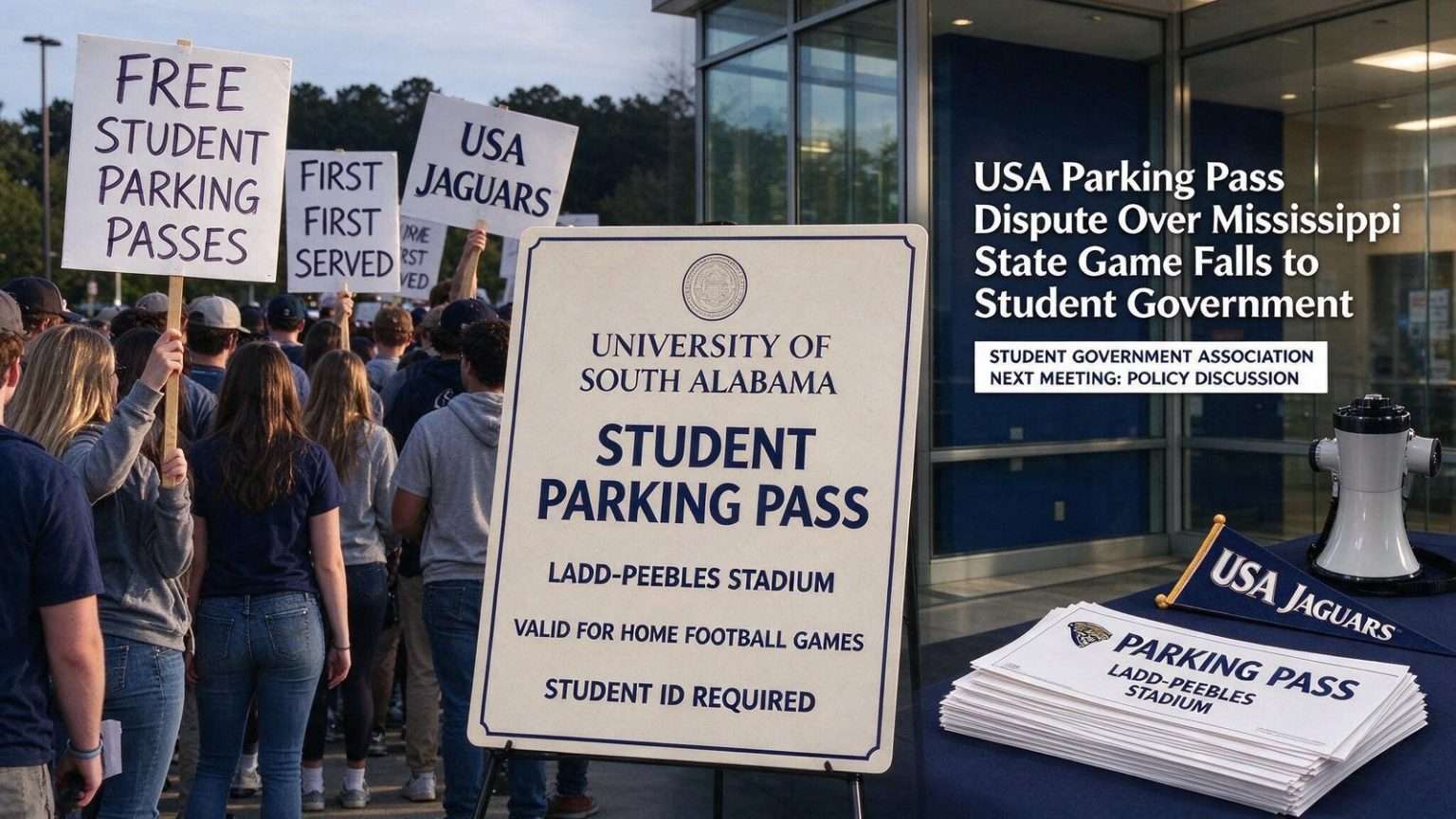
Excitement over the University of South Alabama’s first-ever Southeastern Conference football matchup, a road trip to face Mississippi State, has spilled over into an unexpected controversy involving free student parking passes for Ladd-Peebles Stadium. What should have been a simple student benefit — a free pass to park at the home of Jaguar football — instead became the subject of a campus debate over fairness, reselling and who the passes were meant to serve.
University officials say a handful of campus organizations sent members to camp out at the location where the university distributes free parking passes to students, with the apparent goal of collecting large quantities of the passes to resell them. The scheme, as described by students and administrators, turned a benefit designed for the general student body into an inventory operation for a few organized groups, and it left ordinary students scrambling for what remained.
The passes are typically distributed on a first-come, first-served basis and require students to present a valid student ID at pickup. Because of the unusually high demand generated by the hype around the season, and the reselling scheme some students say inflated that demand even further, the supply of passes ran out well before every student who wanted one could get in line. Many students left the distribution site empty-handed, frustrated that passes intended for the student body had apparently been scooped up in bulk by a small number of organized groups.
How the university is responding
University of South Alabama Dean of Students Michael Mitchell said the matter needs to be resolved through the university’s Student Government Association rather than through administrative action, since the football program’s student parking benefit was created specifically for the student body and is meant to be governed by student leadership. The decision to route the issue through the SGA reflects both philosophy and practicality: student government exists precisely to manage the student benefits and disputes that administrators should not arbitrate from above, and any rule change that students themselves shape carries more legitimacy on campus.
Mitchell said he has been in conversation with student leaders about the issue but that the SGA had not yet convened as a full body to discuss potential fixes. He acknowledged that solving the underlying problem will not be simple given how the passes are currently distributed. He said the SGA is expected to take up the issue at an upcoming meeting, likely the following week, to consider changes to the distribution process that could prevent the same bottleneck and resale activity from recurring at future home games.
Possible fixes under discussion at campuses that have faced similar problems tend to include capping the number of passes any single student can pick up, requiring the ID of each intended user at distribution, moving to digital or numbered passes that can be traced, and shifting from first-come lines to lotteries or reservation windows. Each option trades off convenience against fairness, which is why Mitchell’s point about simplicity rings true: any system can be gamed if a determined group organizes enough members to stand in line.
The moment that raised the stakes
The parking pass shortage comes at a high point for Jaguar football pride, with the university preparing to make its first appearance against an SEC opponent. For a program that has existed only a handful of years, the Mississippi State game is a landmark — the kind of matchup that seasons are remembered by and that alumni calendars get built around. The road trip to Starkville puts South Alabama on the same field as a member of the most powerful conference in college football for the first time, and the excitement on campus has been building all season.
USA’s rapid rise from a startup football program to a game against Mississippi State has energized the student body and increased attendance expectations at Ladd-Peebles Stadium, the team’s home venue in Mobile. The program’s trajectory has been remarkable by any measure: football was only recently added to the university’s athletic offerings, the team played its first seasons at the club and FCS levels before moving up, and its schedule strength has grown steadily to meet its ambitions. Each step up has drawn bigger crowds, and bigger crowds mean bigger demand for everything around game day — tickets, tailgating spots and parking.
Ladd-Peebles Stadium has been Mobile’s shared football home for generations, hosting high school championships, the Senior Bowl and college games long before South Alabama took up residence. Parking around the stadium on game days has always been a managed affair, and the university’s free student parking passes were designed to make attendance easy for students who might otherwise skip games because of the cost and hassle of getting there. When a small number of students corner that supply, they are not just reselling paper — they are taxing the very benefit that makes student attendance possible.
Why student government holds the pen
Mitchell’s decision to hand the issue to the SGA also reflects how the parking benefit was born in the first place. Student benefits like free parking passes are typically negotiated between the athletic department and student government, funded from student fees, and administered under policies the students themselves help set. When something goes wrong with a benefit funded by student fees, the logic goes, the fix should come through the same representative structure rather than a decree from the dean’s office.
That approach has its own risks, as Mitchell acknowledged. If the SGA cannot agree on changes before the next home game, the same lines and the same organized collection efforts will simply repeat, and frustration among students who came away empty-handed will grow. The meeting expected the following week will be the first real test of whether student leadership can act quickly enough to matter.
The timing is delicate in another way: the Mississippi State game has exactly the kind of drawing power that makes both legitimate demand and resale value spike. Passes for that weekend’s home events would be the most valuable of the season for anyone reselling them, which means the groups that organized around the distribution site have every incentive to do it again if the rules do not change first.
What administrators want the system to preserve
University administrators say they want any changes to the parking pass system to preserve the spirit of the benefit, ensuring passes reach students who plan to attend games rather than groups looking to profit from reselling them, while also keeping the distribution process manageable for staff and fair for the broader student population. Those three goals — access, manageability and fairness — can pull against each other. A strict one-ID-one-pass policy maximizes fairness but creates longer lines and more staff work; a lottery maximizes fairness and manageability but removes the spontaneity that first-come systems allow.
Administrators also have to consider the students at the center of the scheme. Reselling free passes for profit raises questions under the university’s code of conduct, and if the organizations involved are identified, disciplinary referrals become possible. Mitchell’s emphasis on fixing the system rather than hunting down individuals suggests the university’s priority is prevention — closing the loophole so the temptation disappears — rather than turning a distribution dispute into a string of conduct cases.
For the students who left the distribution site empty-handed, the outcome of the SGA debate matters practically. Student attendance is a visible measure of school spirit that athletic programs and accreditation bodies alike watch closely, and free parking is one of the few levers a university can pull to keep students coming to games. If the pass system breaks down, the cost lands not only on the students who pay for parking they should not have to, but on the game-day atmosphere that makes home games worth attending at all.
A growing pain of a growing program
Every college football program that grows quickly runs into problems like this one, and in a sense the parking pass dispute is a symptom of success. A program few students cared about a few years ago now generates lines long enough to organize around, a resale market, and a debate in student government — signs of an audience that has arrived faster than the infrastructure serving it. The Mississippi State game will be remembered either way; the question the SGA will take up next week is whether the memory will include a distribution system that worked for the whole student body or one that got gamed in the program’s biggest moment.
The Student Government Association is expected to take up possible changes to the pass distribution process at its meeting in the coming week, and any adjustments would apply to future home games at Ladd-Peebles Stadium. Students with questions or proposals are encouraged to contact their SGA representatives or the dean of students office as the discussion moves forward.