

Days after a 14-year-old student brought a revolver to Vigor High School and tried to shoot a classmate, the Mobile County District Attorney’s Office announced it will pursue an upgraded charge of attempted murder against the teen — a decision that places one of the county’s most serious felony charges on the desk of a juvenile court judge.
Authorities had not publicly identified the student as of the announcement. The teen remained in custody at the Strickland Youth Center, Mobile County’s secure juvenile detention facility in the city, while the case moved through its early stages.
The incident put Prichard’s Vigor High School at the center of a case that prosecutors described as among the gravest a school district can face: a loaded firearm on campus, aimed at a student, pulled twice.
Two trigger pulls, no gunshot
Police had previously said the student pulled the trigger of a .22-caliber revolver twice during a confrontation with a classmate, but the gun failed to fire either time. That distinction — between an attempt that fails and an act completed — is central to how attempted murder law works in Alabama, which allows prosecutors to charge the offense whenever a person intends to kill and takes a direct step toward carrying out that intent, whether or not harm results.
In this case, investigators said, the substantial step was beyond dispute: the weapon was brought onto campus, the confrontation began, and the trigger was pulled twice at another student. Only the revolver’s failure to fire separated the morning from a fatal outcome, and prosecutors made clear in announcing the charge that they viewed the intent, not the malfunction, as the defining fact of the case.
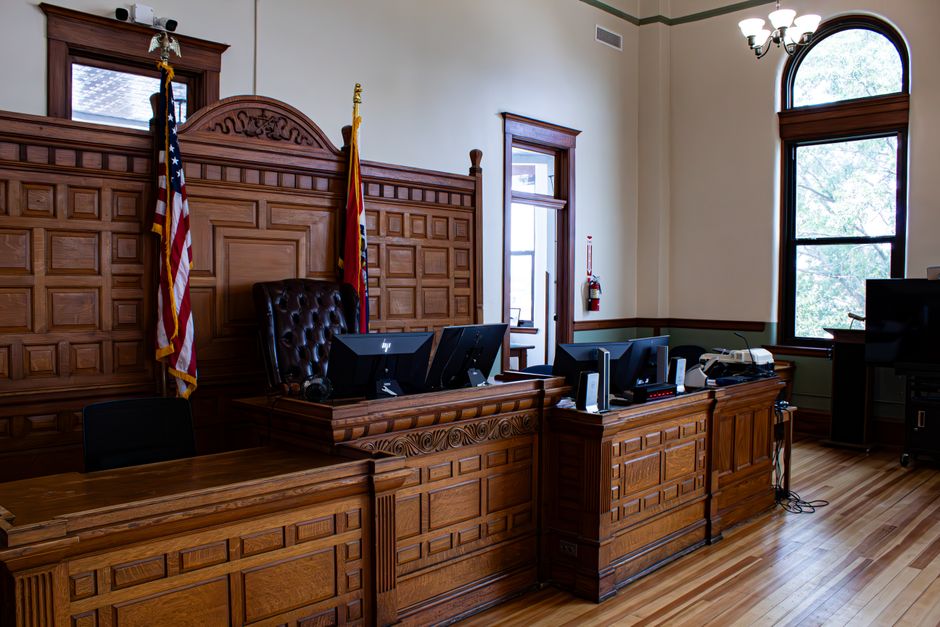
An assistant district attorney said the teen will go through a transfer hearing in juvenile court, a proceeding similar to a preliminary hearing in adult district court, where a judge will weigh whether enough evidence exists to move the case to adult court. “It was at a school — it doesn’t get more serious than that,” the prosecutor said, explaining the decision to pursue the more serious charge rather than a lesser weapons offense.
How a transfer hearing works
Alabama’s juvenile code permits the transfer of defendants 14 and older to adult court when they are accused of certain serious felonies, and attempted murder qualifies. At the hearing, prosecutors present evidence of the offense while the defense argues for keeping the case in juvenile court, where the system’s mandate is rehabilitation rather than punishment and where any custody ends by the age of majority.
Judges weigh a statutory list of factors: the nature of the alleged offense, the juvenile’s age and history, the sophistication the act displayed, the prospects for adequate protection of the public and the likelihood of reasonable rehabilitation under juvenile-court supervision. The outcome shapes everything that follows — the court, the possible penalties and the public nature of the record.
A transfer, if granted, sends the case to circuit court, where the defendant would face the same charging structure and potential sentencing exposure as an adult. A denial keeps the matter before a juvenile judge, whose options end at commitment to the Department of Youth Services until adulthood rather than the decades an adult conviction could carry.
Prichard police, days behind the announcement
A Prichard police spokeswoman said her department had not been informed of the charge upgrade at the time reporters asked for comment, suggesting the decision moved through the district attorney’s office independently of local police. The gap between the prosecutor’s announcement and the investigating department’s awareness drew attention in itself, a reminder that in Alabama’s system the charging decision belongs to the district attorney alone.
Police departments gather evidence and make arrests; prosecutors then review the file and file the charges they believe the facts and the law support. In juvenile matters that review carries extra weight, because the initial filing determines whether a transfer hearing — the gateway to adult court — happens at all.
The instructor who stopped it
Mobile County Public Schools officials separately praised the actions of a JROTC instructor, a retired Army lieutenant colonel, who is credited with physically subduing the armed student and holding him until officers arrived on campus. School administrators have pointed to his quick response as the reason the confrontation did not turn deadly.
JROTC instructors occupy a unique position on high school campuses. Charged with leading the Junior Reserve Officers’ Training Corps — a program teaching leadership, discipline and citizenship to enrolled students — they are typically retired military officers whose years of service leave them prepared for exactly the kind of crisis most teachers never train for. At Vigor, officials said, that preparation showed: the instructor moved toward the confrontation, took the armed student to the ground and held him in place until Prichard police reached the scene.
District leaders said the intervention was the reason a confrontation that began with two trigger pulls ended without a single shot fired — and without injury to any student or staff member on the campus.
A district’s broader safety record
The case arrives amid ongoing attention to school safety across Mobile County Public Schools, the state’s largest district by enrollment. Campuses operate with a mix of security personnel, controlled access points and coordination with municipal police departments, and the district’s policies require expulsion proceedings for any student found with a firearm on school grounds under state law.
The Strickland Youth Center, where the teen is held, operates under the oversight of Mobile County’s juvenile court, which combines detention operations with probation, intake and court services for young people across the county. Its staff handle everything from status offenses to the serious felony cases that occasionally end in transfer, and judges there move quickly on detention reviews to ensure that young defendants are not held without periodic hearings on their status.
Advocates for school safety have long argued that the most valuable protection is not hardware but people — adults who notice a confrontation building, students who report what they hear and staff members positioned to act in the seconds before officers arrive. The Vigor incident, in the district’s own telling, was a case where that human layer worked.
The stakes of the decision
The push to charge a 14-year-old as an adult reflects the seriousness with which the district attorney’s office is treating firearm incidents on school grounds, even when, as in this case, no one was physically injured. Attempted murder charges against juveniles typically require a transfer hearing before any move to adult court can proceed, giving a judge discretion over how the case will ultimately be handled.
Prosecutors defending such decisions point to the facts that recur in school gun cases: premeditation in bringing the weapon, the vulnerability of the setting and the number of people placed at risk. Defense responses typically emphasize the defendant’s age, the absence of injury and the juvenile system’s proven capacity to rehabilitate young offenders — arguments that carry real weight with judges aware that a transfer is a one-way door into the adult system.
Whatever the outcome, the filing itself sends a message that prosecutors intend to treat campus gun incidents as attempted homicides rather than weapons violations, a posture that school officials and police chiefs across the county have endorsed in the wake of similar cases nationwide.
Vigor and its community
Vigor High School serves the Prichard area, a community of roughly 20,000 residents just north of Mobile that has worked for years against economic and public-safety headwinds. The school is a source of civic pride in the city, with athletic traditions and alumni networks that stretch across the region, and incidents on its campus resonate beyond the school walls.
In the days after the confrontation, the account that circulated in the community was not of a near-tragedy but of the retired lieutenant colonel who ended it — a veteran pinning a gunman to the floor of his school. District officials leaned into that account, praising the instructor publicly and describing his response as the difference the entire episode turned on.
The road ahead
The teen’s case now moves toward the transfer hearing that will determine its course. If a juvenile judge finds the evidence sufficient and orders the case to adult court, the defendant will be indicted, arraigned and tried as an adult on the attempted murder charge. If the judge keeps the case in juvenile court, the disposition available there — commitment until majority, with rehabilitative programming — becomes the ceiling.
Either way, the proceedings will unfold against the backdrop of a campus that experienced the rarest of outcomes: a loaded revolver aimed at a student, fired twice at close range, and not a single wound to show for it — because a gun failed, and a retired soldier did not.