

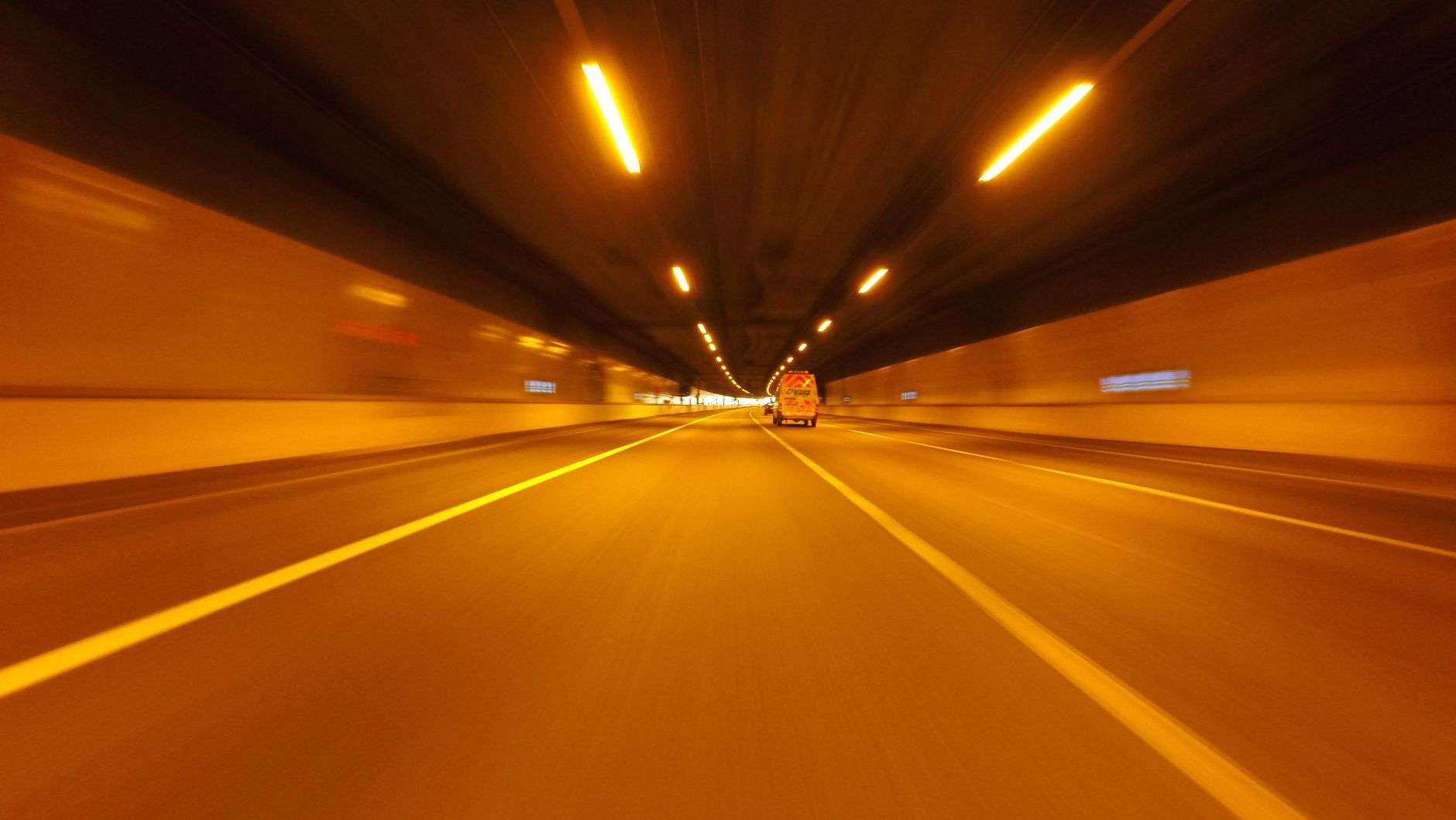
MOBILE, Ala. — Drivers heading east on Interstate 10 through downtown Mobile will need a backup plan on two consecutive nights this week. The Alabama Department of Transportation (ALDOT) has scheduled an overnight Wallace Tunnel closure for the eastbound tube on Wednesday, Sept. 23, and Thursday, Sept. 24, so crews can carry out scheduled maintenance.
According to ALDOT, the eastbound side of the George Wallace Tunnel will close at 9 p.m. each night and reopen at 5 a.m. the following morning. The westbound tunnel is not included in the announced closure.
The department is asking motorists who travel through the area during those hours to plan ahead, allow extra time, look for alternate routes and follow posted detour signs.
Closure at a glance
- What: Eastbound George Wallace Tunnel on I-10 closed for scheduled maintenance
- When: Wednesday, Sept. 23, and Thursday, Sept. 24, from 9 p.m. to 5 a.m. each night
- Where: I-10 eastbound beneath the Mobile River, between downtown Mobile and Blakeley Island
- Detours: Cochrane-Africatown USA Bridge from Water Street, or the Bankhead Tunnel from U.S. 90/Government Street
Recommended alternate routes
ALDOT has identified two detour options for eastbound drivers while the tunnel is closed.
Cochrane-Africatown USA Bridge
Motorists on Water Street can use the Cochrane-Africatown USA Bridge to cross the Mobile River north of downtown. The bridge carries the U.S. 90/98 truck routes and can handle traffic of all sizes, which makes it the more practical choice for tractor-trailers and other large commercial vehicles that would otherwise use the interstate.
Bankhead Tunnel
Drivers coming from U.S. 90/Government Street can use the Bankhead Tunnel, the older of downtown Mobile’s two river tunnels. The Bankhead is limited to smaller vehicles, however. Its vertical clearance is only about 12 feet, and it is open to passenger cars and pickup trucks, not large trucks. Truck drivers should plan on the Africatown bridge instead.
Both detours lead back toward the Causeway and Blakeley Island area, where drivers can reconnect with I-10 eastbound toward the Bayway and Baldwin County.
Tips for drivers during the overnight closure
- Allow extra travel time if you will be crossing the river between 9 p.m. and 5 a.m. on either night.
- Watch for detour signs, lane shifts and work crews near the tunnel approaches.
- Commercial truck drivers should plan to use the Cochrane-Africatown USA Bridge because of the Bankhead Tunnel’s size limits.
- Slow down in work zones and give crews plenty of room.
- Check ALDOT’s traffic information, including the ALGO Traffic website, before heading out for current conditions.
Overnight hours are typically chosen for this kind of work because traffic volumes are much lower than during the day, which limits the disruption to commuters, freight haulers and travelers passing through the region.
A key link on the I-10 corridor
The George Wallace Tunnel carries I-10 beneath the Mobile River, linking downtown Mobile with Blakeley Island and the Mobile Bayway that leads across the bay toward Baldwin County. It is made up of two separate tubes, each with two lanes of traffic, for four lanes in total.
The tunnel is about 3,000 feet long and has a vertical clearance of about 16 feet. Construction began in October 1969, and the tunnel opened to traffic on Feb. 9, 1973, at a cost of roughly $50 million. It was named for George Wallace, who was Alabama’s governor when it opened.
When it opened, the Wallace Tunnel became the third crossing of the Mobile River in the area. Over the decades it has become one of the busiest spots on the Gulf Coast’s stretch of I-10. Traffic counts from 2015 put its use at close to 79,000 vehicles a day, and it is well known to local drivers as a bottleneck at rush hour, on holiday weekends and during the summer beach season.
The tunnel plays a large role in daily life for people who live in Baldwin County and work in Mobile, and for those who make the trip the other way. It is also a key link for tourists headed to the beaches at Gulf Shores and Orange Beach, and for long-haul freight moving along the interstate between Texas and Florida.
The Bankhead Tunnel: Mobile’s first river tunnel
The Bankhead Tunnel, one of this week’s detour options, predates its interstate neighbor by more than three decades. Built between 1938 and 1940 at a cost of about $4 million, the John H. Bankhead Tunnel opened on Feb. 20, 1941. It carries Government Street traffic beneath the Mobile River between Blakeley Island and downtown Mobile.
The two-lane tunnel is about 3,389 feet long. It is named for John H. Bankhead, who represented Alabama in the U.S. Senate from 1907 to 1920 and was the grandfather of actress Tallulah Bankhead. For decades, drivers paid a toll at the east end of the tunnel. The toll was charged from 1941 until the mid-1970s, when the toll plaza was taken down.
The Bankhead is known for its Art Deco entrance and for its flood door, which is designed to keep hurricane storm surge from Mobile Bay out of the tunnel. Because of its limited clearance, it is restricted to cars and pickup trucks.
The Cochrane-Africatown USA Bridge
The other detour route, the Cochrane-Africatown USA Bridge, opened in 1991. It replaced the old Cochrane Bridge, a vertical-lift bridge that had served the crossing for about 60 years.
It was the first cable-stayed bridge built in Alabama and is still the only one in the state. The bridge is about 7,291 feet long, with a main span of 781 feet, and it rises to allow about 140 feet of clearance for ships moving along the Mobile River.
Its name honors two things. The first is the original Cochrane Bridge, which was named for John T. Cochrane Sr., a former president of the Mobile Area Chamber of Commerce. The second is Africatown, the historic community near the bridge’s western approach. Africatown was founded by people who were brought to Mobile aboard the Clotilda, the last known ship to carry enslaved Africans to the United States.
Why hazmat trucks cannot use the tunnel
The Cochrane-Africatown USA Bridge is also the everyday route for a special class of traffic. Vehicles hauling hazardous materials are not allowed to use the Wallace Tunnel. Instead, hazmat traffic on I-10 has to leave the interstate and cross the Mobile River on the Africatown bridge, using the U.S. 90/98 truck route.
Restrictions like this are common for underwater tunnels. A crash, fire or chemical release inside an enclosed tunnel is much harder to contain, ventilate and respond to than one on an open-air bridge, and emergency crews have limited access. Keeping hazardous cargo out of the tunnel reduces that risk for everyone traveling underground. The tradeoff is that this freight must detour onto local streets and surface routes north of downtown, which has long been a concern for transportation planners.
A new bridge on the horizon
The detour is a reminder of why state leaders have spent years pushing for a new crossing. The long-planned Mobile River Bridge and Bayway Project is now moving toward full construction. ALDOT announced on Sept. 18 that financing for the project is complete and that full construction is set to begin Oct. 1, 2026.
The first phase of the project carries a price tag of about $3.2 billion. The financing package includes a federal TIFIA loan of about $2.52 billion, a $550 million Bridge Investment Program grant, a $125 million INFRA grant and additional state funding.
Plans call for a new six-lane, cable-stayed bridge across the Mobile River. The existing Bayway would be restriped to carry six lanes across Mobile Bay, and about a mile of the Bayway would be rebuilt. The project also includes other improvements along the I-10 corridor in Mobile and Baldwin counties.
One of the project’s main goals is to give hazardous-material freight an interstate route across the Mobile River. Today that cargo is barred from the Wallace Tunnel and must travel through local streets instead.
Gov. Kay Ivey said in ALDOT’s announcement that “this major infrastructure investment in Alabama’s Gulf Coast will make monumental improvements for travel and commerce.” ALDOT Transportation Director John Cooper said, “The financing is in place, the construction price is established, and we’re ready to build.”
The new bridge is expected to open in about 2031. Once it opens, it will be tolled. ALDOT has said the per-trip rate for passenger vehicles using an ALGO Pass will be $3, with a $60 monthly unlimited option. No tolls will be charged during construction. The Wallace Tunnel, the Bankhead Tunnel, the Cochrane-Africatown USA Bridge and the Causeway will remain free alternatives.
What comes next
If the maintenance work stays on schedule, the eastbound Wallace Tunnel is expected to reopen at 5 a.m. Thursday, Sept. 24, after the first night of work, and again at 5 a.m. Friday, Sept. 25, after the second. Weather or other factors can affect roadwork schedules, so drivers should watch for updates from ALDOT and pay attention to message boards near the tunnel.
Until then, ALDOT is asking drivers who must cross the river late at night to plan ahead, use the Cochrane-Africatown USA Bridge or the Bankhead Tunnel, and use caution around work crews.