World Mosquito Day: Mobile County Health Officials Urge Residents to Eliminate Standing Water
Ahead of World Mosquito Day, the Mobile County Health Department is urging residents to eliminate standing water and take other precautions against mosquito-borne disease.
MOBILE, Ala. — As World Mosquito Day approaches, the Mobile County Health Department (MCHD) is reminding residents that the observance is not meant as a celebration, but as a call to action against mosquito-borne illness. World Mosquito Day commemorates a discovery made in 1897 by British physician Sir Ronald Ross, who found that female Anopheles mosquitoes transmit malaria. That insight, health officials say, continues to shape global public health efforts more than a century later, and it frames the department’s annual message to residents: the smallest precautions taken at home can prevent the largest community outbreaks.
Ross made his breakthrough while working in India, where he demonstrated that the Anopheles mosquito carries the malaria parasite from one human host to another. The discovery transformed how governments approached mosquito control and helped launch the modern discipline of vector management, the field that health departments across the Gulf Coast still practice today. Each August, agencies like MCHD use the anniversary not to mark a victory over the insects, but to remind the public that the threat never fully went away — it simply changed form, moving from malaria in Ross’s era to a broader family of viruses that circulate in warm, humid regions like south Alabama.
Mosquito-Borne Diseases Remain a Local Concern
In Mobile County, the presence of Anopheles, Culex and Aedes mosquito species underscores the ongoing risk of mosquito-borne disease locally. Each of the three groups behaves differently and favors different breeding conditions. Culex mosquitoes, often active in the evening hours, are associated with West Nile virus, which has appeared in Alabama in most recent years. Aedes species, aggressive daytime biters that thrive in small containers of clean water, are capable of carrying Zika, Dengue and Chikungunya. Anopheles, the genus Ross identified, still capable of transmitting malaria, breeds in quiet, sunlit water such as ditches and pond margins.
In recent years, communities along the Gulf Coast have reported cases of Zika, Dengue, West Nile virus and Chikungunya, all of which can carry serious health impacts for those infected. Most of these illnesses produce fever, headache, body aches and fatigue, but severe infections can lead to hospitalization, long-term neurological complications, and in vulnerable patients, death. Health officials note that the region’s climate gives mosquitoes a long active season, stretching from early spring well into late fall, and that heavy rains during hurricane season can suddenly multiply the number of breeding sites in a matter of days.
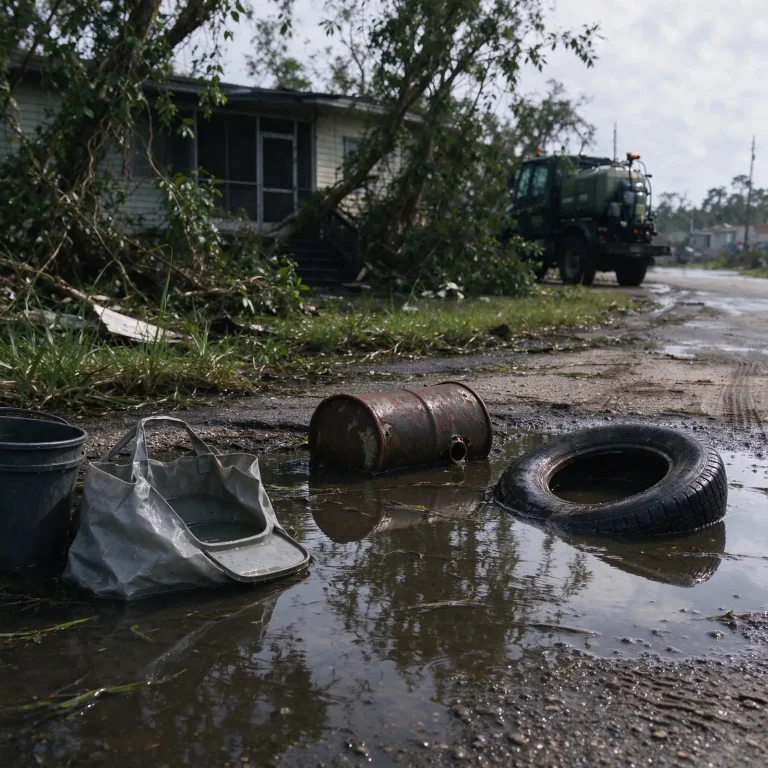
Health officials emphasize that many of these risks are preventable. Everyday habits — such as allowing standing water to collect in buckets, containers or yard debris — create breeding grounds for mosquitoes around homes. A single discarded tire or neglected flowerpot saucer can hold enough water to produce a new generation of mosquitoes within about a week, which is why vector control programs stress that residents, not just government crews, are the first line of defense. Failing to use EPA-approved insect repellents or wear protective clothing, like long sleeves and pants, can further increase a person’s risk of exposure.
“World Mosquito Day is a reminder that prevention starts at home,” said Dr. Kevin Michaels, Health Officer for Mobile County. “Simple steps can significantly reduce the risk of mosquito-borne illness for individuals and the community.”
Steps Residents Can Take
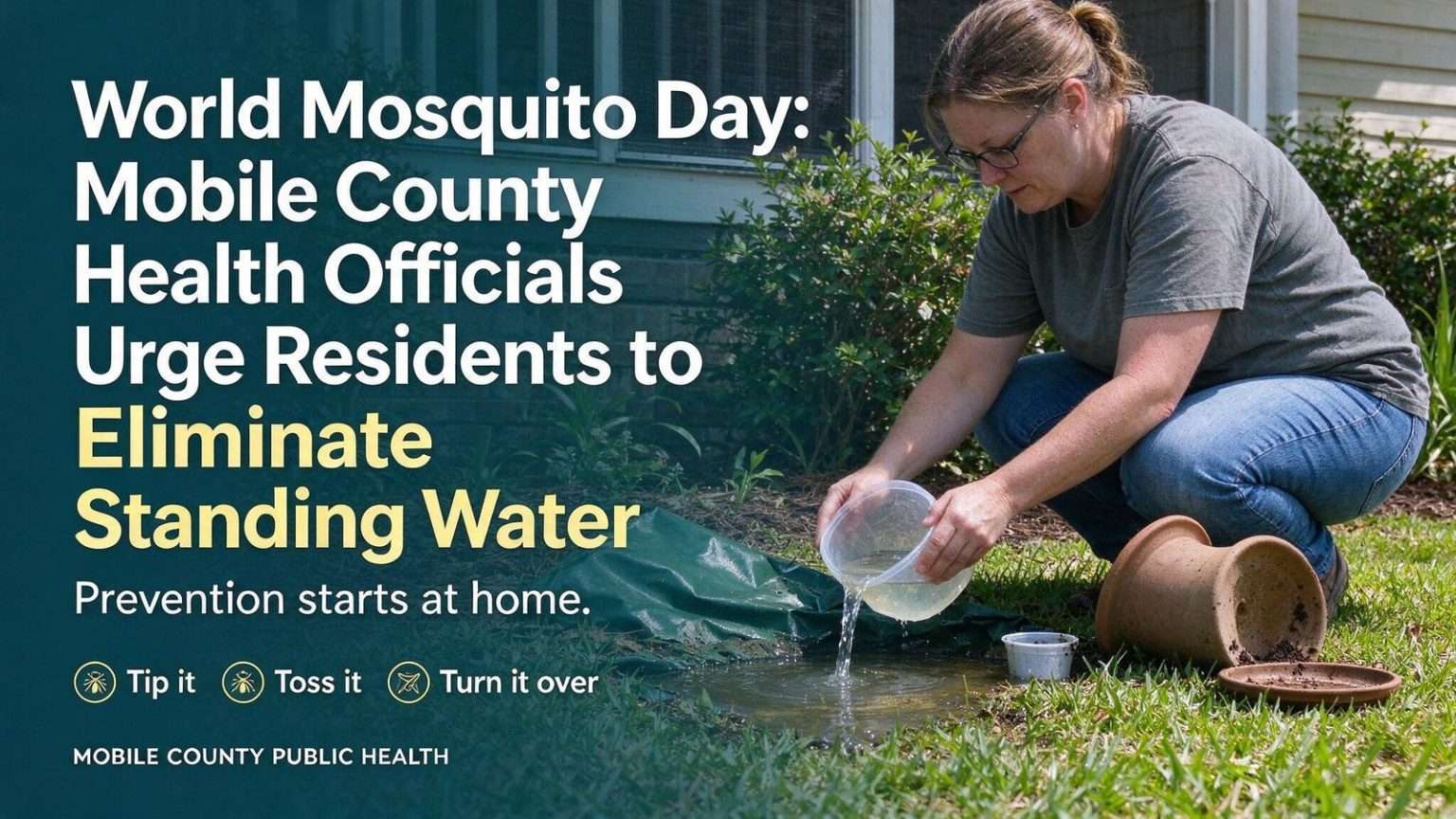
The Mobile County Health Department is encouraging residents to take several precautions, starting with the elimination of standing water around homes. That includes water collecting in flowerpots, gutters, tarps, buckets, pet dishes, children’s toys and other outdoor containers, all of which should be emptied, scrubbed or stored upside down. Gutters clogged with leaves are an especially common and overlooked source, because they hold shaded water that homeowners rarely see. Tarps stretched over boats, firewood and grills should be pulled tight so that no pockets form where rain can pool.
When outdoors, the department recommends using EPA-approved mosquito repellents, which are registered after review of their active ingredients and have been shown to be safe and effective when used as directed. Repellents work best when applied to exposed skin and clothing according to the product label, and they should be reapplied after swimming or heavy sweating. Residents who prefer to work in their yards for long stretches during warm months are encouraged to treat repellent use as routine, the same way they would treat sunscreen. Wearing long sleeves and pants, particularly during peak mosquito activity at dawn and dusk, adds another layer of protection, since light-colored, loose-fitting clothing is harder for mosquitoes to bite through.
Home maintenance matters as much as personal protection. Ensuring that window and door screens are intact keeps mosquitoes from entering homes, and even small tears can be enough to admit the insects on summer evenings. Residents planning to spend time on porches or patios can check screens for holes, make sure doors close tightly, and consider using fans in outdoor seating areas, since mosquitoes are weak fliers and struggle against moving air. Swimming pools that are neglected or left uncovered can become significant breeding sites, so owners of vacant properties are asked to keep them maintained or drained.
Residents are also encouraged to report mosquito activity so that the department can direct its control efforts where they are needed most. Complaints about heavy mosquito concentrations, standing water on public property, or neglected private properties can be reported to MCHD, which uses the reports to prioritize inspection and treatment routes. Vector control staff respond by surveying neighborhoods, treating standing water that cannot be drained, and, when conditions warrant, conducting spraying operations in the affected areas during nighttime hours when the insects are most active and when beneficial pollinators are least likely to be harmed.
Why the Gulf Coast Stays on Alert
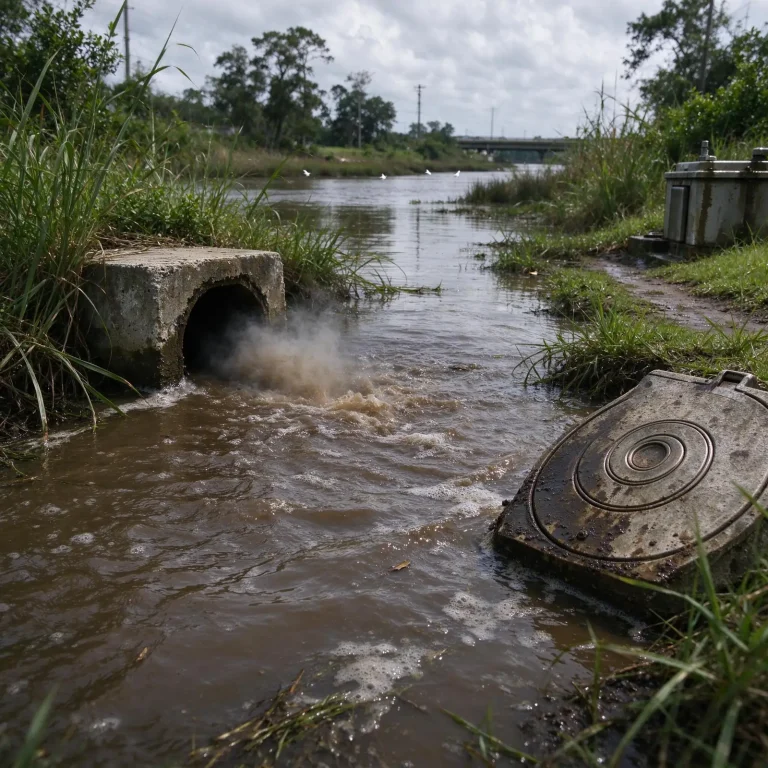
South Alabama’s environment makes sustained vigilance necessary. The county’s mix of tidal marshes, bayous, drainage canals and suburban landscaping gives mosquitoes a near-continuous supply of habitat, and the region’s mild winters mean populations can rebound quickly once warm weather returns. Travel adds another dimension: residents who visit regions where tropical viruses circulate can return carrying an infection, which local health agencies monitor for, making household mosquito prevention important even for people who never leave the neighborhood.
Local governments and the health department also coordinate on a larger scale. Drainage maintenance, ditch management and wet-weather infrastructure all influence where water stands after storms, and public works crews and vector control teams work through the same neighborhoods that residents report. After major rain events, departments typically urge a community-wide cleanup of containers, since debris left by storms can hold water for weeks. The message from officials is consistent: mosquito control is a shared responsibility, and the effectiveness of any government program depends on what happens in individual yards.
For older residents, young children, pregnant women and people with weakened immune systems, the stakes of prevention are higher, because mosquito-borne viruses tend to hit those groups hardest. Health officials recommend that families check on elderly neighbors after heavy rains and help clear yards of water-holding debris when residents are unable to do it themselves. Pet owners are reminded that mosquitoes also threaten animals, particularly dogs, which makes year-round prevention advised by veterinarians another part of the region’s overall defense.
A Century of Vector Control in Alabama
Organized mosquito control has a long history along the northern Gulf Coast, stretching back to the era when malaria and yellow fever still shaped settlement patterns across the South. Early campaigns focused on draining swamps and screening homes, and over the decades those efforts evolved into the modern surveillance-based programs run by county health departments today. MCHD’s vector work now combines mosquito trapping and species identification with laboratory testing and targeted treatment, an approach that allows crews to concentrate resources on the areas and species that pose the greatest risk rather than treating every corner of the county indiscriminately. Officials say that surveillance data, combined with resident reports, gives the department its best picture of where mosquito populations are building from week to week.
A Reminder With a Century of History
More than a century after Ross’s discovery, the tools have changed — repellents, screens, surveillance programs and public education — but the underlying principle he demonstrated remains the same: controlling mosquitoes means controlling the water where they breed. Health officials say that World Mosquito Day is best observed not with commemoration but with a walk around the yard, a check of the gutters and a bottle of repellent by the door.
Residents who want more information about mosquito prevention, or who wish to report mosquito activity or standing water in their neighborhoods, can contact the Mobile County Health Department. Officials say that as the late-summer season continues, the most valuable contribution any resident can make is the simplest one: tip it, toss it or turn it over, so the next rain leaves nothing behind for mosquitoes to call home.