

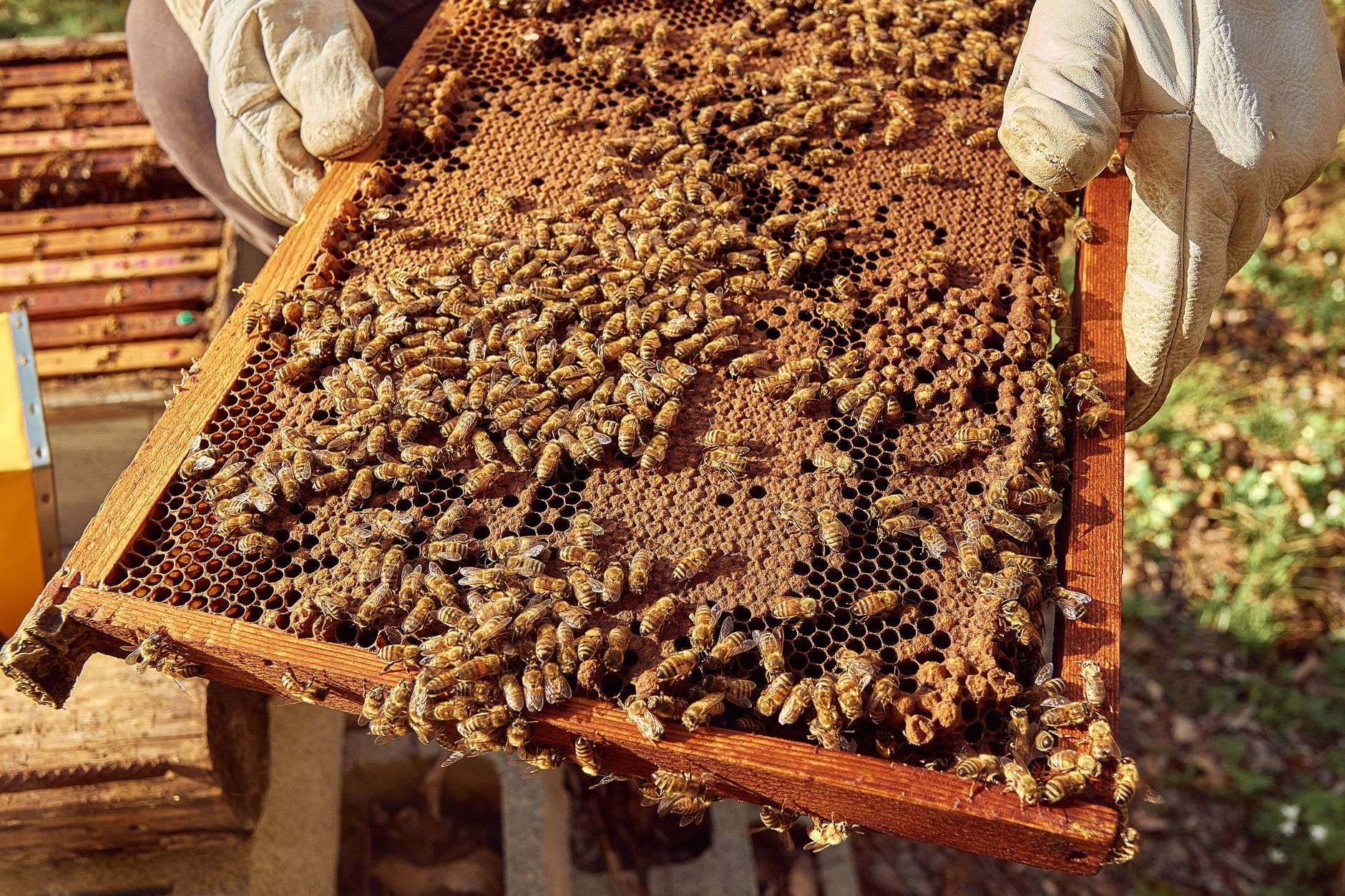
Some kids spend their weekends on screens. Gracie McTaggart spent hers in a bee suit. In 2022, at age 12, the young beekeeper was already a two-year veteran of the craft, helping tend eight hives and harvest local honey at Allegri Farms in Daphne, a young beekeeper whose interest took root at a 4-H Club meeting and grew into a serious hobby.
Her story is a small one, but it touches on something much bigger: the quiet, essential work honeybees do for the farms, gardens and flowering landscapes of Baldwin County and beyond.
How a 4-H Meeting Turned Into a Hobby
Gracie first learned about bees and honey around 2020 at a 4-H Club meeting in Fairhope. From there she learned the hands-on side of honey harvesting alongside her friend Evan and his father, Dr. Michael Pursley, a Fairhope cardiologist who himself learned beekeeping from his own father.
Gracie affectionately calls him “Uncle Daddy Michael.” For a time he kept hives on the roof of his medical practice building near Thomas Hospital in Fairhope, an unexpected spot for a colony but not an unusual one; rooftop beekeeping has become popular in towns and cities around the country because bees will happily forage a mile or more from their hive. Pursley later moved the hives to Allegri Farms in Daphne.
That is where Gracie and Evan now care for eight hives. The partnership is a good example of how beekeeping knowledge has traditionally been passed along: from parent to child, mentor to student, one generation of keepers to the next.
4-H, the youth development program run nationally through the Cooperative Extension System and in Alabama by the Alabama Cooperative Extension System through Auburn University and Alabama A&M University, has long been a gateway for young people into agriculture, animal science and hands-on projects like beekeeping. Clubs meet across Baldwin County, and many young members discover lifelong interests there, just as Gracie did.
A Monthly Routine at the Hives
Gracie takes the responsibility seriously. She visits the hives every month to check on them and tend to the colonies. Regular inspections are the backbone of good beekeeping. Keepers typically look for a healthy queen and signs she is laying eggs, check whether the colony has enough stored honey and pollen, watch for pests and disease, and make sure the hive has enough room so the bees do not become crowded and swarm.
Along the Gulf Coast, where winters are mild and something is blooming for much of the year, bees stay active for long stretches of the calendar. That long season is one reason the region can support two honey harvests a year.
Two Harvests, Two Kinds of Honey
At Allegri Farms, honey is harvested twice a year, once in winter and once in summer. The two batches look noticeably different. Winter honey is darker, which Gracie attributes to the darker plants the bees visit in that season. Summer honey is lighter, reflecting the brighter plants in bloom.
Beekeepers everywhere see this kind of variation. The color and flavor of honey depend on the nectar sources bees are working at the time, which is why honey from different seasons and regions can range from pale gold to deep amber, and from mild and floral to bold and molasses-like.
From Comb to Jar: How the Harvest Works
Harvesting honey is a step-by-step process, and Gracie knows it well:
- Clearing the bees. First, the bees are blown out of the honey boxes so the frames can be carried to the spot where the honey will be extracted.
- Uncapping. Bees seal finished honey in wax cells. The extraction starts by scraping those wax caps off the honeycomb to open the cells.
- Spinning. The frames are placed in an extractor and spun, and the force flings the honey out of the comb while leaving the comb largely intact.
- Filtering. The honey runs through a mesh filter into a 5-gallon bucket, straining out bits of wax and other debris.
- Bottling. The buckets have a spout and nozzle at the bottom that make it easy to fill jars.
The yield from the eight hives is about 75 eight-ounce bottles of honey per harvest.
One of the advantages of spinning honey out rather than crushing the comb is that the bees can reuse the drawn comb. Building wax takes a great deal of energy for a colony, so returning intact frames to the hive gives the bees a head start on the next round of honey.
What About Local Honey and Allergies?
Local honey has a devoted following, and many people turn to it for comfort. Folk wisdom credits honey with soothing sore throats, easing coughs, shortening head colds and settling upset stomachs, and it has long been valued for its natural antimicrobial properties. Honey’s ability to calm a cough is one of the better-supported of those traditional uses.
Many people, including plenty of Gulf Coast residents who suffer through the region’s heavy spring and fall pollen seasons, also eat local honey hoping it will help with seasonal allergies. The idea is intuitive: local bees forage on the same plants that are blooming around you, so a spoonful of their honey might, in theory, help the body get used to those plants. Scientific studies on that question have produced mixed and limited results, so honey is best enjoyed as a food rather than relied on as an allergy treatment. Anyone with significant allergies should talk with a doctor.
One important safety note that health authorities stress: honey should never be given to infants younger than 1 year old because of the risk of infant botulism.
Why Bees Matter to Baldwin County
Honeybees and other pollinators are critical to growing crops and flowers nearly everywhere. Many fruits, vegetables and nuts depend on insect pollination to produce a good harvest. In Baldwin County, one of Alabama’s leading agricultural counties, that work supports everything from backyard gardens and roadside produce stands to larger farm operations.
Gracie and her mother, Katherine, noticed something at Allegri Farms that seemed to reflect the bees’ presence: the crops there looked bigger, brighter and healthier than what they had seen elsewhere. They credit the hard-working bees that call the farm home.
Pollinators across the country have faced serious challenges in recent decades, including habitat loss, pesticides, parasites such as the varroa mite, and disease. Beekeepers, gardeners and farmers who keep hives healthy and plant pollinator-friendly flowers all play a part in supporting them.
Want to Get Started? What Readers Should Know
Gracie’s experience shows that beekeeping can be learned at almost any age with the right mentors. For readers who are curious, a few general pointers:
- Find a mentor or club. Local beekeeping associations and 4-H programs are the best way to learn from experienced keepers. The Alabama Cooperative Extension System offers beekeeping resources and can point residents to local contacts.
- Learn before you buy. Many new keepers take a beginner class and spend time in an established apiary before setting up their own hives.
- Check local rules. Some neighborhoods and municipalities have rules about keeping bees, so it pays to check before installing a hive.
- Plant for pollinators. Even without a hive, planting native flowering plants and limiting pesticide use helps bees and other pollinators.
- Buy local. Purchasing honey from local beekeepers at farmers markets and farm stands supports the people who keep colonies healthy in the community.
For Gracie, the reward is simple and sweet: a hobby that connects her to friends, to the land at Allegri Farms and to the tiny workers who make it all grow.