A West Mobile Homeowner Shot an Intruder. Now a Grand Jury Will Decide Whether Charges Follow.
Newly released 911 transcripts detail the minutes before and after a west Mobile homeowner shot and killed a man trying to break into his house on Calgary Drive, including a neighboring business owner's call and the homeowner's wife on the line as the shot was fired.
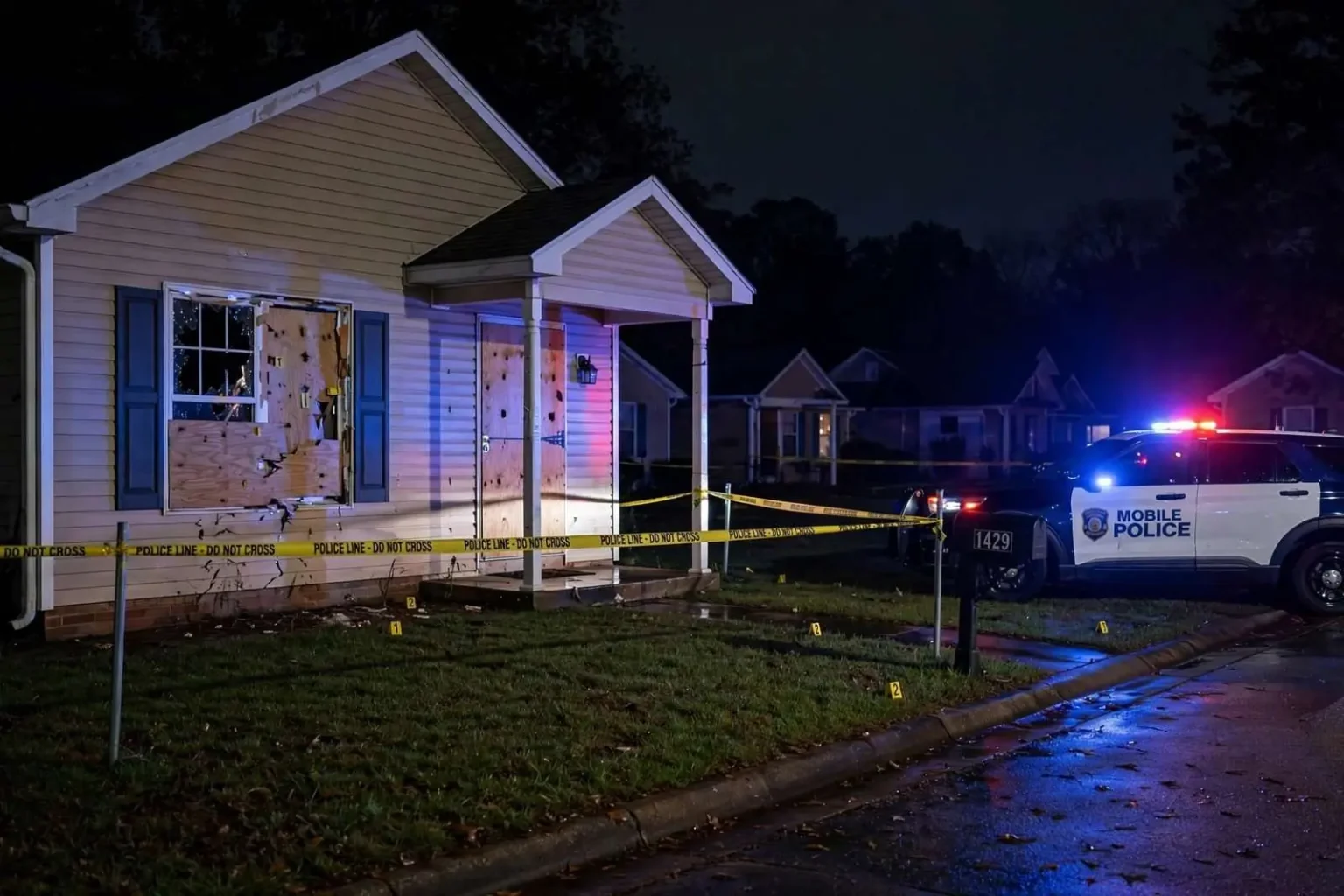
WEST MOBILE, Ala. — A Mobile County grand jury will decide whether charges should be pursued against a man who shot and killed an intruder inside his West Mobile home, a case that turns on one of the most contested areas of Alabama law: when a homeowner may lawfully use deadly force against someone who has broken in.
Just after 9 p.m. Friday, Sept. 7, Mobile police officers were called to a home on Calgary Drive, off Leroy Stevens Road in West Mobile. Investigators said a man had broken into the house through a window. A man who lived there was inside at the time and shot him.
Investigators identified the intruder as 37-year-old David Lee Jr.
The Mobile County District Attorney’s Office is sending the case to a grand jury to determine whether charges should be filed. No arrest has been announced, and the resident who fired the shot has not been publicly identified.
What Lee’s Family Says Happened
Lee’s sister said her brother had just been released from a mental health facility. She said he broke into a random house and did not know who was inside.
That account, if borne out, describes a scenario that sits uncomfortably outside the usual framing of a home invasion. It suggests a man in crisis rather than a man committing a calculated burglary — and it does not, on its own, change the legal analysis for the person who was inside the house. Under Alabama law, the question is not what the intruder intended. It is what the resident reasonably believed at the moment he acted.
Neighbors React
A woman living nearby said she believed the shooting was justified.
“He had a right to do it. I would too,” said Cecelia Primm. “If somebody would have broke in mine, I would’ve done the same thing too,” Primm continued.
On Wednesday, a medical waste truck sat outside the home while cleaners worked inside.
Alabama’s Stand Your Ground and Castle Doctrine Provisions
Alabama is among the states that have codified both a “castle doctrine” and a broader stand-your-ground provision, and the two work together in a case like this one.
Under the state’s self-defense statute, a person is justified in using deadly physical force when they reasonably believe that another person is using or about to use unlawful deadly physical force against them, or is committing or about to commit certain enumerated felonies. Critically, the statute specifically addresses unlawful entry: a person is justified in using deadly physical force when another person has unlawfully and forcefully entered, or is unlawfully and forcefully entering, a dwelling, residence or occupied vehicle.
The law also removes the duty to retreat. A person who is not engaged in unlawful activity and who is in a place they have a right to be has no obligation to withdraw before using force they are otherwise entitled to use.
Alabama further provides for immunity rather than merely a defense at trial. If the use of force is found to have been justified, the person who used it is immune from criminal prosecution and from civil liability. That immunity can be determined by a court at a pretrial hearing, which is a meaningfully different posture from having to raise self-defense before a jury at trial.
Why the Case Still Goes to a Grand Jury
To a reader encountering the phrase “grand jury” alongside a fact pattern that looks like a textbook lawful shooting, the referral can seem like an accusation. It generally is not.
In Alabama, a grand jury’s function is to review evidence presented by prosecutors and determine whether there is probable cause to charge someone with a crime. Proceedings are conducted in secret, the standard is far below the beyond-a-reasonable-doubt standard used at trial, and the defense does not present a case. A grand jury may return an indictment, or it may return a “no bill,” declining to charge.
Prosecutors in Mobile County and across Alabama routinely route fatal shootings to a grand jury even when the initial facts appear to support a claim of justification. There are practical reasons for that practice. It places the decision in the hands of citizens rather than in the sole discretion of a prosecutor, which insulates the outcome from the appearance of favoritism in either direction. It creates a formal record. And in cases where a person has died, it provides the family with the assurance that an independent body reviewed the circumstances.
The referral, in other words, is a procedural step rather than a signal about the strength of the case against the resident. Prosecutors have not indicated what charge, if any, they would ask a grand jury to consider.
The Detail That Complicates the Picture
The element of this case likely to draw the most attention is the account from Lee’s sister that he had recently been released from a mental health facility and that he entered a house at random.
It is worth being precise about what that detail does and does not do legally. It does not create a defense for the person who entered the home — and that person has died, so no prosecution of him will occur. It does not diminish the reasonableness of the resident’s belief; a person awakened by someone climbing through a window has no way to assess the mental state of the person entering, and the law does not require them to try.
What the detail does is raise a separate question, one that sits outside the criminal case entirely: how a person in acute crisis came to be moving through a residential neighborhood at night, entering a stranger’s home. That is a question about the availability of mental health care, about discharge planning, and about what follow-up exists for people leaving inpatient treatment. It is not a question a grand jury will take up.
Alabama, like most states, has spent decades operating a mental health system with fewer inpatient beds than demand and limited community-based follow-up capacity. Encounters between people in psychiatric crisis and armed civilians or law enforcement are a recurring consequence of that gap. Nothing in the public account of this case establishes what care Lee received or what happened after his release, and this report does not suggest otherwise. But the family’s account is the part of this story that will likely outlast the legal proceeding.
What Happens Next
The case will be presented to a Mobile County grand jury. Grand jury proceedings are not public, and the timing of a presentation is generally not announced in advance. If the grand jury returns a no bill, the matter ends there. If it returns an indictment, the resident would be formally charged and the case would proceed to circuit court, where a claim of self-defense immunity could be raised at a pretrial hearing.
Mobile police have not released additional details about the layout of the entry, the sequence of events inside the house, or whether any 911 call was placed before the shot was fired. The investigation is being handled by the department’s violent crimes unit, and the district attorney’s office has not commented beyond confirming the grand jury referral.
For Residents Weighing the Same Question
Cases like this one prompt a predictable round of conversation about what a homeowner is and is not permitted to do. A few points are worth stating clearly.
The legal protection Alabama extends applies to a reasonable belief formed in the moment, judged on the circumstances as they appeared at the time — not on facts learned afterward. That the intruder turned out to be unarmed, or in crisis, or known to no one in the house, is assessed against what the resident could perceive when they acted.
The protection is also not unlimited. It attaches to unlawful and forceful entry into a dwelling, residence or occupied vehicle, and to the enumerated circumstances in the statute. It does not extend to force used after a threat has ended, and it does not cover a person who was themselves engaged in unlawful activity.
Anyone who uses force in defense of their home should expect a full investigation regardless of how clear the circumstances seem. That is the normal course, and in Alabama it frequently includes a grand jury review. Calling 911 immediately, securing the scene, and cooperating with responding officers are the steps law enforcement consistently advises.
South Alabama News will report the outcome of the grand jury’s review when it becomes public.
Update: 911 Transcripts Detail the Minutes Before the Shooting
Transcripts of the 911 calls placed that night have since been released, and they narrow a sequence that had been described only in summary. They show two separate callers, roughly six minutes apart, and a shooting that occurred while a dispatcher was still on the line.
The First Call
The first call came in shortly after 9 p.m. from the owner of a business near Calgary Drive, who did not want to be identified.
“He was just climbing at the top of our barbed wire getting in when I saw him,” the caller told the operator.
The business owner said his surveillance cameras recorded what he described as odd behavior around 9:13 p.m.: a man crawling up stairs, attempting to climb through a window, then falling and crushing a doghouse.
Less than 10 minutes later, according to the transcripts, the homeowner on Calgary Drive fired the shot that killed David Lee Jr., 37.
The Second Call
At 9:19 p.m., the homeowner’s wife called 911.
“There’s somebody trying to break into my house,” she told the operator.
Asked whether she knew the person, she answered: “No! I don’t know the person. My husband is armed and he is trying to get the person to leave. He is knocking at our window.”
The transcripts record a loud crash in the background. The caller screams, “He broke my window!” The operator then hears a gunshot.
When the operator asked whether the person was inside the house, the caller said: “No! My husband had to shoot.”
According to the transcripts, Lee attempted to come inside the home after being shot. The caller was transferred to the Mobile Police Department, telling the new line, “Help us! Please help us!”
Why the Transcripts Matter Legally
The detail in these calls speaks directly to the legal questions laid out above. Alabama’s self-defense statute turns on what a resident reasonably believed at the moment force was used, and on whether an intruder had unlawfully and forcefully entered or was entering the dwelling.
The transcripts place the window breaking immediately before the shot, and they record the wife telling a dispatcher, in real time, that she did not know the man outside and that her husband was trying to get him to leave. Contemporaneous statements of that kind — made while events are unfolding rather than reconstructed afterward — carry particular evidentiary weight, and a grand jury reviewing the case would be expected to consider them alongside the physical evidence and the accounts of responding officers.
None of that resolves the matter. The Mobile County District Attorney’s Office has said the case will be presented to a grand jury, and it remains unclear when that will happen. No one has been charged.