

A cluster of Midtown Mobile businesses built around advertising, marketing and local media has grown to include Access Magazine, which has relocated into a building at the corner of Hallett and Dauphin streets that once housed a neighborhood bakery. The property, formerly home to Smith’s Bakery, is owned by Tony Atchison, whose Atchison Home business anchors the large brick building on the corner. By the end of this week, eight companies tied to advertising, marketing, video, film and publishing will operate out of the main building and a smaller gray structure across Hallett Street, a cluster some in the neighborhood have started calling “Media Row.”
The name has the feel of an inside joke that hardened into an address. Nobody planned Media Row, at least not officially. It grew out of decisions by individual tenants — a video house here, a radio station there — that stacked up until the corner block became the place where Mobile’s creative trades concentrate. That kind of organic clustering is how most recognized creative districts in American cities actually form: no master plan, no incentive package, just a landlord with the right instincts, a few anchor businesses, and low rents in a neighborhood with good bones. Midtown Mobile, with its mid-century commercial buildings, mature tree canopy and quick access to both downtown and Spring Hill, has offered exactly those conditions.
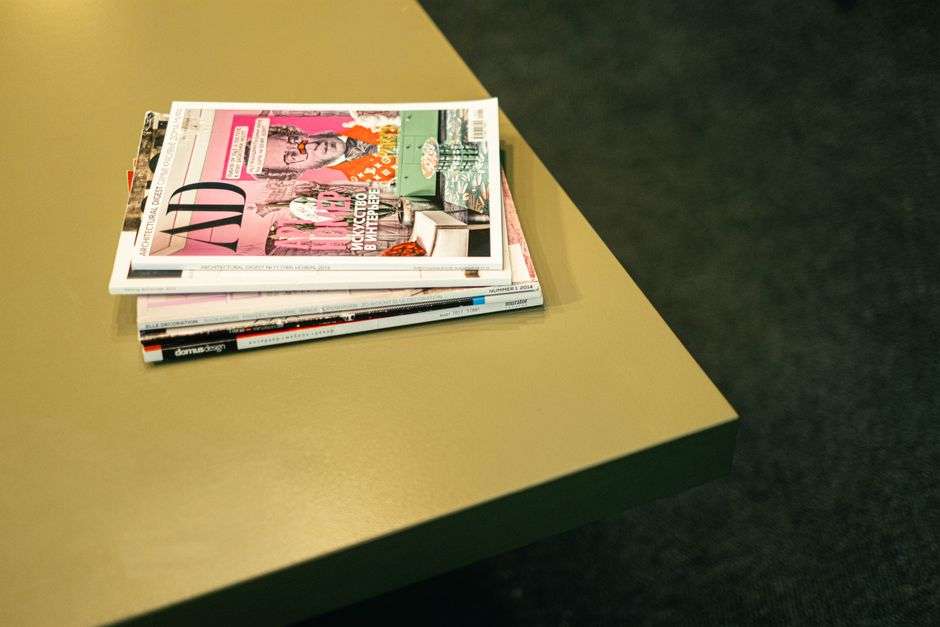
Access Magazine, a lifestyle and style publication aimed primarily at women readers in the Mobile area, has moved its staff into the gray building after spending the past year working out of founder and publisher Hayley Hill’s home. The move from a dining-room-table operation to a dedicated office is the standard inflection point for a young publication — the moment a side project becomes a company with a staff, an editorial calendar and a business address. For Hill, it also means being a walk-in destination: advertisers, contributors and readers can now find the magazine in a building they already visit for other Media Row businesses.
The magazine joins two video production companies, a radio station, a marketing firm and a film production company already located in the main Bakery Building. That mix matters more than the raw head count. Video production companies need writers and art direction; radio needs producers who understand advertising sales; marketing firms need photography and film partners for their clients’ campaigns. When those functions sit within a few dozen feet of each other, work starts crossing the hall — a magazine feature becomes a video package, a radio spot becomes a full campaign. Media clusters pay off not through synergy on paper but through hallway conversations that turn into contracts.
The Bakery Building’s Second Act
Advertising and marketing firm Hummingbird Ideas is also expanding into another suite within the Bakery Building this week, moving over from its longtime home in the Tower at Ryan Park next door. The short move — from one corner of the block to another — signals the gravity the cluster has developed. Hummingbird built its reputation locally through campaign work for regional brands and nonprofits, and its decision to consolidate inside the bakery complex puts its creative team physically adjacent to the production companies it regularly partners with. Shorter feedback loops between account staff and producers are one of those practical advantages that only show up when colleagues share a building.
A wine and retail shop, Red & White, plans to open soon on the building’s ground floor in space that formerly housed True Midtown Kitchen, and a group of architects rounds out the roster of new tenants moving into the complex. The retail component rounds out the mix in a way that pure office clusters never manage. Ground-floor retail gives the building a public face during business hours, gives the media tenants a lunch spot and an after-work stop, and gives the neighborhood a reason to walk past. Architects in the complex add their own density to the creative economy — design professionals who can collaborate with the branding and video tenants on everything from set construction to client presentations.
The reuse of the former bakery building also preserves a piece of Midtown’s commercial history. Smith’s Bakery served the neighborhood for years, and its old brick structure — with the deep floor plates and heavy construction typical of mid-century commercial work — turned out to be exactly the kind of space creative businesses need: large open areas for studios and editing suites, divisible suites for growing firms, and street frontage that gives small brands visibility. Communities across the country have converted similar neighborhood commercial buildings into creative hubs precisely because the old construction adapts better than modern strip retail does.
Building a Magazine Against the Odds
For Hill, the move represents more than additional square footage. After three and a half years in business, she said Access has reached a level of stability that once seemed uncertain for a locally owned magazine in a media market where new publications often struggle to survive their first few years. The failure rate for start-up magazines is brutal even in large markets, and in a metro the size of Mobile — where ad budgets are finite and national lifestyle titles already compete for shelf space — the odds are steeper still. Reaching year three with a growing staff and a commercial address is, by the industry’s own benchmarks, the point where a publication stops being an experiment.
“We’ve got our claws in,” Hill said. “I feel like the first two to three years people were afraid of us because so many magazines fail. I don’t think people are scared of us failing anymore.”
That confidence cuts both ways. Advertisers who once hesitated to commit budgets to an unproven title now have three years of circulation history, event programming and reader engagement to evaluate, and Hill’s remark reflects a shift in how the local business community treats the magazine — less as a gamble and more as an established media buy. For a publication aimed at women readers across the Mobile area, that shift opens categories of advertising — fashion, medical practices, real estate, home services — that depend on exactly the audience loyalty a surviving lifestyle title builds.
Why Midtown Draws the Creative Trades
Media Row did not emerge from nowhere, and its location tells a story about how Mobile’s economy has shifted. Downtown’s revival — restaurants, bars, condos and the entertainment corridor along Dauphin Street — pulled significant creative energy into the central business district, but downtown rents and parking realities do not suit every small business. Midtown offers a middle path: commercial corridors like Old Shell Road, University Boulevard and the Dauphin Street extension, where rents are gentler, parking is easier, and buildings from the 1950s and 1960s sit on generous lots. For companies whose work involves hauling camera equipment, hosting clients, and growing headcount without moving every two years, that combination is hard to beat.
The Tower at Ryan Park, Hummingbird’s former home next door, represents the other half of Midtown’s commercial stock — the office-park tradition that housed Mobile’s professional services through the late twentieth century. A marketing firm trading that setting for a creative cluster building is a small but telling migration: account executives increasingly want to sit beside the people who actually produce the work, and buildings organized around production — studios, editing bays, rehearsal space — have become the preferred address for agencies that used to spread across multiple suites.
The gray structure across Hallett Street, now Access Magazine’s home, adds a second node to the cluster rather than filling the first one to capacity. Multi-building clusters work the way office campuses do: the main building houses the larger production tenants, the satellite structure takes newer or smaller operations, and the two share parking, foot traffic and identity. Hill’s staff gains not just an office but adjacency to a radio station, two video houses, a film company and a marketing firm — the full supply chain a local magazine touches every month as it plans covers, shoots features and sells sponsorships.
What a Local Magazine Does for a Market
Access’s stability has implications beyond its own staff. Locally owned publications perform functions national titles cannot: they cover local events with genuine knowledge, they feature local businesses and personalities that outside media ignore, and they keep advertising dollars circulating inside the metro rather than shipping them to a national sales office. In a market Mobile’s size, where the daily paper has contracted and broadcast outlets focus on spot news, a healthy lifestyle magazine fills a gap in how the community sees itself — covering the fundraisers, the new restaurants, the medical milestones and the home trends that shape how local life actually feels.
The media cluster amplifies that role. When a magazine, two video production companies, a film company, a radio station and a marketing firm share a block, cross-projects become routine: the magazine’s features turn into sponsored video content, the radio station’s hosts become event emcees, the marketing firm’s clients end up in magazine spreads and on film. Advertisers get package deals across platforms that none of the tenants could assemble alone, and the collective output raises the professional floor for everyone involved — crews learn each other’s standards, and clients get work that looks like it came from a much larger market.
That professional lift is one reason clusters like Media Row matter for a city’s broader economy. Young creatives who once assumed a career in video, design or publishing required a move to Atlanta, Nashville or New York increasingly find they can build one in Midtown Mobile — and the ones who stay become the next round of founders, hiring locally and selling nationally from a Gulf Coast address. Every established tenant that survives its risky early years lowers the perceived risk for the next one, which is exactly the dynamic Hill described when she noted that people are no longer afraid Access will fail.
The Neighborhood Effect
Residents around Hallett and Dauphin streets get their own benefits from the cluster. Ground-floor retail like Red & White gives the block a daytime pulse, the offices bring steady foot traffic that supports nearby restaurants and coffee shops, and creative businesses tend to invest visibly in their buildings — signage, lighting, landscaping — because their space is part of their brand. A corner that once closed at the bakery’s last batch now stays active from morning meetings through evening shoots, and activity of that kind is the single most reliable predictor of how a neighborhood commercial block ages.
Whether Media Row grows into a formally recognized district — with its own marketing identity, events and additional buildings — will depend on whether the pattern repeats elsewhere on the corridor. Clusters consolidate when a second landlord copies the first one’s playbook and recruits similar tenants, and Midtown has the inventory of underused commercial buildings to support that. What is already certain is the current state of the block: eight companies in two buildings, a wine shop on the way, architects moving in, and a three-and-a-half-year-old magazine with “its claws in” holding down the corner office. For a neighborhood that spent decades watching its commercial buildings age quietly, that is a noticeably louder heartbeat.