

F. “Tiger” Marston, who has spent 25 years as the city of Mobile’s municipal cemeteries manager, is retiring this summer, closing out a career in the death care profession that spans half a century.
Marston’s connection to the work began long before he took the reins of Mobile’s city-owned cemeteries. Counting four summers during his high school years, 2020 marks his 50th year in the profession.
He got his start as a teenager cutting grass and digging graves, work he has often described as learning the business “from the underground, up.”
Over the decades, Marston held a number of roles in the local death care industry before joining the city. He served as director of the Catholic Cemetery of Mobile, as vice president of Mobile Memorial Gardens, and as a funeral counselor at several funeral homes in the area, before spending his final two and a half decades as the city’s cemeteries manager.
In that time, he estimates he met and worked with thousands of families across Mobile and Baldwin counties, almost always during some of the hardest days of their lives.
Unlike many professions where a first meeting is a happy occasion, Marston has said there is rarely room for that kind of pleasure in his line of work. Instead, he has described his focus as providing the best possible “family service” during moments that call for trust, care and discretion.
That trust, he has said, is not something families choose to extend so much as something they are forced to rely on when a loved one dies. Funeral and cemetery professionals are asked to step in during moments of grief and handle arrangements with dignity, a responsibility Marston said he tried to honor with every family he served.
The arc of his career mirrors the arc of the Gulf Coast’s death care industry itself. The Mobile area’s funeral and cemetery trade — a network of family-owned homes, church-affiliated graveyards, memorial parks and municipal grounds — has long run on people who learned the work the way Marston did, starting in the physical labor of the grounds and rising into the management of them. His half century spans the industry’s transformation from an almost entirely local trade into one increasingly consolidated by national corporations, which made a caretaker of his experience and local memory rarer with each passing year.
Twenty-five years for the city
Marston’s tenure as the city’s cemeteries manager put him in charge of grounds that hold more of Mobile’s history than any museum could. Municipal cemeteries in a city as old as Mobile — founded in 1702, the oldest city in Alabama — are working archives: the graves of veterans from conflicts going back two centuries, of mayors and merchants, of the yellow fever epidemics of the nineteenth century, and of generations of ordinary families whose stones record the city’s growth from a colonial river town into a Gulf port of nearly 200,000 people.
Beyond the day-to-day work of managing burials and grounds, Marston became a familiar face to many in the Mobile area through the public tours, classes and presentations he led over the years.
He guided the popular annual public tour series of historic Magnolia Cemetery each November, opening the city’s oldest burying ground to visitors who came for the history, the architecture and the stories.
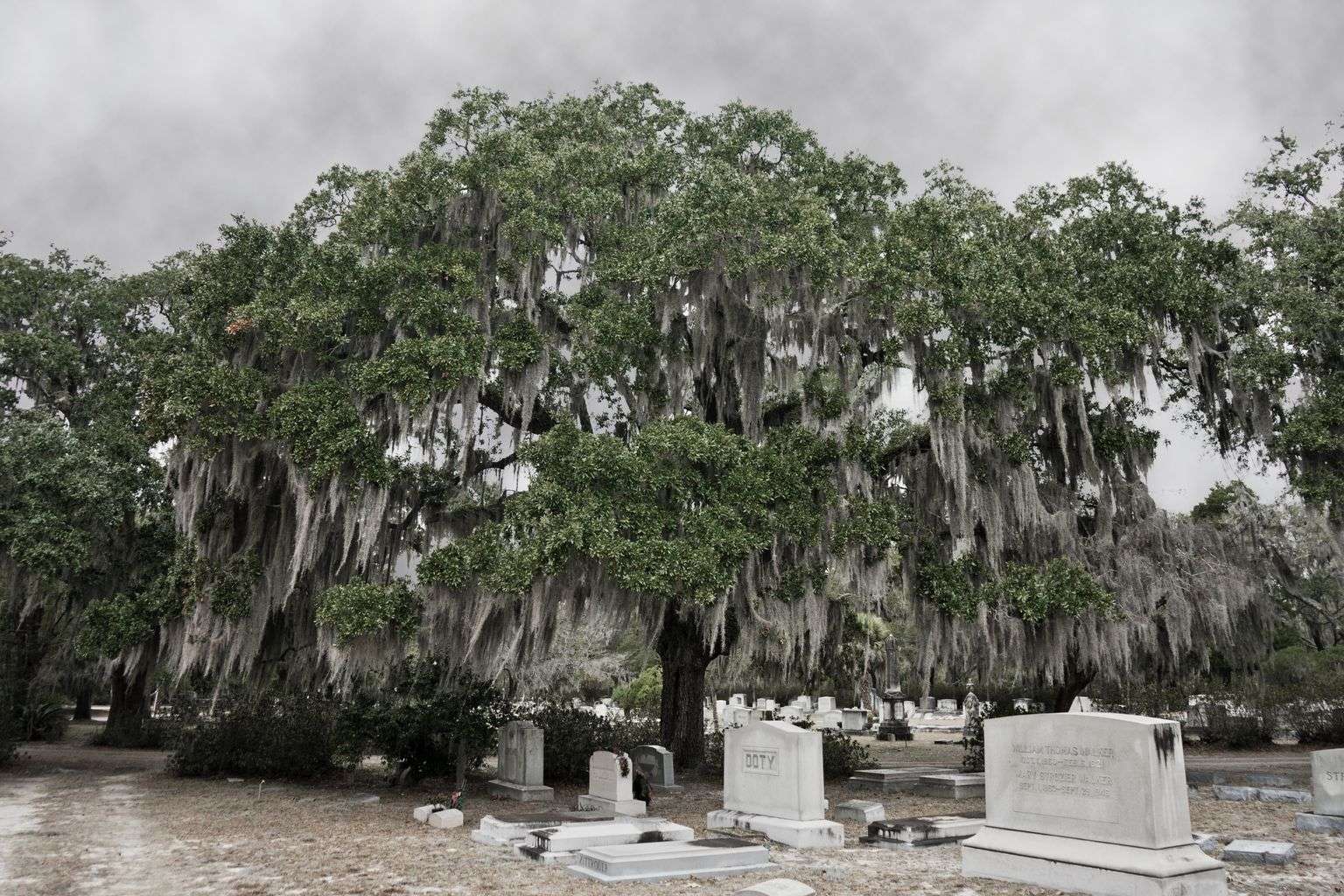
Magnolia Cemetery, established in the early nineteenth century on the city’s northern edge, holds some of the most significant burials in Alabama — Confederate dead, survivors of famous shipwrecks, victims of the 1853 and later yellow fever outbreaks that killed thousands in a city whose port made it an entry point for the disease, and the founders and builders whose names remain on Mobile’s streets and buildings. Its cast-iron fences, Victorian monuments and oak-shaded lanes make it one of the Gulf Coast’s most atmospheric historic landscapes, and tours of it require a guide who knows both the stones and the stories behind them. Marston’s November walks became a fixture of Mobile’s cultural calendar, drawing school groups, history societies and curious residents in numbers that grew year over year.
His classes and presentations carried the same dual purpose — education and stewardship. A historic cemetery’s survival depends on a public that values it, funds its upkeep and treats it with respect, and the professionals who manage such grounds have long understood that interpretation is part of preservation. Marston’s talks explained not only who was buried where but how burial customs changed, why monuments were built as they were, and what the grounds’ care demanded of the city that owned them.
The daily work
Between the public-facing history and the family service, Marston’s job was operationally demanding. Municipal cemeteries management means coordinating burials on short notice, maintaining grounds across seasons of Gulf Coast heat, rain and hurricane season, keeping records accurate for decades of interments, and responding to the genealogical inquiries that arrive constantly in a city whose families have been burying their dead in the same grounds for generations. City cemeteries also carry obligations private operations do not: they serve residents regardless of means, and their managers answer to a city government whose budget cycles, procurement rules and public oversight shape every decision about grounds crews, equipment and restoration.
The Hurricane Katrina years tested that obligation directly. Mobile’s proximity to the storm’s devastation across the Gulf Coast put the region’s cemeteries and funeral homes under extraordinary strain in 2005, when the needs of displaced families converged with the physical damage storms inflict on old grounds. Managers like Marston spent those months doing the unglamorous recovery work — clearing fallen trees, righting monuments, restoring access — that keeps a historic cemetery functional after a Gulf storm, and the city’s burial grounds emerged from those years under care that visitors rarely think to credit.
A profession learned from the ground
Marston’s “underground, up” description of his education captured how the death care industry actually trains its people. Cutting grass and digging graves teaches the physical reality of cemetery work — the soil, the drainage, the weight of monuments, the precision a grave requires — before any of the professional and emotional skills arrive. Directors of cemeteries who began in the grounds tend to manage differently from those who arrive from the business side: they know what a crew can accomplish in a Gulf summer, what a century-old plot looks like when it is properly maintained, and why the record-keeping beneath the surface matters as much as the monuments above it.
His stops at the Catholic Cemetery of Mobile, Mobile Memorial Gardens and the area’s funeral homes gave him the full breadth of the local trade. The Catholic Cemetery serves one of the oldest Catholic communities on the Gulf Coast, with grounds that hold generations of the city’s founding families; Mobile Memorial Gardens, a memorial park, represents the mid-century shift toward lawn-park cemeteries that reshaped the industry across the South; and funeral counseling put him at the interface where every cemetery career ultimately lives — the family in the arrangement room. Few people in the Mobile area have worked every layer of the trade in a single career, and the breadth explains why the city’s families trusted him across a quarter century.
What retirement changes
Marston’s departure leaves the city with a succession question that goes beyond staffing. The institutional memory of a 25-year manager — the location records, the family histories, the relationships with funeral homes across Mobile and Baldwin counties — does not transfer in a handover memo, and cities that lose such caretakers often spend years rebuilding what walked out the door. Mobile’s municipal cemeteries remain active burial grounds serving a growing metropolitan area, and the demands on them — space planning, historic preservation, storm recovery, digital record-keeping — are expanding as the city’s population does.
The tours he led will continue under others, but the November walks of Magnolia Cemetery will carry a different voice — one that learned the grounds in an era when the trade was smaller, more personal and more local. For the thousands of families he served across two counties, and for the visitors who learned Mobile’s history standing among its stones, the retirement of “Tiger” Marston marks the close of a kind of career the Gulf Coast produced steadily for a century and produces rarely now: a man who learned his city’s dead from the underground up, and spent fifty years making sure the living were treated as well as the buried.
His colleagues and the city’s history community marked the retirement as the passing of an era in the trade. The death care profession has changed around Mobile in ways Marston’s career spans entirely — from independently owned grounds run by men who knew every family in the parish to a corporate industry managing markets across state lines — and the municipal manager who answered to no corporate office, only to the city and its families, belongs to the older model. Mobile’s cemeteries will be managed again, and probably well. They will not soon be managed by someone who dug his first grave as a high school summer job and spent the next half century proving that the work, done right, is among the most humane a city has to offer.