

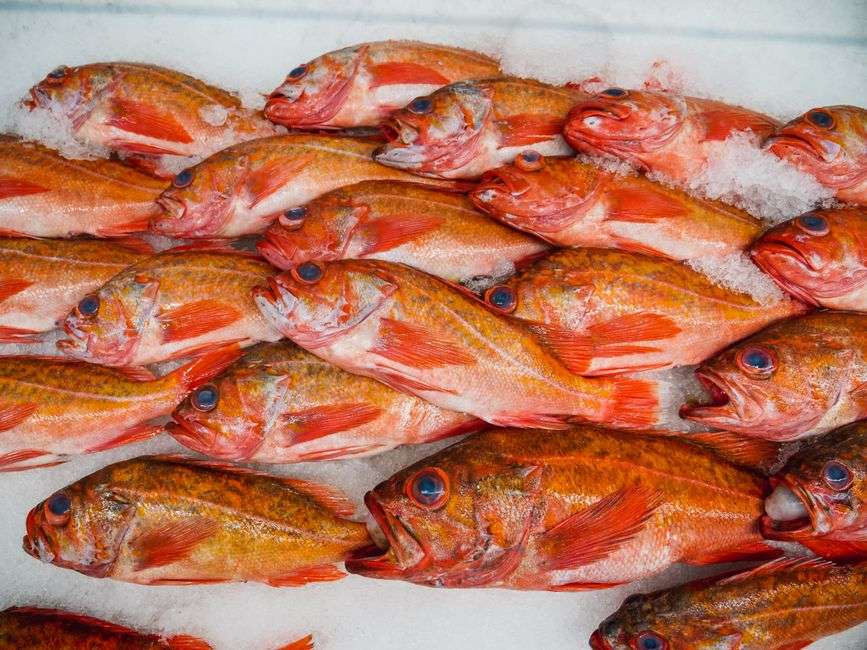
Don Rhodes, owner of Ahi Seafood Market in Fairhope, is more than a purveyor of fresh seafood. He is, by his own description, a seller of all things his customers want — and that customer-driven instinct is what has turned a small market on South Section Street into one of the Eastern Shore’s most trusted sources for fish, meat and everything that goes with dinner.
Raised on the Bayou
Rhodes grew up in Bayou La Batre, the fishing village in south Mobile County that has supplied the Gulf Coast’s seafood tables for generations. “The town is one big family, and everyone works in the seafood industry in some capacity,” he says. His mother kept the books for several seafood businesses, and Rhodes worked every aspect of the shrimp, crab and oyster trade at one time or another.
The stories from those years are the kind only a seafood town produces. At 12, he worked his first shrimp boat, a week-long summer job. At 14, he signed onto a steel-hull boat working the waters between Bayou La Batre and Brownsville, Texas — a three-month summer job that ended when the captain handed him a $100 bill and bought him two bus tickets home to start football practice at Alba High School. As boys, he and his brother shucked a gallon of oysters every morning before school to earn five dollars; one is left-handed and one right-handed, so they shared a pair of gloves each week. During college summers he crewed an East Coast long-line boat chasing bigeye tuna and swordfish, managing forty miles of trotline and learning celestial navigation along the way.
After attending the University of South Alabama, Rhodes left the water for dry land, owning and operating a commercial HVAC and plumbing contracting company for more than 25 years. Then, two years before the market opened, his best friend from the bayou, Patrick Kraver, encouraged him to come back to seafood. “I left the Bayou, but the Bayou didn’t leave me,” Rhodes says.
An Accidental Building, A Deliberate Standard
He found the building the way you find anything authentic in Fairhope: by noticing a little handmade “For Sale” sign on South Section Street at a storage building belonging to the artist Nall. They worked out an agreement, and Ahi Seafood Market was created. The name, Rhodes is quick to explain, is not a species of tuna as many assume — it’s a grade assigned to the quality of seafood, which tells you everything about his focus.
Quality is the operating principle. Rhodes arrives at 7 a.m. to prepare for the day and inspects everything that comes through the door; if it doesn’t meet his standard, it goes back. His brokers have learned he doesn’t cut corners, even with treatments that would extend shelf life at the cost of taste. Most of the fish is wild-caught rather than farm-raised, with exceptions like USDA-certified catfish; the Scottish salmon is flown in from Scotland. He knows fresh stone crabs are “sinkers, not floaters,” and his oysters are never packed with extra fluid. The small amount of fish that arrives flash-frozen is disclosed plainly — thawed slowly overnight, he notes, it’s still very good.
More Than Seafood
What customers request, Rhodes stocks. The market has added special cuts of never-frozen beef and pork, special-order wines sold by the case, ready-to-eat specialty pies, casseroles and stuffed chicken, spices and Charleston Bloody Mary mix — a growing inventory of specialty items driven entirely by the people who shop there. He cooks seasonal items like crawfish in the spring and steams shrimp anytime. “Custom orders don’t upset us,” he says. “We are figuring it out as we go.”
His model is the big-city specialty market: customers visiting several times a week to get what they need for the evening, knowing the person behind the counter and trusting the source. “Knowing your source is most important,” he says — the rule he learned as a kid shucking oysters in Bayou La Batre and has never abandoned.
And what’s it like getting back to his roots after two decades in contracting? “It’s toughened me up again,” he says. Fairhope diners are the beneficiaries: a straight-shooting market where the fish is inspected, the source is known, and if you ask for something special, the answer is likely to be yes.