

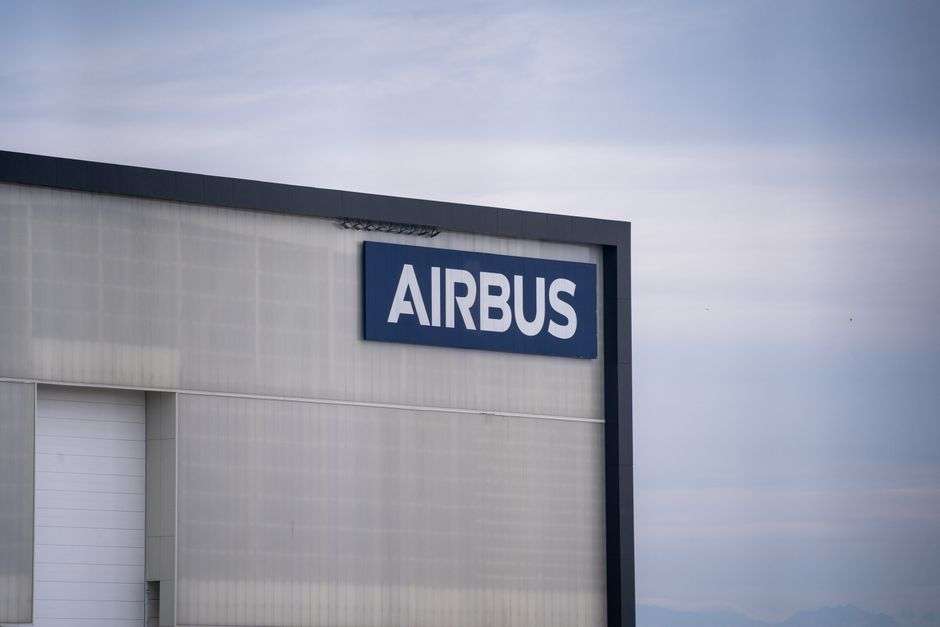
Airbus formally opened its first U.S. manufacturing plant at Brookley Aeroplex in Mobile on Monday, marking the end of a years-long effort to bring the European aerospace giant to the Alabama Gulf Coast and the beginning of full-scale aircraft production in the region.
The final assembly line, built to produce Airbus’ A320 family of narrow-body jets, is now the company’s only commercial aircraft manufacturing site on U.S. soil. The A320 family is among the most widely flown aircraft in the world, used for short- and medium-range routes and capable of carrying up to 220 passengers. Major components will arrive in Mobile from suppliers around the globe, where employees at Brookley will assemble them into finished jets. The first planes built at the facility are expected to make their maiden flights directly from the Mobile site.
Mobile’s new role in the global supply chain is unusual for a factory of this kind. Instead of stamping sheet metal, the Brookley line receives completed major assemblies — fuselage sections from Europe, wings and other components from across Airbus’ international network — and performs final assembly: joining, wiring, testing, painting and preparing each aircraft for its first flight and delivery. The model is closer to shipbuilding than traditional factory work, and it is the same process Airbus runs at its final assembly lines in Toulouse, Hamburg, Tianjin and now Mobile.
More than 260 employees currently work at the plant, and many of them took part in Monday’s inauguration ceremony. Company officials said the workforce will keep growing as additional new hires complete training at Airbus’ operations in Hamburg, Germany. Jennifer Ogle, the facility’s head of human resources, said the company is in a “continuous ramp-up phase” and that the plant is ultimately expected to support as many as 1,000 direct jobs, with the potential for several times that number among suppliers and contractors.
A workforce built from scratch
Ogle said 89 percent of the employees hired so far are from the local region, a reflection, she said, of the deep pool of skilled workers along the Gulf Coast. She credited Mobile’s existing infrastructure and talent base with helping convince Airbus to locate its first American plant here, even though many new hires have little or no prior background in aviation manufacturing.
That training pipeline is deliberate. Airbus designed its Mobile hiring process around the recognition that the Gulf Coast’s workforce — shaped by shipbuilding at Mobile Bay, the Ingalls shipyard across the state line in Pascagoula, and decades of industrial and logistics work — needed aerospace-specific instruction but already possessed the precision habits the assembly line demands. New employees rotate through structured training before joining production teams, and a first cohort traveled to Hamburg to learn the process inside the plant that built it.
For some of those new employees, the jobs have been a turning point. Jocelyn Wright, a Mobile native, said she was hired about two months ago as the assembly line’s mail clerk after a layoff and a stretch of temporary work left her searching for something more stable to help support her two daughters.
“It felt really good,” Wright said of landing the position. “It’s good to find a good, stable and long-term job.” She said the months leading up to being hired had been difficult ones for her family, and described Monday’s ceremony as an exciting milestone. “Everything is brand new,” she said.
Hers is the kind of story local officials have pointed to since the project was announced: a plant whose jobs do not all require engineering degrees, and which reaches into the region’s workforce at every skill level, from assembly mechanics to logistics, support and administrative roles. The 89 percent local hiring rate is itself a selling point Airbus has carried into future recruitment, both for additional employees and for the supplier companies expected to follow the plant to the Gulf Coast.
State and federal officials on hand
Gov. Robert Bentley, Sen. Jeff Sessions and Rep. Bradley Byrne each spoke at the ceremony, praising the skill and work ethic of the region’s labor force and framing the plant’s opening as a turning point for the local economy. Sessions reflected on the state’s earlier, unsuccessful bid to win a U.S. Air Force refueling tanker contract that would have brought a similar assembly operation to Mobile — a competition the European consortium behind Airbus fought through Congress and the Pentagon for nearly a decade before Boeing won the contract.
The tanker fight is the backstory to Monday’s ceremony. Mobile campaigned hard through the 2000s to become the assembly site for Air Force aerial refueling tankers based on Airbus’ commercial airframe, and twice lost — once in 2008, when the contract was reopened amid procurement controversy, and again in 2011, when Boeing prevailed. When Airbus decided in 2012 to build its own U.S. final assembly line for commercial jets, Mobile was positioned to win it without a bidding war: the city had spent years demonstrating its aerospace workforce, its deep-water port for component delivery, and its runways at what is now the Mobile Aeroplex at Brookley, the former Brookley Air Force Base that closed in the late 1960s and left the city with an industrial airfield and empty hangars.
Byrne, whose district includes the Brookley site, has framed the plant as the payoff for that long campaign. The airfield’s revival — first with aerospace suppliers, then with the Airbus project itself — has turned a facility that symbolized Mobile’s postwar economic loss into the anchor of its modern industrial base.
What the plant means for the region
The assembly line changes the arithmetic of Mobile’s economy in several directions at once. Direct employment at the plant is projected to reach 1,000 jobs as production ramps, and each aircraft job in aerospace historically supports multiple additional positions among suppliers, contractors and service companies. The state, the city and the Mobile County industrial development boards structured incentive packages around those projections when the project was announced in 2012, betting that the plant would become a platform rather than a single factory.
That platform logic is already visible at Brookley. Aerospace and aviation suppliers have expanded or opened operations at the Aeroplex since the Airbus announcement, feeding the assembly line with components and services, and the city has marketed the site to additional aerospace employers on the strength of having a commercial aircraft manufacturer as a neighbor. Port of Mobile logistics — the delivery route for aircraft components arriving by ship — has become part of the sales pitch for the port’s own expansion.
The A320 family’s market position underwrites the whole enterprise. It is the best-selling narrow-body aircraft line in the world, the direct competitor to Boeing’s 737, and demand from airlines — particularly U.S. carriers expanding domestic fleets — has driven Airbus to increase production rates at all of its final assembly lines. Mobile’s line exists precisely because Airbus needed U.S. production capacity close to the American market, the fastest-growing segment for single-aisle deliveries.
Education institutions across the region have built programs around the plant’s demand. Two-year colleges in Mobile and Baldwin counties developed aerospace manufacturing and maintenance tracks aimed at the Brookley workforce, and school systems have pointed to the plant when steering students toward technical credentials. The pipeline matters to the ramp-up math: reaching 1,000 direct employees requires a steady supply of trained hires, and the region’s colleges have treated the plant as both a customer and a reason to expand.
From ceremony to routine
The coming months will convert the ceremony into routine. Aircraft components will continue arriving at the Port of Mobile and moving to Brookley for assembly, and the first Alabama-built jets are expected to make their maiden flights from the Mobile Aeroplex’s runway before delivery to airline customers. Each delivered aircraft will carry a Mobile birthplace into airline fleets worldwide — a branding benefit state and local officials have described as worth more than the factory’s payroll alone.
Company officials describe the ramp-up in measured terms. Hiring will continue in waves, production will accelerate as the workforce completes training, and the line’s output targets will grow with Airbus’ global delivery schedule. What Monday celebrated was the end of the construction-and-certification phase — the hangars complete, the workforce in place, the process proven — and the beginning of the production phase the entire project was structured to reach.
For Mobile, the milestone closes a circle that began with the tanker bids and runs through the 2012 announcement, the 2013 groundbreaking and the three-year build-out on the Brookley airfield. The city that lost the tanker contract twice has, without winning it, acquired something the bid would have brought: a permanent aerospace manufacturing base on the Gulf Coast, and the workforce — from assembly mechanics to a mail clerk supporting two daughters — that state officials say is the reason it will stay.