

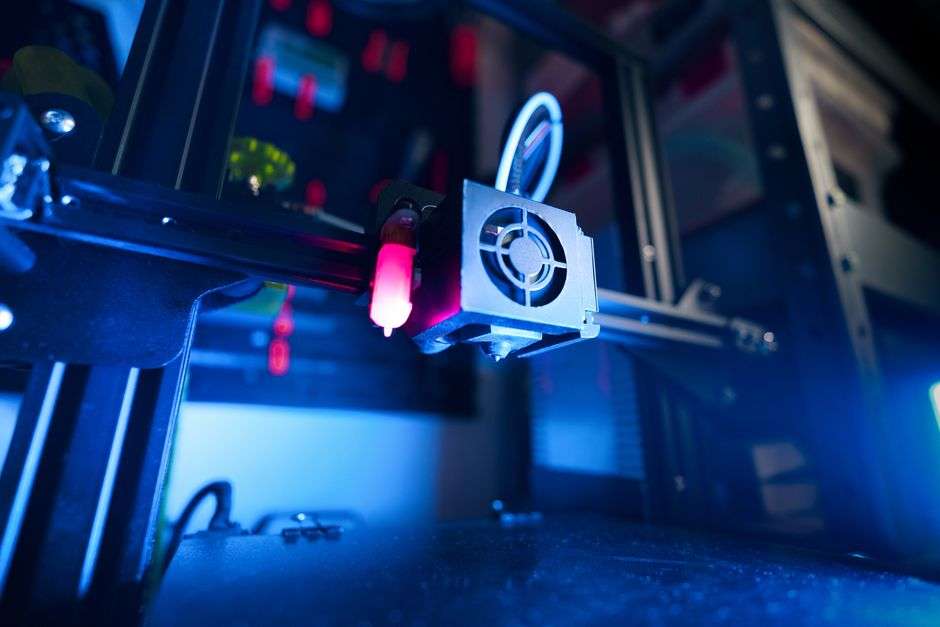
Aircraft maker Airbus and USA Health have joined forces to manufacture protective medical equipment for the Mobile area’s health care workers as the region continues to battle the COVID-19 pandemic. Engineering and production staff from Airbus’s Mobile operations, working alongside USA Health employees, are using 3D printers to produce reusable face masks and adjustable tension release bands designed to ease the strain of wearing protective gear for long shifts. The printers are located at Airbus’s production and engineering facilities, at Flight Works Alabama, and at USA Health itself.
The partnership is one of the more striking wartime-style conversions of the pandemic era: an aerospace campus built to rivet aluminum airliners now hums with machines printing plastic face masks, and the engineers who normally fine-tune jet assembly are fine-tuning medical equipment instead. For USA Health, the region’s largest hospital system, the effort arrived at a moment when personal protective equipment of every kind was scarce, back-ordered, and fought over by hospitals across the country.
The mask designs come from the National Institutes of Health’s 3D Print Exchange, a public repository created specifically to help manufacturers respond to shortages in the medical supply chain during the pandemic. The Exchange, a federal database that collects tested, open-source designs for medical and scientific equipment, became one of the quiet workhorses of the crisis, letting any machine shop, school or company with a 3D printer download vetted files and start producing gear the same day.
“I’m excited to be helping the local medical community using the skills I and other team members normally use for making things fly,” said Nick Simpson, one of the Airbus employees participating in the project. “We’ve had some very clever people working on this, and we are gratified to help our local medical teams where and when it’s most needed.”
Designing for the front line
Dr. Benjamin Estrada, a pediatric infectious disease specialist with USA Health, helped guide the effort by advising Airbus on which mask designs would be most useful to front-line medical staff. That clinical input, the partners said, was what separated the project from a well-intentioned printing exercise: rather than guessing at what health care workers needed, the manufacturing team was iterating against the daily reality of nurses and physicians wearing the equipment through twelve-hour shifts.
That input led the team to settle on a nylon mask that can be sanitized and worn repeatedly, rather than a single-use design. Reusability was the decisive feature at a time when disposable masks were so scarce that many hospitals were discussing reuse of gear never meant to be worn twice. A printed mask that could be disinfected between shifts, the team determined, would do more good per unit than any quantity of single-use alternatives.
“It has a filter that can be changed,” Estrada said. “The filter is a square piece of a surgical mask. One of those can be reused up to five times.” The design essentially stretched a scarce resource — surgical mask material — five times further than normal, by letting a single surgical mask supply filters for multiple printed masks over repeated shifts. The mask also includes a rubber lining to reduce the discomfort and skin irritation that can come from wearing tight-fitting protective gear for an entire shift.
“It fits nicely,” Estrada said. “It doesn’t hurt, but gives a tight fit, which is good.” Fit, clinicians stressed, is not a comfort luxury: a mask that gaps at the cheeks or chin does not filter properly, and one that digs into the bridge of the nose for hours leaves workers tempted to loosen it. The printed design’s adjustable fit and soft lining addressed both problems at once.
Not a substitute for the N95
Estrada was careful to note that the 3D-printed masks are not intended to replace N95 respirators, which remain the standard for staff who are directly caring for patients on ventilators or undergoing other high-risk procedures. Instead, the printed masks are meant to supplement the existing supply and give hospitals and clinics an additional layer of protection as the pandemic drags on.
The distinction matters operationally. N95 respirators — fitted, certified devices that filter at least 95 percent of airborne particles — are reserved for the highest-risk moments in a hospital: intubation, bronchoscopy, aerosol-generating procedures. The printed masks sit a tier below, suited for general patient contact and for staff working in lower-risk settings, which is exactly where they preserve the scarce N95 supply for the rooms that need it most. Mask and tension bands serve the same conservation logic, easing the pressure of straps and extending how long existing equipment can be worn safely.
“Everyone hopes everything will get better sooner than later, but we don’t know,” Estrada said, adding that having extra supply on hand is valuable simply because no one can say for certain how long medical staff will need to keep up the fight against the virus. The uncertainty, he noted, was itself the argument for building stock: a health system that prints masks when it can is a system that will not be caught empty when it must.
The project also reflected a broader shift in how hospitals weathered the pandemic’s supply shortages. With global distribution chains choked and normal vendors out of stock, health systems turned to whatever manufacturing capacity existed nearby — universities, garage workshops, distilleries producing sanitizer, and in Mobile’s case one of the largest aerospace plants on the Gulf Coast. The federal 3D Print Exchange was the connective tissue in that improvised network, standardizing designs so a hospital in one state could trust what a printer in another produced.
A factory with time on its hands
The mask-making initiative comes at a time when Airbus’s Mobile campus has significant manufacturing capacity sitting idle. The company paused commercial aircraft production at its Mobile final assembly line on April 6, with the shutdown expected to last through at least April 29 because of pandemic-related disruptions. The mask project has given some employees a way to keep contributing to the community while that production pause continues.
The pause itself was a measure of how hard COVID-19 had hit aviation. With air travel collapsing worldwide, airlines had slowed or canceled aircraft orders, and manufacturers across the globe idled lines to protect workers and match production to demand. The Mobile facility — where Airbus assembles single-aisle airliners for U.S. and international carriers, and which had been ramping up hiring for years as one of the city’s flagship industrial employers — went quiet in a matter of days. Machines and trained hands, however, remained.
The pivot from aircraft to medical equipment did not require reinvention so much as redirection. Additive manufacturing — building objects layer by layer from digital files — was already part of the modern aerospace toolkit, used for prototyping and specialty parts. The same printers, loaded with different files, could produce medical hardware. The engineering staff’s core skills, reading specifications and holding tolerances, transferred directly.
The 3D-printing effort adds to other support Airbus has provided to the region during the health crisis, including donations of tens of thousands of face masks to first responders and health care workers in the Mobile area. Company officials say the combined effort reflects an attempt to put Airbus’s manufacturing expertise and workforce to use in support of local hospitals, clinics and emergency responders during a time of acute need.
What it means for Mobile
For the Mobile area, the partnership was a small but telling demonstration of how the region’s growing aerospace sector can serve the community in ways its founders never planned for. The flight line that has transformed the Brookley-area economy over the past decade stood silent for the moment, but its people — engineers, technicians, trainers — were producing something the city needed more urgently than a new airliner: protection for the workers holding the line at USA Health’s hospitals and clinics.
Health officials have emphasized that the pandemic’s supply problems will not be solved by any single donation or printer bank, but by many such efforts layered together — commercial donations, federal shipments, and local manufacturing like the Airbus-USA Health line. Each printed mask, washed and refitted between shifts, is one more piece of gear a nurse does not have to ration, and one more reminder that the region’s fight against the virus is being supplied, in part, by its own neighbors.
What it means for Mobile
For the Mobile area, the partnership was a small but telling demonstration of how the region’s growing aerospace sector can serve the community in ways its founders never planned for. The flight line that has transformed the Brookley-area economy over the past decade stood silent for the moment, but its people — engineers, technicians, trainers — were producing something the city needed more urgently than a new airliner: protection for the workers holding the line at USA Health’s hospitals and clinics.
Health officials have emphasized that the pandemic’s supply problems will not be solved by any single donation or printer bank, but by many such efforts layered together — commercial donations, federal shipments, and local manufacturing like the Airbus-USA Health line. Each printed mask, washed and refitted between shifts, is one more piece of gear a nurse does not have to ration, and one more reminder that the region’s fight against the virus is being supplied, in part, by its own neighbors.