Alabama’s 2015 Brown Shrimp Season Opens Along the Coast
Alabama's brown shrimp season opened June 3, giving Mobile and Baldwin County commercial shrimpers the go-ahead for the year's first harvest.
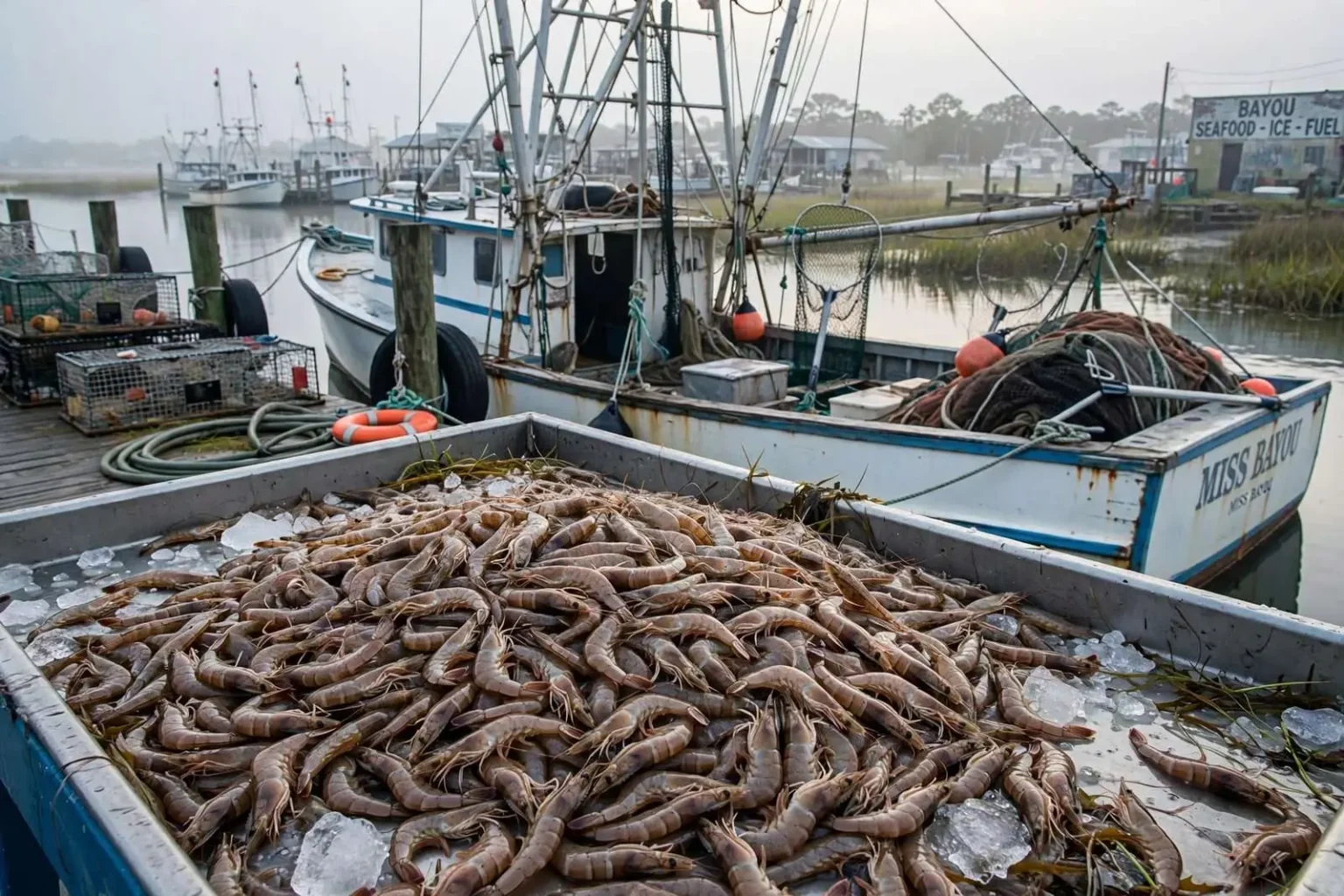
Alabama’s brown shrimp season opened at 6 a.m. Wednesday, June 3, giving commercial shrimpers along the Mobile and Baldwin County coastline the green light to head out for the year’s first harvest. The announcement came from the Alabama Marine Resources Division, which sets the opening date each year based on the size of shrimp sampled in state waters. For the crews working boats out of Bayou La Batre, Bon Secour and the codes and marinas along Mobile Bay, the opening is the moment the season’s arithmetic — fuel costs, crew shares, ice and dock prices — finally gets its first real test.
Chris Blankenship, director of the division and program administrator for the Alabama Seafood Marketing Commission, said the opening is always a notable moment for the coastal economy. “The opening of shrimp season is always celebrated across Coastal Alabama,” Blankenship said. “We look forward to a bountiful opening and a plentiful 2015 season.” The commission, created to promote Alabama seafood in markets where imported product has taken shelf space, treats the brown shrimp opener as both a harvest event and a marketing milestone for the state’s certified wild-caught brand.
State biologists determined the season could open after routine sampling showed shrimp in designated waters averaged larger than 68 head-on shrimp per pound — a benchmark the division uses to judge whether the crop has matured enough for harvest. The sampling program runs trawl surveys in the bays, sounds and lower Mobile Bay throughout the spring, measuring shrimp from representative sample hauls. When the average size crosses the threshold consistently, biologists set the opening so that boats catch shrimp that have had time to grow, maximizing the value of the crop rather than pulling smaller, cheaper shrimp too early.
How Alabama Manages Its Shrimp Seasons
Officials said sampling would continue throughout the season, and additional announcements could follow if conditions in other areas changed. That approach splits the year’s harvest into careful phases. Alabama’s waters produce two commercial shrimp crops: brown shrimp, which dominate the summer months, and white shrimp, which typically come on strong in late summer and fall. The Marine Resources Division monitors both, and it can open or close specific areas — inside bays versus Gulf waters — as each population matures.
The size-based opening reflects a management philosophy shared across Gulf states. Louisiana, Mississippi and Florida all use biological benchmarks to time their seasons, and the states coordinate informally because shrimp migrate across state lines in federal waters. A well-timed opening lets smaller boats, which cannot run far offshore, compete for the inshore harvest, while larger vessels follow the crop out toward the state-federal boundary as the summer progresses.
Biologists also watch environmental factors that shape each year’s catch. Salinity levels in Mobile Bay, spring river discharge and water temperature all influence shrimp growth and movement, and a wet spring or a dry one can shift where the crop shows up and when it reaches market size. The division’s sampling net-work is what turns those variables into a single, defensible opening date rather than a guess.
Before the Boats Leave the Dock
Commercial shrimpers preparing to head out were reminded to have their paperwork in order. Boat registration or documentation papers, along with the boat owner’s driver’s license and Social Security or tax identification number, are required when purchasing a commercial shrimping license. Licenses are sold through the division’s offices, and enforcement officers with Marine Resources and the Alabama Law Enforcement Agency check vessels on the water throughout the season for licenses, turtle excluder devices and required safety equipment.
The regulatory framework exists alongside federal rules that govern the larger Gulf fleet. Shrimp trawlers must use turtle excluder devices and bycatch reduction gear in their nets, measures designed to protect sea turtles and reduce the incidental catch of finfish. Violations can bring federal penalties that far exceed the value of a single haul, and Coast Guard patrols routinely board working boats to inspect gear during the height of the season.
Insurance, fuel and crew costs mean most boats need a strong opening to set up a profitable summer. Diesel represents one of the largest line items in a shrimping budget, and fuel prices in the years before 2015 had squeezed margins across the Gulf fleet. A good June — steady catches, decent dockside prices and manageable fuel bills — carries a boat’s finances deep into the fall.
The Backbone of the Coastal Economy
The brown shrimp season is one of the most closely watched dates on the calendar for Alabama’s seafood industry, drawing boats from ports along Mobile Bay, the Bon Secour River and the Gulf beaches. The harvest supports processors, dockside markets and restaurants throughout south Alabama that depend on a steady local supply heading into the summer tourist season. When tourists fill tables at Gulf Shores and Orange Beach seafood houses each June, a substantial share of what reaches their plates comes off boats working the same waters they swam in that morning.
Bayou La Batre, on the western shore of Mobile County, remains the heart of the fleet. The small waterfront city has shipped seafood across the country for generations, and its processing houses employ hundreds of workers who pick, pack and freeze shrimp during the summer run. Baldwin County’s Bon Secour fleet adds a second hub, with docks along the river that give the community its name and its livelihood. Together the two ports anchor an industry that state officials value in the hundreds of millions of dollars once processing, wholesale and restaurant sales are counted.
Alabama’s shrimping industry has weathered years of competition from imported product and fluctuating fuel costs, making a strong opening especially significant for family-run boats that rely on the summer season for the bulk of their income. Imports now supply the overwhelming majority of shrimp eaten in the United States, and dockside prices have spent long stretches below what many Gulf boats need to break even. The industry’s response has been differentiation: state certification programs that verify wild-caught Alabama shrimp, marketing that emphasizes freshness and local economic impact, and direct sales through dockside markets that cut out intermediaries.
What the 2015 Season Meant
Coming into June 2015, coastal communities were watching a series of pressures on the local seafood economy. The lingering effects of the 2010 Deepwater Horizon oil spill — including the tourism marketing dollars that flowed into the coast as part of the legal settlement — had reshaped how the region advertised its seafood, and programs tied to restoration and promotion gave the industry new tools even as imports kept price pressure on. An opener with strong shrimp sizes, biologists noted, was the kind of start the fleet needed.
The brown shrimp crop itself follows a predictable rhythm. Postlarval shrimp drift into the bays in late winter and spring, grow rapidly in the warm, shallow nurseries of Mobile Bay, Mississippi Sound and the Bon Secour estuary, and then move toward the Gulf as they mature. June’s opening catches typically come from the bays and nearshore waters; by midsummer, the larger shrimp — and the larger boats chasing them — have shifted toward deeper water.
For consumers, the opening weeks of the season are the best time of year to find truly local shrimp. Seafood markets from Dauphin Island to Foley stock fresh product straight off the docks, prices dip as volume rises, and restaurants across Mobile and Baldwin counties advertise their local sourcing while the supply holds. The Marine Resources Division’s sampling data, and the dates it produces, quietly set the tempo for all of that commerce.
Looking at the Season Ahead
With the opener behind them, shrimpers turned to the variables no date can control: weather, fuel prices and the marketplace. Summer thunderstorms keep boats at the dock on short notice, tropical systems can disrupt a season’s best weeks, and dockside prices respond to imports and national demand in ways no Alabama boat can influence. The division’s continuing biological sampling will guide the white shrimp season later in the year, giving the fleet a second act before winter.
For now, the June 3 opening delivered what Coastal Alabama wanted: boats in the water, nets in the bay and the state’s signature seafood moving from the Gulf to tables across the region — the start of a season that, in a good year, sustains communities from Bayou La Batre to Bon Secour until the last boats come home in the fall.
The People Behind the Catch
Behind the statistics is a workforce that makes the season run. Deckhands, captains, net builders, ice house operators, welders and boatyard crews all depend on the summer harvest, and many of the families involved have worked the same ports for generations. In Bayou La Batre especially, the industry is not just an economic sector but the community’s identity — reflected in its seafood festivals, its church communities and the boats named for children and grandchildren who may one day take the wheel.
The work is demanding and increasingly hard to staff. Shrimping runs around the clock during peak season, with crews hauling nets every few hours, sorting the catch on culling boxes and packing shrimp in ice below decks. Younger workers have more employment options ashore, and fleet owners say finding reliable crew is among their toughest challenges. That labor reality, alongside fuel and import pressures, is why state programs that boost demand for Alabama shrimp matter so much to the boats’ bottom lines.
The 2015 opener gave that workforce its annual restart. Whatever the months ahead brought — storms, price swings, a strong white shrimp run or a lean one — June 3 marked the day the state’s oldest commercial fishery went back to work, carrying a coastal economy that has never stopped betting on the waters just past the pass.