House Passes Bill Giving Gulf States More Control Over Red Snapper Season
Congress passed a bill shifting red snapper management authority toward Gulf states, a change welcomed by Alabama fishing officials and coastal lawmakers.
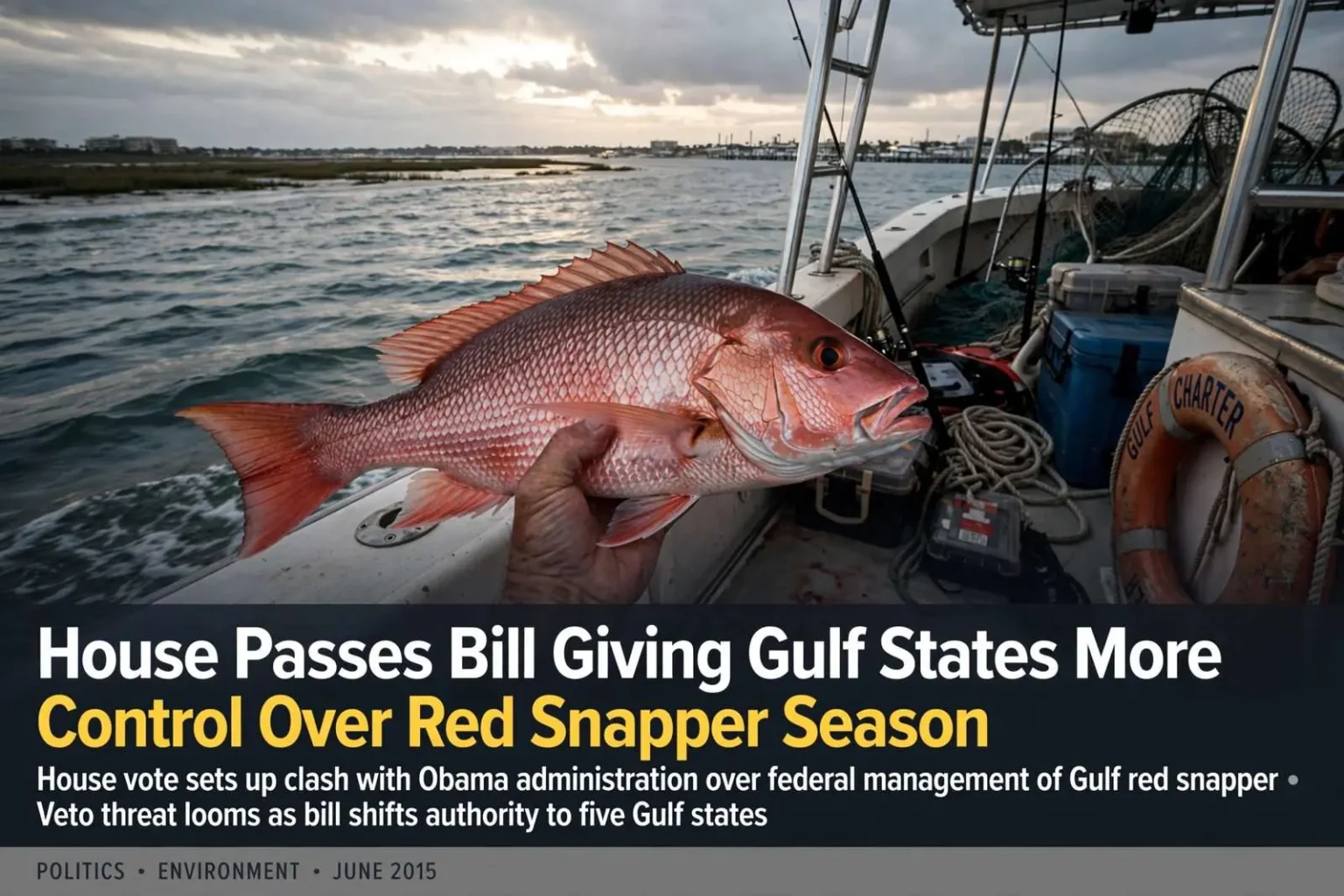
Despite a veto threat from the Obama administration, the U.S. House of Representatives passed legislation that would significantly change how the federal government regulates red snapper fishing in the Gulf of Mexico, a move welcomed by Alabama fisheries officials and coastal lawmakers. The vote set up a collision between Congress and the White House over an issue that has generated more anger along the Gulf Coast than almost any other fisheries question of the past decade.
The largely party-line vote reauthorized the Magnuson-Stevens Conservation and Management Act, the primary law governing fisheries management off the U.S. coast, providing close to $2 billion in funding through 2019. The bill now moves to the Senate for consideration, where its fate is far less certain and where the Gulf state delegation will need to win over colleagues from regions with no stake in the red snapper fight.
Three provisions in the bill had been championed by U.S. Rep. Bradley Byrne, R-Fairhope, whose district includes much of coastal Baldwin and Mobile counties. Together they amount to a fundamental restructuring of how recreational red snapper fishing is managed in the Gulf, shifting authority and responsibility from federal agencies toward the five Gulf states.
The measure repeals the federal quota system for Gulf red snapper that critics have long called too rigid, extends state-controlled waters from three to nine miles offshore to match limits already enjoyed by Texas and Florida, and shifts responsibility for collecting red snapper population data away from federal regulators and toward the states. Each provision attacks a different piece of a management system that coastal anglers have come to view as broken.
Byrne said in a statement that the vote represented “a big win for red snapper fishermen in the Gulf and fishermen all across the country,” arguing that better data collection and greater flexibility for state fisheries managers could help restore a fuller snapper season along the coast. His district’s marinas, charter fleets and bait shops depend directly on recreational fishing, and the shrinking federal season had become the issue his coastal constituents raised most often.
Why the seasons kept shrinking
The debate comes as Gulf fishermen have grown increasingly frustrated with shrinking federal red snapper seasons; this year’s federal season, which began this week, lasts just 10 days. A decade earlier, the recreational season stretched across most of the summer, and the steady compression — despite what anglers describe as abundant snapper on the reefs — has fueled accusations that federal managers are working from bad data.
At the heart of the dispute is the way the federal government estimates how many fish recreational anglers catch. Catch data for private recreational boats has historically been collected through surveys and phone sampling rather than direct measurement, and the uncertainty in those estimates forces managers to set conservative quotas. When a stock is managed with razor-thin margins for error, the first thing cut is the season.
Alabama anglers argue the problem is compounded by the state’s unusual success at building fish habitat. Decades of deploying artificial reefs — from concrete pyramids to decommissioned ships — off the Alabama coast have created one of the most productive snapper fisheries in the Gulf, concentrating fish within relatively easy reach of small boats. That abundance makes short federal seasons feel especially arbitrary to fishermen who can limit out in a morning but are legally barred from fishing the rest of the year.
Alabama’s Marine Resources Division director welcomed the House vote, saying the shift to nine-mile state waters would open six additional miles of Gulf waters to anglers fishing under state rules, a meaningful expansion for a coastline where productive bottom habitat sits relatively close to the passes. Extending state jurisdiction would let Alabama manage fishing in those waters year-round under state seasons rather than the federal calendar.
The nine-mile provision aligns the central and western Gulf with the situation Texas and Florida already enjoy, since those states asserted — and in key respects won federal recognition of — authority over red snapper inside their extended boundaries. For Louisiana, Mississippi and Alabama, matching that status has been a standing demand of their congressional delegations.
Under the bill’s data provisions, the states would take over collection of the catch statistics that drive quota decisions, using programs that log catches directly at the dock or through electronic reporting. State officials argue that real-time data would let managers adjust seasons quickly instead of waiting for federal estimates that arrive years late and drive conservative shrinkage. Critics counter that fragmenting data collection among five states risks inconsistency.
Environmental groups push back
Environmental groups criticized the bill. The Ocean Conservancy’s Fish Conservation Program director called it a “stinging disappointment” that fails to serve fishermen or fish populations, noting that the current law had previously enjoyed bipartisan support by balancing the interests of anglers and conservationists.
That criticism reflects a long view of the Magnuson-Stevens Act’s history. The law, first passed in 1976 and repeatedly strengthened since, is widely credited by conservationists with rebuilding depleted stocks through hard quotas and accountability measures. Groups worry that loosening the federal framework for red snapper — one of the Gulf’s most economically valuable species — could unravel the discipline that produced the stock’s recovery and invite similar exceptions for other fisheries.
Red snapper themselves are a long-lived reef species that can survive for decades, which makes the population slow to recover from overfishing but also, once rebuilt, remarkably durable. Biologists on both sides of the debate agree the Gulf stock has grown substantially since severe restrictions began; where they part ways is over how quickly the catch limits can rise to match that recovery without putting the rebound at risk.
The veto threat from the Obama administration sharpened the stakes of the House vote. Administration officials had objected to provisions they argued would weaken science-based management and the role of the regional fishery management councils, setting up the possibility that even a Senate-passed bill could die at the president’s desk rather than become law.
The economic footprint of red snapper fishing along the Alabama Gulf Coast is hard to overstate. Charter boats in Orange Beach and Gulf Shores book the bulk of their summer business around snapper season, and the tens of thousands of private recreational trips the short season compresses into a few weeks put money into marinas, tackle shops, fuel docks and hotels. When the federal season shrinks, those businesses feel it first, which is why coastal chambers of commerce have backed the state-management push as firmly as anglers themselves.
Commercial fishermen, meanwhile, watch the recreational fight with interests of their own. The commercial sector operates under a separate quota system that keeps its season open for most of the year, and any restructuring of recreational management affects how the overall catch is divided. The House bill’s repeal of the recreational quota framework raised questions about how the sector split would be preserved or reworked in practice.
Charter captains have been among the loudest voices in the debate. Their livelihoods depend on clients catching fish during a window the federal government controls, and a season compressed to 10 days concentrates every booking into the same brief stretch, crowding boat ramps and forcing captains to turn away summer business entirely. The for-hire fleet’s frustrations have given the state-management movement a professional, full-time corps of advocates at public meetings across the coast.
For Alabama’s congressional delegation, the vote capped years of escalating advocacy. Coastal legislators had pressed federal agencies through letters, hearings and proposed rule changes before concluding that only a rewrite of the underlying law would dislodge a management system they considered immovable. Byrne’s provisions represented the most direct legislative attempt yet to hand the states the authority anglers had demanded.
The Senate road ahead
Sending the bill to the Senate leaves the fight at its most uncertain stage. Upper-chamber leadership controls what comes to the floor, and a reauthorization carrying a veto threat faces long odds even before the substance is debated. Gulf Coast senators would need to attach the state-management provisions to legislation that can move, or negotiate a compromise that wins administration support.
Whatever happens next, the House vote marked a turning point in the argument. For the first time, a full chamber of Congress had endorsed the proposition that Gulf states, not federal regulators, should hold the reins of recreational red snapper management — a proposition Alabama’s fisheries officials have advanced for years.
Back home, the reaction split along the lines the issue has always followed. Anglers and coastal officials celebrated a vote they read as recognition of years of frustration, while conservation organizations warned that dismantling the federal framework threatens the recovery of the very fishery everyone claims to want. Both sides now turn to the Senate, where the future of the 10-day season — and the law behind it — will be decided.