

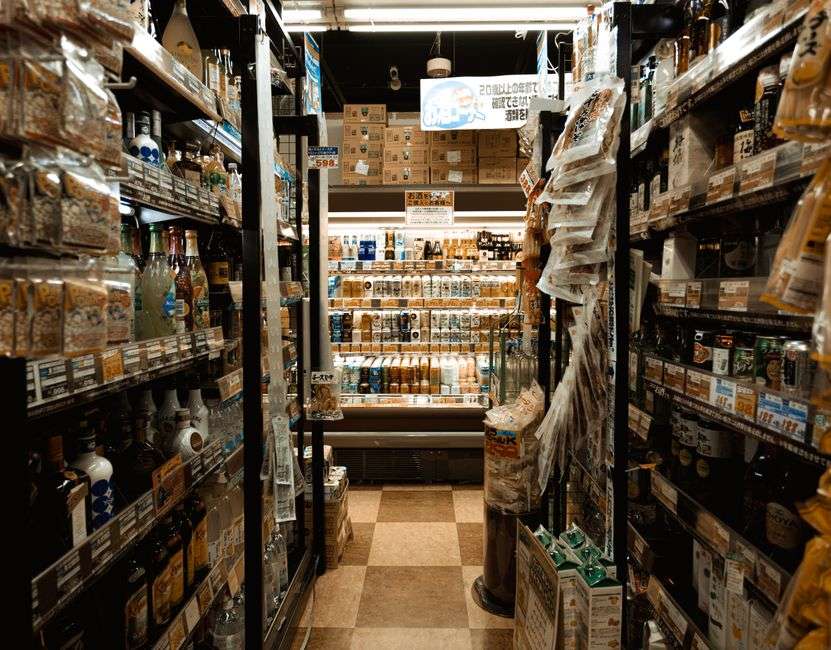
Alabama has officially joined a small but growing list of states banning kratom, the plant-derived substance long sold at gas stations and convenience stores across South Alabama as an energy booster and pain reliever. State lawmakers voted to criminalize the possession, sale and manufacture of kratom in the closing hours of this year’s regular legislative session, and Mobile County law enforcement agencies have already begun pulling the products from store shelves. The shift happened almost overnight for the retailers who had stocked it for years and the customers who had bought it without a second thought. What had been an unregulated herbal product sitting between the energy shots and the cold medicine is now, under state law, a serious narcotic.
How the ban became law
Senate Bill 226, sponsored by Sen. Arthur Orr, R-Decatur, passed the Legislature in the final minutes of the session and was signed into law by Gov. Robert Bentley on May 10. Orr, the chairman of the Senate’s budget-writing committee, is not typically associated with drug policy bills, and the measure moved quietly through the process while attention was fixed on higher-profile fights over the state budgets and gambling legislation. By the time most Alabamians heard about it, the bill had already cleared both chambers and been signed.
The measure adds kratom to Alabama’s list of Schedule I controlled substances, placing it in the same legal category as cocaine and methamphetamine. Under the state’s controlled substances act, Schedule I is reserved for drugs deemed to have a high potential for abuse and no accepted medical use, and the designation carries the harshest penalties on the books. Under the new law, possession of the plant or any product containing its derivatives is now a felony — a classification that shocks many first-time offenders, who face consequences closer to those for hard narcotics than for the herbal supplement aisle where they first encountered the product.
Kratom comes from a tropical tree native to Southeast Asia, where laborers have chewed its leaves for generations to fight fatigue. In the United States it appeared in head shops, health stores and, increasingly, gas stations, marketed in pill and powder form and, in its latest iteration, as a liquid “energy” drink. Its rapid spread through the convenience store economy is what finally drew the attention of law enforcement and public health officials in Alabama, who watched a psychoactive plant move from niche market to mainstream shelf with no testing, labeling or age controls whatsoever.
The District Attorney’s warning
Mobile County District Attorney Ashley Rich said her office and local police have tried to give retailers a reasonable window to comply since the law took effect, but the message to businesses is now blunt: get it off the shelves. “What was being sold in our convenience stores and in local businesses yesterday is now against the law today,” Rich said. “The community needs to understand these are now controlled substances, and they need to be removed from the shelves of any business that is selling them.”
According to Rich, kratom produces a range of effects depending on the dose. At lower amounts, users report increased alertness and energy, while larger doses can bring on sedative effects comparable to morphine and other prescription painkillers. She said the drug acts directly on the brain’s opioid receptors, which she described as producing documented opioid-like effects and a significant risk of addiction. The dual nature of the drug — stimulant at low doses, opioid-like at high ones — is part of what made it attractive to consumers and alarming to health officials, who noted that users seeking pain relief could escalate doses toward dependence without realizing how strong the products actually were.
Because kratom now falls under the same classification as other serious narcotics, the penalties tied to it are severe. Rich noted that even packaging kratom leaves for distribution could bring a manufacturing charge, which under Alabama law carries a potential sentence of 10 to 99 years in prison. Distributors and store owners who continued to sell after the effective date face the possibility of trafficking-scale charges depending on quantity, and prosecutors have made clear that ignorance of the new law will not be treated as a defense.
The Mobile Police Department and the Mobile County Sheriff’s Office have already started sweeping gas stations and other retailers to confiscate any remaining kratom products, with business owners bearing the cost of the seized inventory. Deputies and patrol officers have visited convenience stores along the corridors of U.S. Highway 45, U.S. Highway 90 and Airport Boulevard, where the products had been most visible, and store owners have responded at different speeds — some clearing shelves as soon as news of the signing reached them, others waiting until an officer appeared at the counter. For a small operator, losing an entire inventory category without compensation is a real financial hit, but prosecutors have emphasized that the alternative is criminal exposure.
The enforcement effort is being coordinated with an education campaign aimed at both retailers and the public. Officials want store clerks to understand that the old packages are no longer just inventory — they are contraband — and they want parents to recognize the brightly colored bottles and packets that may still be sitting in teenage backpacks. Residents who spot kratom still being sold are being asked to report it rather than assume the law does not apply.
How it reached teenagers
Virginia Guy, executive director of the Drug Education Council, said kratom itself is not new, but its popularity surged locally once companies began selling kratom-infused drinks packaged similarly to popular energy shots at gas stations throughout Mobile County. She said that packaging, combined with the drug’s legal status and wide availability, made it easy for children and teenagers to obtain. “Our agency’s main goal is to protect children in our community,” Guy said. “So we’ve been talking for a little while about the dangers of children using these products, particularly with kratom.”
The Drug Education Council, a longtime Mobile-area nonprofit focused on substance abuse prevention, had tracked the products’ spread through school resource officers, parents and the young people the agency serves in its counseling programs. What alarmed prevention specialists most was the marketing: the drinks were shelved at eye level next to legitimate energy products, carried no meaningful warnings, and required no ID to purchase. A fourteen-year-old with a few dollars could buy a substance acting on the brain’s opioid receptors, and neither the clerk nor the customer had any way of knowing the dose inside.
Although some kratom products carried age advisories restricting sales to adults 18 and older, those limits were unenforceable because no state law governed the substance’s sale prior to this year. An advisory printed on a label has no force behind it, and clerks had no legal basis for refusing a sale to a minor. Efforts by some kratom advocates to reach a compromise that would have regulated sales rather than banning the substance outright failed to gain traction with lawmakers, who declined to give the proposal additional time or debate before the session ended. That left lawmakers with a binary choice in the session’s final hours: ban the substance outright or leave it entirely unregulated, and they chose the ban.
Rich said she does not believe age restrictions would have solved the underlying problem. She pointed to kratom’s addictive potential and the false sense of safety created by its years of open, legal sale in local stores. “We hear that from so many young people, but there are very dangerous addictive substances,” she said. “People were going in the store to buy a Coke or a muffin, and there it was.”
Rich added that many consumers, including teenagers, assumed kratom posed little risk simply because it had been sold openly and lawfully alongside everyday convenience store items for years. That perception, she said, was itself one of the most dangerous features of the product: a drug that behaves like an opioid but carries the social status of an herbal tea can recruit users who would never go looking for one. The years of legal shelf presence gave the substance a credibility that no marketing budget could have bought, and undoing that impression will take more than a single news cycle.
What happens next
With the new law now in effect, Mobile County officials say they intend to continue enforcement sweeps and encourage residents to report any businesses still selling kratom products. The first weeks of enforcement are expected to focus on compliance rather than prosecution — removing the products from circulation and making sure every retailer in the county knows the rules have changed. Prosecutors will reserve felony charges for offenders who keep selling after the grace period, in particular for anyone caught distributing the products to minors.
For consumers who had been using kratom for pain relief or energy, the ban leaves no legal avenue in Alabama. Health officials have urged anyone who was using the products regularly, particularly at higher doses, not to simply stop without understanding that withdrawal symptoms similar to those of opioid dependence are possible. Treatment resources in the Mobile area, including the programs the Drug Education Council coordinates, are available to people who find themselves dependent and do not know where to turn.
The debate over kratom is not settled nationally. Several states continue to allow and regulate its sale, and advocates argue the plant has legitimate uses and that a ban simply pushes demand to an unregulated black market with products of unknown purity. Federal regulators, meanwhile, have examined the substance repeatedly without imposing a nationwide scheduling decision, leaving a patchwork of state laws that a traveler crossing state lines can violate without ever realizing it. In Alabama, at least, that patchwork now ends at the state line: possession, sale and manufacture are felonies, the shelves in Mobile County are being cleared, and officials say the message to any business still holding inventory is the one Rich has repeated all month — get it off the shelves.