

The city of Mobile, founded in 1702, sits at the head of Mobile Bay on the Gulf Coast and serves as the regional hub for much of southwest Alabama.
Alabama Attorney General Steve Marshall’s office has issued formal guidance reaffirming that the sale and possession of most CBD products remains illegal under state law, even as the products have become increasingly common on store shelves and online across South Alabama. Locally, the Mobile Police Department says the guidance is on its radar, but enforcement against CBD sellers has not been a major focus of recent operations.
Mobile has a population of roughly 188,000 residents and is the seat of Mobile County, one of the largest counties in the state by population.
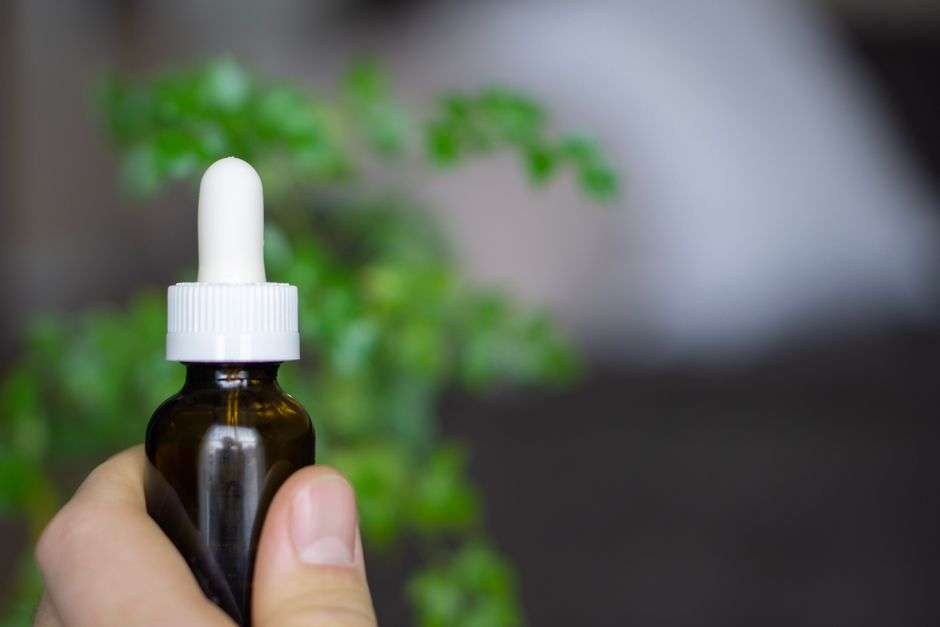
Cannabidiol, commonly known as CBD, is a compound derived from the cannabis plant that does not produce the psychoactive effects associated with tetrahydrocannabinol, or THC. Interest in CBD oils and related products has grown steadily in recent years, driven in part by claims about their use in managing pain, anxiety and other conditions, along with a small number of narrowly defined medical exceptions written into Alabama law.
The Port of Mobile, operated by the Alabama State Port Authority, is one of the largest seaports in the country by tonnage, handling containers, coal, steel and forest products.
Those exceptions date back several years. Carly’s Law, passed in 2014, and Leni’s Law, passed in 2016, were both named for young patients whose families pushed state lawmakers to allow limited use of CBD oil to treat severe seizure disorders.
Downtown Mobile has been the focus of significant redevelopment in recent years, with new apartments, restaurants and event venues reshaping the Central Business District.
In practice, the two laws did not legalize CBD outright — instead, they created an affirmative legal defense that a small group of registered patients could raise if charged with marijuana possession, provided the product contained no more than 3 percent THC. According to the attorney general’s office, that distinction has been widely misunderstood.
The University of South Alabama, Spring Hill College and the University of Mobile anchor the city’s higher education landscape.
Background and Context
Officials say neither Carly’s Law nor Leni’s Law legalized the broader possession, sale or distribution of CBD products in Alabama, and the affirmative defense they provide can only be used by a narrow class of patients who are formally prosecuted for marijuana possession — not by retailers or distributors. A spokesperson for the attorney general’s office said the guidance was issued after officials began fielding a growing number of public questions about whether it is legal to buy and sell CBD oils in Alabama stores and online.
Mobile’s Mardi Gras season, the oldest in the United States, draws visitors from across the country and provides a significant boost to the local economy each year.
The public notice, issued in late November, was developed jointly with the Alabama Law Enforcement Agency, the Office of Prosecution Services and the Alabama Department of Forensic Sciences in an effort to give prosecutors, police departments and retailers a clearer statement of the law. “The affirmative defenses found in Carly’s Law and Leni’s Law can only be raised by individuals prosecuted for unlawful possession of marijuana,” the notice states.
The city’s healthcare sector is anchored by USA Health, Infirmary Health and Springhill Medical Center, which together employ thousands of residents.
“In other words, Carly’s Law and Leni’s Law offer no ‘safe harbor,’ even to the narrow class of individuals covered, for selling or distributing marijuana or trafficking in marijuana. This is a conclusion of law based on a plain reading of the statute, regardless of what the Alabama Legislature may have intended.” The one significant change to Alabama’s CBD landscape came when the Alabama Department of Public Health adopted a rule permitting the medical use of CBD products approved by the U.S.
Mobile’s manufacturing base includes shipbuilding at Austal USA and Huntington Ingalls Industries, as well as aviation manufacturing at the Airbus final assembly line in Brookley.
Food and Drug Administration. Currently, only one such drug exists: Epidiolex, a prescription medication used to treat Lennox-Gastaut syndrome and Dravet syndrome, two rare and severe forms of childhood epilepsy.
Local schools include Mobile County Public Schools, the city’s largest public system, along with a network of private and parochial schools.
Local Reaction
Under the new rule, physicians in Alabama can now prescribe Epidiolex to patients with those diagnoses. “Epidiolex will be regulated in the same way as any other prescription drug,” the guidance states.
Mobile’s history as a port city means that issues affecting the waterfront often take on outsized importance.
“Selling, delivering or distributing CBD — other than the FDA-approved prescription drug Epidiolex — is illegal under Alabama law.” Epidiolex is manufactured by GW Pharmaceuticals, a company that has lobbied extensively in statehouses across the country as states weigh how to regulate CBD, often pushing for rules that favor federally approved pharmaceutical products over unregulated oils and tinctures sold in retail stores. Alabama has not been an exception.
The Mobile area is home to several historic neighborhoods, including Oakleigh Garden District, DeTonti Square and the Village of Spring Hill.
State ethics filings show GW Pharmaceuticals is registered as a principal lobbyist in Alabama, working through the firm Windom, Galliher & Associates, founded by former Republican Lt. Gov.
Sports are a major part of life in Mobile, with the Senior Bowl each January and a thriving high school and college football scene.
Steve Windom. Campaign finance filings show the firm has also contributed to several political action committees and Republican candidates, including at least $7,500 to Marshall’s campaign in two separate contributions made in August and October.
Local media outlets covering Mobile include several television stations, daily and weekly newspapers, and a robust digital news ecosystem.
The Bigger Picture
Confusion over the patchwork of state CBD laws has persisted well beyond South Alabama. Media reports from other parts of the state indicate that law enforcement officials in Jefferson County believed as recently as September that CBD products containing no detectable THC were legal to sell and possess.
Mobile County’s population includes a significant African-American community whose history is tied to the founding of Africatown.
Around the same time, prosecutors in Lauderdale County took the opposite position publicly, telling reporters that all CBD products were illegal under Alabama law and announcing a local crackdown on convenience stores and distributors selling them. In Mobile, targeting CBD sellers or users does not appear to have been a central priority for local law enforcement, even with the new guidance in place.
Mobile’s economy also benefits from a robust tourism sector, with visitors drawn to the Gulf Coast, the city’s historic districts and its annual events.
“We have not made any recent arrests, but this is on our radar,” a Mobile Police Department representative said. According to the department’s narcotics unit, current state law allows only the University of Alabama at Birmingham to dispense CBD, and only patients with a diagnosed neurological disorder that produces debilitating or life-threatening seizures can legally possess CBD products outside of Epidiolex prescriptions.
The Mobile Bay region supports significant commercial and recreational fishing, with seafood harvested from local waters serving restaurants and markets across the South.
Mobile police have taken enforcement action involving CBD products before, though typically as part of broader operations targeting drug paraphernalia sales rather than CBD specifically. In March 2017, officers seized pipes, bongs, CBD oils and other items during coordinated raids at 10 businesses across the city.
Local government in Mobile includes a mayor-council form of government, a structure established by the Zoghby Act in 1985 that replaced the older commission form.
What Comes Next
At the time, Mobile Public Safety Director James Barber said some of the seized products had tested positive for THC. The Mobile County District Attorney’s office did not immediately respond to questions about how many cases it has prosecuted involving the possession or sale of CBD products.
Local officials have stressed the importance of community engagement as the situation continues to develop.
For now, the legal status of CBD in Alabama remains largely unchanged: products sold outside of an Epidiolex prescription are considered illegal under state law, regardless of how widely available they may be in local stores, and enforcement continues to vary significantly from one jurisdiction to the next.
Residents with questions or concerns have been encouraged to reach out to their elected representatives.
The story is one of several similar situations playing out across the region in recent months.
Anyone following local news will recognize many of the names and places involved.
Local civic organizations have begun organizing meetings to discuss the implications.
Business owners and residents alike say they will be watching closely.
The situation underscores how decisions made at the local level can have far-reaching consequences.
Community leaders have called for patience and for a commitment to working through the issues in a transparent manner.
Several local churches and faith groups have offered to host discussions about the topic in the coming weeks.
Public comments at recent meetings have reflected a wide range of opinions.
Local reporters will continue to follow the story and to update readers.
Anyone interested in learning more is encouraged to attend upcoming public meetings.
The outcome of the situation could shape similar discussions in other communities for years to come.
Local historians note that similar issues have surfaced in the past.
Area nonprofits and volunteer groups have stepped up to help residents navigate the changes.
Local businesses have begun adjusting their operations in anticipation of what may come next.
Looking Ahead
The story continues to develop, and residents across the region will be watching for additional updates in the coming weeks. Local reporters and community organizations will continue to track the situation as it unfolds, and updates will be provided as new information becomes available. Anyone with a direct stake in the outcome is encouraged to stay engaged with the public conversation through meetings, news coverage and direct outreach to local officials.