

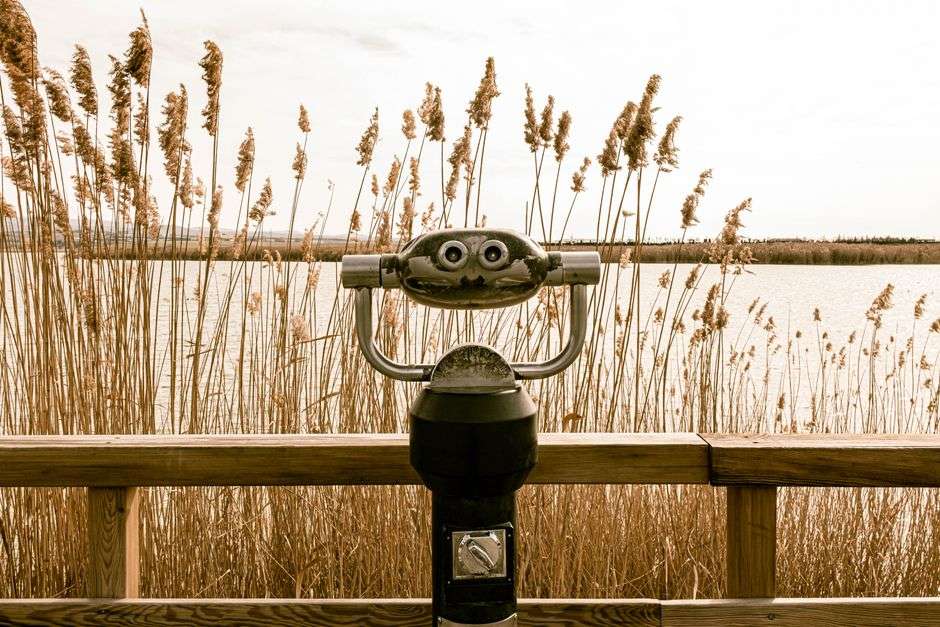
Long before the Gulf Coast became a destination for beach umbrellas and condominiums, it was a destination for birds — and for the people who travel hundreds of miles to watch them. The strip of coastline from the Mississippi line to Pensacola is one of the world’s great birding hotspots, a funnel for migratory species moving up and down the Gulf, and every fall it hosts one of the region’s signature nature events: the Alabama Coastal BirdFest, founded in 2003 and now run by the South Alabama Land Trust.
Built around expert-led tours from the Mississippi line to Pensacola — and through Gulf Shores, Orange Beach, Dauphin Island, Daphne, Fairhope, Spanish Fort and Mobile — BirdFest has grown into a multi-day celebration of one of the most biodiverse birding regions on the continent, capped by a free, family-focused Nature Expo at the 5 Rivers Delta Resource Center in Spanish Fort.
A festival born on the causeway
The event was founded in 2003 by Dr. John L. Borom of Fairhope as a project of the Mobile Bay Audubon Society, and for its first decade and a half it carried his name — the John L. Borom Alabama Coastal BirdFest. In 2019, the festival was transferred to the South Alabama Land Trust, the Fairhope-based conservation organization (formerly the Weeks Bay Foundation) that protects coastal land across Baldwin and Mobile counties.
Under SALT’s stewardship, BirdFest became one of its two signature fundraisers, netting tens of thousands of dollars a year for habitat restoration and protection. A typical festival year draws birders from more than a dozen states and every corner of Alabama, choosing from dozens of trips, workshops and evening events over four days. “As an ecotourism event, BirdFest involves local guides, rental companies, boat tour operators, workshop presenters, hotels, caterers, restaurants and more, so the economic impact for Baldwin and Mobile counties is definitely notable,” SALT executive director Connie Whitaker has said.
The festival’s longtime partners read like a map of coastal Alabama’s natural treasures: the 5 Rivers Delta Resource Center, Dauphin Island Sea Lab, Gulf State Park, the Bon Secour National Wildlife Refuge and more. “It’s wonderful for people to see and experience the places we, as a land trust, are working to protect,” Whitaker said.
What the festival looks like
The structure is simple and addictive: participants register online, browse the season’s list of tours and workshops, and build a personal schedule using the code for each event. Tours run by land, boat, kayak and bike, from dawn birding trips on the barrier islands to delta pontoon cruises and plant walks on protected land. Pricing reflects the sum of the events you choose, and capacity is limited — the most popular trips fill fast.
The lineup stretches from Mobile Bay to Pensacola, but the anchor is the free Nature Expo at 5 Rivers, which transforms the Delta Resource Center into a family festival: live animal presentations, hands-on activities, educational booths and — the point of it all — kids outdoors.
Getting kids outside, by design
That last part has become a mission of its own. SALT’s Gulf Coast Nature Passport is a free workbook that challenges kids — it was designed with ages 9 to 12 in mind — to identify native plants and animals, complete outdoor activities and log their finds at different levels of completion. Completed passports can be brought to SALT’s office for a prize, a structure that turns a Saturday walk into a season-long scavenger hunt.
“We hope that a little time away from computers and the phone will grow an understanding and appreciation of the natural wonders here in our backyard,” the organization says. The passport prompts were curated by SALT’s land conservation staff to send families into the same habitats the BirdFest tours visit — marshes, longleaf forest, delta waterways — with names for what they find.
Why this corner of the Gulf matters to birds
The reason a bird festival thrives here is geography. The Alabama coast sits where the great flyways of the Americas converge on the Gulf of Mexico, and its mix of habitats — barrier island beaches, maritime forest, tidal marsh, cypress swamp, longleaf pine savanna — packs an outsized variety of birds into a small area. According to the eBird project, Cornell University’s citizen-science database, the region records a remarkable diversity of species year-round, with spring and fall migration pushing the list higher.
That diversity is exactly what the Land Trust exists to protect. SALT, incorporated in 1990 to support the Weeks Bay National Estuarine Research Reserve and nationally accredited as a land trust since 2009, uses events like BirdFest to fund permanent protection of habitat — the working logic being that a birder who spends a weekend exploring a wetland is likelier to support conserving it.
The birding economy
It is easy to overlook how significant birding tourism has become along the Gulf Coast. Birders travel from across the country for events like BirdFest, staying in local hotels, eating in local restaurants and chartering local boats — an ecotourism stream that reaches its peak in the cooler months, when most beach tourism has gone home. For the small towns that host the tours — Dauphin Island, Grand Bay, Spanish Fort, Bon Secour — the festival arrives in the shoulder season, when the economic boost is most welcome.
For organizers, that dual value — fundraiser and ambassador — is the point. BirdFest turns hundreds of people into eyewitnesses of the habitats SALT works to protect, which is a more persuasive argument than any brochure.
Plan ahead, pack the binoculars
The practical advice from everyone who has organized a BirdFest: register early, build your schedule in advance, and assume the boat trips will sell out first. Tours and workshops are listed on SALT’s website with codes for each event; pricing reflects the sum of the events you choose. Whether you are a seasoned birder with a life list to grow or a family looking for a reason to spend a Saturday outside, the festival is built to meet you where you are.
As one of SALT’s outreach coordinators put it: “Whether you’re a local looking for a fun, family-friendly event or a birder looking to experience something new in our area, everyone should take advantage of the wonderful, diverse, and abundant natural wonders that our Gulf Coast has to offer.”
The birds, after all, show up every year without being asked. BirdFest simply gives the rest of us a reason to be there when they do.