Alabama man in prison for TV series: ‘your humanity starts to kind of go away’
Geneva native Jake Ellenburg spent about 12 days in a real Georgia jail for the streaming series “The New Stanford Prison Experiment” and says its ending is about unity.
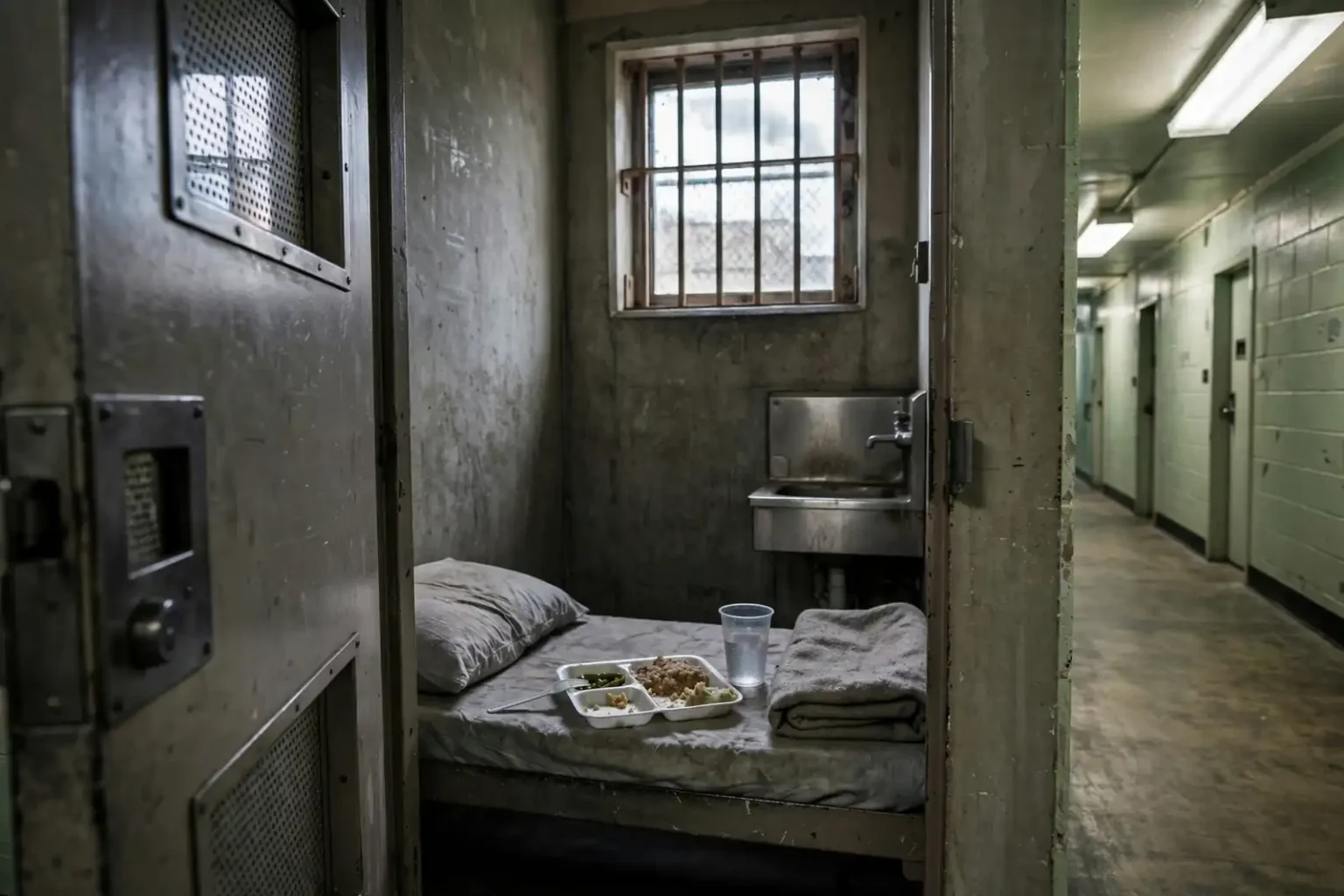
A Geneva native spent roughly 12 days locked inside a real jail for “The New Stanford Prison Experiment,” a new streaming series that opens as an unusual entry in the reality TV genre and closes in a direction few viewers are likely to expect. By the final episodes, the Alabama man in prison for the cameras finds himself at the center of the action.
Jake Ellenburg, 35, said he never set out to become a reality television personality when he agreed to spend a couple of weeks behind bars for the show.
“I thought, you know, what a crazy chapter for the life story,” he said.
The six-episode series was released Oct. 21, and all episodes are now available to stream.
A notorious experiment, revisited
The show borrows its name from one of the most infamous studies in the history of psychology. In August 1971, Stanford University psychologist Philip Zimbardo recruited college students and randomly assigned them to play either prisoners or guards in a mock jail set up in the basement of a campus building. The study was planned to run for two weeks, but it was halted after six days as guards became abusive and prisoners showed signs of severe distress.
The original experiment has since become a cautionary tale about how not to conduct research on human subjects, and its methods and conclusions have drawn sustained criticism from scholars over the decades.
With that history attached, the new series was met with some skepticism when it was announced. One critic wrote that “there is something almost impressively misguided” about the project.
A muddled premise with flashes of comedy
The finished series is something of a muddle. Unlike competition-based reality shows, there is no cash prize or grand reward driving the participants’ behavior. A panel of expert observers tries to draw larger lessons from what unfolds, with limited success.
What the show does offer are regular moments of absurd humor. A schoolteacher embraces his role as a prisoner with obvious delight, explaining that he could never be a guard because he already functions as one every working day. Later, when roles are reversed, he ends up wearing a guard’s uniform anyway.
A participant with a corporate executive’s outlook arrives armed with management and motivational ideas, approaching the job of guarding inmates as though it were a team-building exercise. A tough-talking guard is switched to the inmate side and promptly quits. Another prisoner learns, a little too late, that the toilet in his cell can be flushed only twice an hour.
A turn in the final episodes
Ellenburg keeps a relatively low profile through most of the series. That changes in the last two episodes, when the story takes a surreal turn. Without revealing too much, the remaining prisoners begin to understand that they may have the power to end the experiment on their own terms.
Ellenburg is the first participant to say so out loud. But turning that realization into action requires the group to agree on what those terms should be.
“I think that the message at the end will surprise people,” Ellenburg said. “I think if you watch the trailer and you watch the first episode or so, I think that final episode is going to leave you really surprised and hopefully feeling a little bit better about the human race.”
He said the conclusion struck him as especially meaningful given the current mood of the country.
“You know, I know times are tough right now,” he said. “I know that a lot of people feel sad, they feel depressed, they feel lonely, they feel angry. There’s just a lot of animosity out there. I feel like the ending was about unity. I’m trying not to get, like, choked up thinking about it now.”
From small-town Alabama to tech startups
About a year has passed since the bulk of filming wrapped, giving Ellenburg time to reflect on why he took part and what he took away from it. He said he has no regrets.
Geneva is a small town in Geneva County, in the Wiregrass region of southeast Alabama near the Florida line. Ellenburg said growing up there shaped how he views opportunities when they appear.
“I grew up in Geneva, Alabama,” he said. “It’s one of those small towns where like, you know, you don’t get a lot of opportunities. And when I was at the University of Alabama, I had the opportunity to build a startup and that changed my life. You know, I moved to D.C. for years, did the whole tech-startup entrepreneur thing for a very long time. And it reset the trajectory of everything for me.”
When producers contacted him about the series, he said, he saw it as another unexpected chance worth taking.
“I was reached out to and they said that I would probably be a good fit for this,” he said. “I sat there and I thought about it for a minute and I was like, is this another crazy opportunity coming knocking on a Geneva kid’s door?”
Inside a real jail
The production was filmed in an actual jail in Georgia. Neither the participants playing prisoners nor those playing guards received much coaching before the doors closed behind them.
Ellenburg said he was struck by how fast he adapted to life as an inmate.
“From my perspective, I was kind of surprised how quickly even I fell into the role of an inmate,” he said. “You know, keep your head down, eat your food, try to, you know, trust, but also keep your head on a swivel.”
Some participants treated the experience as a test of endurance. Ellenburg said he saw it as a study in power: how people act when they hold too much authority over others, and how people respond when they have none at all.
He did not expect it to bring participants together, but it did. Much of that bonding took place off camera, or at least out of the spotlight until late in the series.
“One of the things we really don’t see until kind of close to the end is, every night we would sit around and kind of tell our stories,” he said. “Different guys share their backgrounds, different guys would share their upbringings, you know, and just their heroes and what they wanted to do with life.”
Those relationships mattered in the finale, which Ellenburg described as one of the hardest days he has lived through.
“It was one of the most incredible, heart wrenching, emotional, mentally taxing days I think I’ve ever had in my life, to be completely honest,” he said.
‘Your humanity starts to kind of go away’
The experience stayed with Ellenburg after he returned to his job running a marketing firm he owns in Atlanta. He said the whole thing felt like a fever dream, but the group chat with his fellow participants helped keep him grounded.
“We still keep up,” he said. “A lot of people ask that. Yeah, we still talk almost every day, especially since the show’s aired.”
Ellenburg said one part of the experience that may be overlooked by viewers is the serious discussion it sparked among participants about the American prison system.
“One of the things that I think is kind of missed … is we had a lot of great conversations around the prison industrial complex,” he said. “I know we got to kind of cosplay prisoners. I’m not equating what I did to somebody who really served time. But I did eat real prison food. I did sleep on a real prison bed.”
He said even a short stint took a physical and emotional toll.
“You know, I was locked in a real prison for 12-ish days. After eating that food for that long, it makes you sick, it makes you tired, it makes you feel like you’re just not a human being,” he said. “When you’re served three meals of slop a day, your humanity starts to kind of go away.”
That brief taste left him thinking about people who spend years or decades incarcerated.
“I just couldn’t imagine somebody who’s got to do that for 2, 10, 20, 30, 40 years,” he said. “I don’t want to be controversial, but we might need to make some changes.”
No plans for a reality TV career
For Ellenburg, the experience was worthwhile. He said he learned from it and has moved on, and he is not looking to turn the show into a new line of work.
“I didn’t go into it wanting to be like the next reality TV show guy,” he said. “I’ve had a successful career. I like my job. I will do it if they come to me. But it wasn’t like I was going, I want to go do this to transform that into an acting career or reality TV or whatever.”
Creating content, he said, remains a hobby that fits naturally with his profession.
“I make content for fun. I’ve done that for most of my life,” he said. “I’m a marketer, so I love social media. I love making content and things like that. But for now, that all is just for fun.”
All six episodes of “The New Stanford Prison Experiment” are available for streaming.
Related coverage from South AL News
- Geneva County Drivers: SR-52 and CR-73 Intersection Becomes Temporary Three-Way Stop Wednesday During Construction
- CMT's 'Sweet Home Alabama' Reality Series Set to Film in Fairhope
- Unbearable Heat in Alabama Prisons: Humanitarian Crisis Demands Immediate Reform
- Figures Calls Tuberville Fuel-Price Remark 'Beyond Irresponsible' at Geneva Campaign Stop