

GENEVA, Ala. — U.S. Rep. Shomari Figures used a Friday campaign stop in downtown Geneva to push back on recent comments by U.S. Sen. Tommy Tuberville suggesting that Alabamians are willing to absorb higher fuel prices, arguing that rising costs and tariffs are squeezing Wiregrass families and farms.
Figures, a Democrat from Mobile, is running in Alabama’s redrawn 2nd Congressional District against Republican state Rep. Rhett Marques of Enterprise. The Sept. 25 visit to the Geneva County seat came as both candidates step up campaigning in the final weeks before the Nov. 3 general election.
During the stop, Figures met with voters to discuss rural health care, Social Security and economic relief.
At a glance
- Who: U.S. Rep. Shomari Figures, D-Mobile, the Democratic nominee in Alabama’s 2nd Congressional District
- Where: Downtown Geneva, Geneva County
- When: Friday, Sept. 25
- What he addressed: Tuberville’s fuel-price comments, tariff relief for farmers, rural health care, Social Security and questions about his Mobile roots
- Opponent: Republican state Rep. Rhett Marques of Enterprise
- Election Day: Tuesday, Nov. 3
The comments that sparked the exchange
Tuberville, the Republican nominee for governor, said recently that he believes Alabamians will tolerate higher fuel prices because they broadly support President Donald Trump, pointing to the president’s strong electoral record in the state. Tuberville has also argued that Democratic energy policies helped drive up fuel prices and has called for more domestic oil production.
Asked about Tuberville’s remarks in Geneva, Figures said he strongly disagreed.
“It is beyond irresponsible to make such a comment,” Figures said. “To believe that people in the state of Alabama, a place where we have an individual median income of $34,000, are okay paying higher prices out of some loyalty to somebody who is, you know, making them spend more money than they have to, it’s just ridiculous.”
Figures said economic strain is being felt across the Wiregrass, and especially on local farms.
A call for tariff relief
Figures called for a federal program to help farmers cope with the effects of tariffs.
“We need a tariff relief policy, a tariff relief program for our farmers, because they didn’t ask for this; even if they voted for Donald Trump, this is not what they voted for. They did not vote for someone who was going to go to war with the largest industry in the state of Alabama,” Figures said.
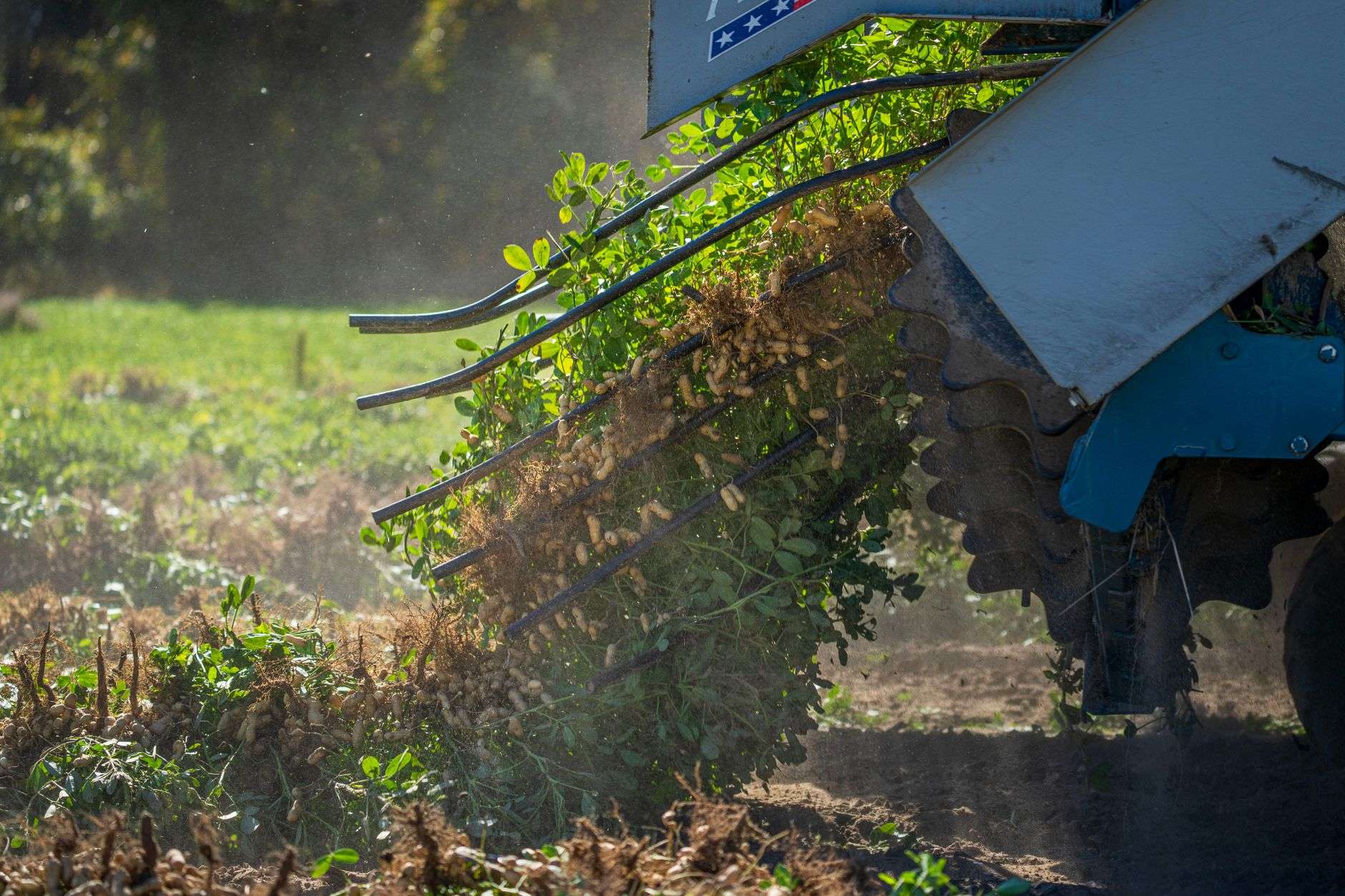
Agriculture and forestry together are frequently described by state farm groups as Alabama’s largest industry. In the Wiregrass, a region named for the wiregrass that once covered its longleaf pine forests, farming remains central to local economies. Peanuts, cotton and cattle are major products across the southeast Alabama counties that now make up much of the 2nd District, and the area around Dothan is known as one of the most important peanut-growing regions in the country.
Farmers are exposed to trade policy in two ways. Tariffs on imported goods can raise the cost of equipment, fertilizer and other supplies, while retaliatory tariffs imposed by trading partners can make American crops more expensive overseas and reduce export demand. During Trump’s first term, the U.S. Department of Agriculture paid billions of dollars in trade-mitigation aid to farmers affected by retaliatory tariffs.
Figures has also criticized a Trump administration plan to lower import tariffs on foreign beef, making an appeal to cattle ranchers in the district as he tries to fend off his Trump-backed opponent. Supporters of lower beef tariffs argue the move can help bring down grocery prices for consumers, while cattle producers have raised concerns about competition from imports.
Fuel costs in rural Alabama
Fuel prices have become one of the most prominent issues in Alabama’s fall campaigns. Diesel is a major expense for farmers, truckers and commercial fishermen, and higher prices ripple through the cost of moving crops and goods to market.
Doug Jones, the Democratic nominee for governor, has made fuel and household costs a centerpiece of his campaign against Tuberville and has proposed eliminating state taxes on fuel. Tuberville has countered that the country needs “more American energy” and that Democratic policies bear responsibility for high prices.
Answering questions about his Mobile roots
Figures was also asked how he responds to voters who see him primarily as a Mobile candidate, now that the district’s lines have shifted toward southeast Alabama and his opponent’s home base in Enterprise.
“I represent 13 counties right now, and there’s not a single county that will tell you that we haven’t been there for them, we haven’t been present, that we haven’t been listening, and that we haven’t been producing for them,” Figures said. “So, you know, they can say what they want to, but our record stands for itself and speaks for itself.”
How the 2nd District changed
Figures was first elected in 2024 under a court-ordered congressional map that stretched the 2nd District from Mobile east toward the Georgia line. That map followed the U.S. Supreme Court’s 2023 ruling in Allen v. Milligan, which upheld a finding that Alabama’s congressional map likely violated the Voting Rights Act, and a federal court’s later rejection of the replacement plan lawmakers passed that year. Under the court-drawn lines, Alabama had two districts in which Black voters made up a majority or near-majority of the population.
This year, after the Supreme Court’s 2026 decision in Louisiana v. Callais, Alabama lawmakers met in a special session and cleared the way for the state to return to its 2023 map. Supporters said the move restored the Legislature’s own plan. Critics argued it diluted the voting strength of Black Alabamians.
Under the redrawn lines, the 2nd District leans more heavily toward the Wiregrass, Montgomery and the eastern Black Belt, and it is now considered to lean Republican. Mobile, Figures’ hometown, sits in the neighboring 1st District. Marques, a Trump-endorsed state representative, won the Republican nomination in a special primary in August. Recent public polling has shown a close race, including a late-August survey that had each candidate at 47%, and both national parties are investing heavily in the contest.
About the candidates
Shomari Figures
Figures is a Mobile native and the son of state Sen. Vivian Davis Figures and the late state Sen. Michael Figures. Before running for Congress, he worked in the Obama administration and later served in senior roles at the U.S. Department of Justice under Attorney General Merrick Garland. He is seeking a second term.
Rhett Marques
Marques represents part of the Wiregrass in the Alabama House of Representatives and lives in Enterprise, in Coffee County. He has the endorsement of President Trump, who is scheduled to hold a rally in Mobile on Oct. 2 with Tuberville and U.S. Senate nominee Barry Moore expected to appear.
Other issues on the trail
Beyond fuel and tariffs, Figures spent time in Geneva talking with voters about rural health care and Social Security, issues that resonate in a largely rural district with many older residents. Rural hospitals across Alabama have struggled financially for years, and access to care in small towns remains a frequent topic at campaign events in both parties.
Figures has also been promoting legislation he introduced this week, the Public Service Educational Assistance Act, which would cover public college or job-training costs for the children of educators, first responders and social workers with at least 20 years of full-time service.
What’s next
The 2nd District race is expected to remain one of the most closely watched congressional contests in the South through Election Day. Trump’s Oct. 2 rally at the University of South Alabama’s Mitchell Center will take place just outside the district’s new boundaries, in a media market that reaches much of southwest Alabama and the Florida Panhandle.
- Voter registration deadline: Monday, Oct. 19, 15 days before the election.
- Election Day: Tuesday, Nov. 3. Polls are open 7 a.m. to 7 p.m.
- Photo ID: Required to vote in Alabama.