Alabama Special Needs Teacher Accused of Putting Hot Sauce on Student’s Tongue
Heather Varner Hunter, 46, a former special education teacher at Cottonwood Elementary in Houston County, is charged with child abuse after investigators say she put hot sauce on a student's tongue.
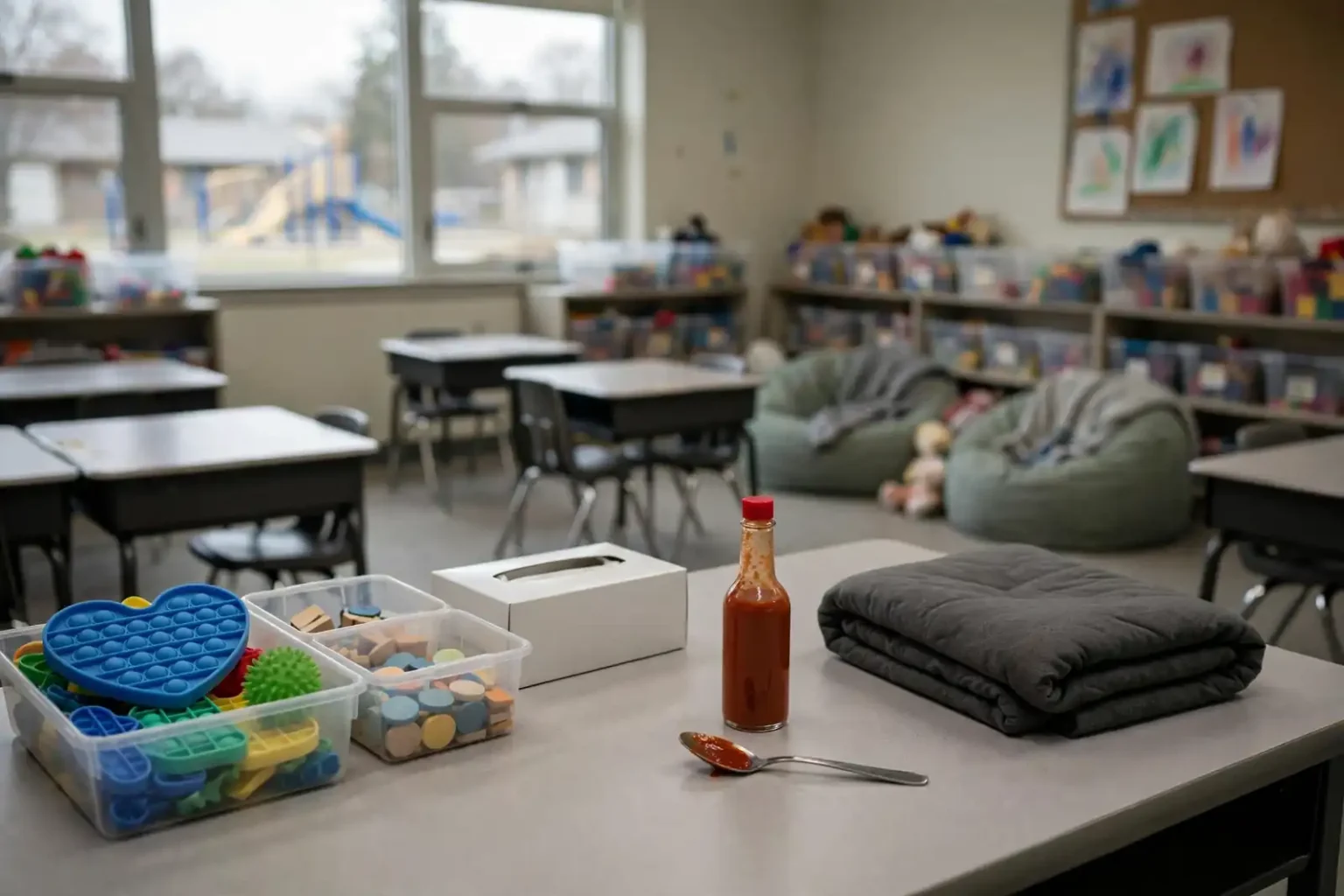
COTTONWOOD, Ala. — A Houston County special needs teacher has been arrested and charged with child abuse after investigators say she put a spoonful of hot sauce on a student’s tongue as a form of discipline, according to charging documents.
Heather Varner Hunter, 46, of Dothan, is charged with child abuse/torture. She had worked as a special education teacher at Cottonwood Elementary School, part of the Houston County Schools system in the southeastern corner of the state.
Hunter is accused, not convicted, and is presumed innocent unless proven guilty in court.
What the charging documents allege
According to charging documents, the incident took place on Sept. 15.
An investigator wrote that Hunter poured a spoonful of hot sauce on the student’s tongue because the child was being “defiant” and had stuck out their tongue at teachers.
The student has been described publicly only as young. Authorities have not released the child’s name, age or grade, and this publication is not reporting any details that could identify the student.
It has not been made public how the allegation came to the attention of investigators or which agency handled the investigation.
Arrest, bond and employment status
Hunter was booked into the Houston County Jail on Monday. She was released the same day after posting a $2,500 bond.
Houston County Schools officials said Hunter is no longer employed by the school system. It was not specified whether she resigned or was dismissed.
Cottonwood is a small town in southern Houston County, near the Florida state line in the Wiregrass region. Its elementary school is part of the county school system, which operates separately from Dothan City Schools, the district serving the county’s largest city.
Hunter has been a teacher for 18 years, eight of them at Cottonwood Elementary. In March, she was named the Wiregrass Electric Cooperative Teacher of the Month.
What the charge means under Alabama law
Alabama’s child abuse statute makes it a crime for a responsible person to torture, willfully maltreat, cruelly beat or otherwise willfully mistreat a child under 18. The offense is a Class C felony, which carries a possible penalty of one year and one day to 10 years in prison upon conviction.
The charge as filed reflects the allegation at the time of arrest. Prosecutors and, in felony cases, a grand jury decide what charges a case ultimately proceeds on.
What happens next
Felony cases in Alabama generally begin in district court, where a defendant can ask for a preliminary hearing. At that stage, a judge determines only whether there is probable cause to move the case forward.
The case can then be presented to a Houston County grand jury. Grand jurors meet in private, hear evidence presented by prosecutors and decide whether to return an indictment. If Hunter is indicted, the case would move to circuit court, where she would be arraigned and enter a plea. Many criminal cases are resolved through plea agreements, while others go to trial before a jury.
No court dates had been announced.
Students with special needs and school safeguards
Students who receive special education services in public schools are protected by the federal Individuals with Disabilities Education Act, which guarantees eligible children a free appropriate public education and requires individualized education programs, known as IEPs, tailored to each child’s needs. Many of those plans address classroom behavior and the supports staff should use when a student struggles.
Advocates for children with disabilities have long pointed out that some students, particularly those with communication challenges, may have difficulty telling a parent what happened at school. That makes the observations of other adults in the building especially important.
In Alabama, teachers and other school employees are mandatory reporters under state law, meaning they are legally required to report known or suspected child abuse or neglect to law enforcement or the Alabama Department of Human Resources.
Where to report suspected abuse
Anyone who suspects a child is being abused or neglected in Alabama can contact their local county Department of Human Resources office or local law enforcement. In an emergency, call 911.
Parents who have questions or concerns about how their child is being treated at school can also contact the school’s principal or the district’s central office, and can request a meeting to review their child’s IEP and any behavior plan in place.