

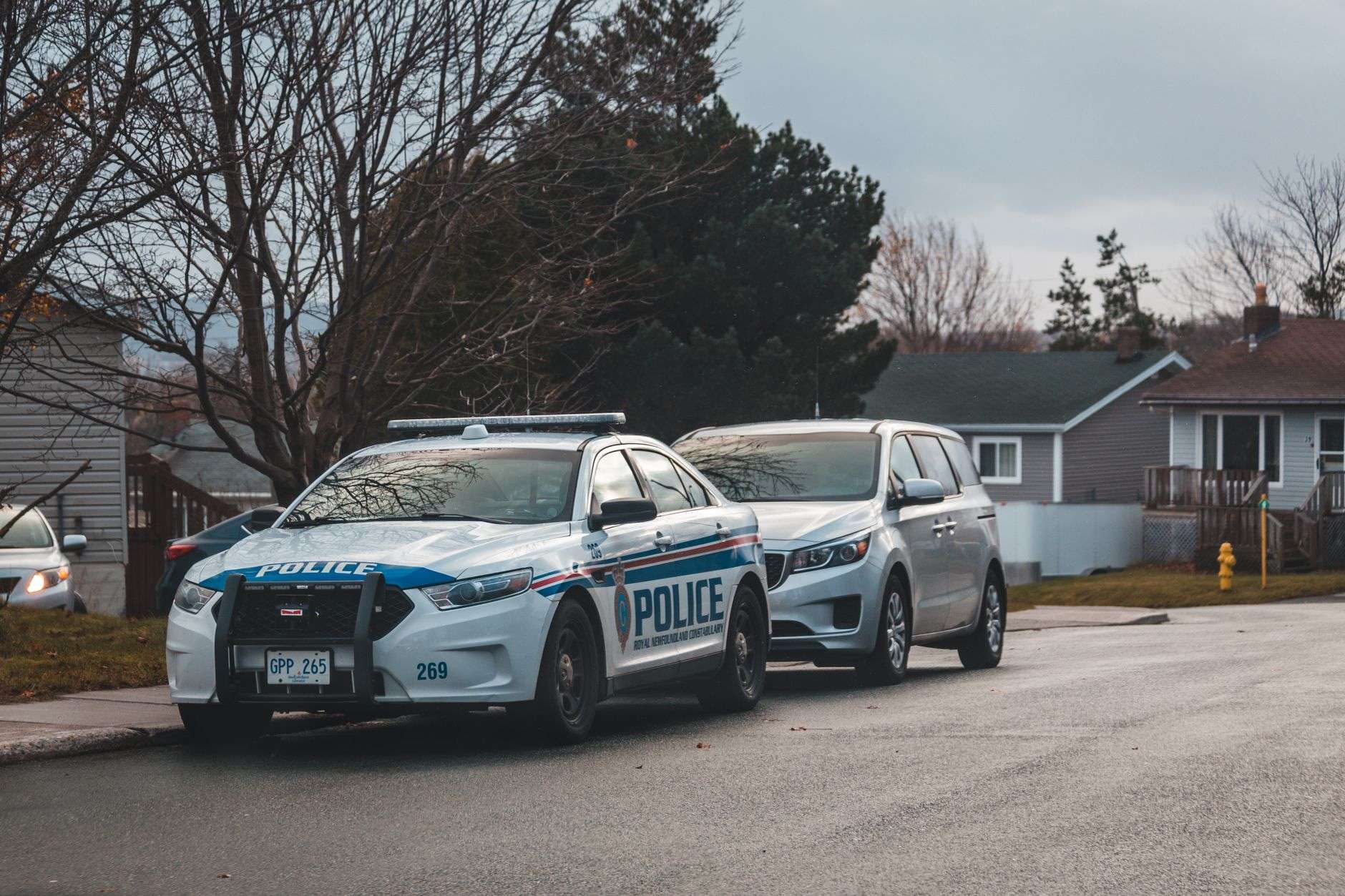
ATMORE, Ala. — An Atmore couple has been arrested on drug charges and chemical endangerment of a child after their 14-month-old son ingested a narcotic substance inside their home in August, according to the Atmore Police Department.
Amber Christiana Osborne, 31, and Jonah Patrick Osborne, 31, both of 160 East St., were each charged with unlawful possession of marijuana in the second degree, unlawful possession of drug paraphernalia and chemical endangerment of a child. Both were booked into the Escambia County Detention Center in Brewton and held on $25,000 bond.
The Call on Aug. 13
Atmore police said officers responded on Aug. 13 to a call regarding a 14-month-old boy who had ingested illegal narcotics. Officers noted the child was exhibiting symptoms consistent with opioid-like effects and he was transported to a medical facility.
Investigators with the Atmore Police Department’s criminal investigation division responded to the scene and opened an investigation, later executing a search warrant at the residence. Probable cause was developed during that process, and arrest warrants for the parents were obtained afterward.
Police reported that following medical treatment, the child is doing well.
What Court Records Say
Court records state the chemical endangerment charge arose when the couple “caused an overdose of a minor by leaving the narcotic Kratom in the area where the minor could access it.”
Records also show the couple possessed marijuana for personal use and had an empty pill bottle that had contained kratom.
Police specified that they do not believe the marijuana charge is associated with the substance ingested by the child. That distinction matters legally, because it separates the possession counts from the endangerment count, which rests on the kratom.
What Kratom Is
Kratom is derived from the leaves of Mitragyna speciosa, a tree native to Southeast Asia. Its principal active compounds, mitragynine and 7-hydroxymitragynine, act on opioid receptors, which is why ingestion can produce effects a responding officer would describe as opioid-like — including sedation and respiratory depression.
Kratom occupies an unusual regulatory position in the United States. It is not a federally scheduled controlled substance, and it is sold in many states in gas stations, smoke shops and online in capsule, powder and extract form. It is not approved by the U.S. Food and Drug Administration for any medical use, and the agency has repeatedly warned consumers against it, citing risks including seizures, liver injury and dependence.
Alabama is one of a small number of states that took a different path. The Alabama Legislature classified mitragynine and 7-hydroxymitragynine as Schedule I controlled substances in 2016, making kratom illegal to possess or sell in the state. That is why the charging language in this case refers to kratom as a narcotic.
For a 14-month-old, the risk profile is substantially different from that of an adult. Dosages formulated for adults are concentrated relative to a toddler’s body weight, and small children are more vulnerable to respiratory depression — the mechanism that makes opioid-class exposures dangerous in the very young.
Alabama’s Chemical Endangerment Statute
Alabama’s chemical endangerment law, codified at Section 26-15-3.2 of the Alabama Code, was written in 2006 and originally aimed at methamphetamine production in homes where children lived. Its reach is broader than that origin suggests.
The statute makes it an offense to knowingly, recklessly or intentionally cause or permit a child to be exposed to, to ingest or inhale, or to have contact with a controlled substance, chemical substance or drug paraphernalia. The offense is graded by outcome. Exposure alone is a Class C felony. If the child suffers serious physical injury, the offense rises to a Class B felony. If the child dies, it becomes a Class A felony.
Alabama courts have interpreted the statute expansively over the years, and it has produced more prosecutions than comparable laws in most other states. The charge does not require proof that a parent intended harm; recklessness — including leaving a substance where a child can reach it — is sufficient under the statute’s terms.
The Other Charges
Unlawful possession of marijuana in the second degree is a Class A misdemeanor in Alabama, applying to possession for personal use. Unlawful possession of drug paraphernalia is also a misdemeanor for a first offense.
Bond was set at $25,000 for each defendant. Both were transported to the Escambia County Detention Center in Brewton, which houses pretrial detainees for Atmore and the surrounding communities.
The Osbornes have not been convicted of any offense and are presumed innocent unless and until proven guilty in court. Cases of this type in Escambia County proceed to a grand jury, which decides whether to return an indictment on the felony count.
Preventing Accidental Pediatric Exposures
Poison control data consistently show that children under two are at the highest risk of accidental ingestion, because they explore by mouth and because they are mobile enough to reach containers adults assume are out of range. Pills and powders left in nightstands, purses, countertops and vehicle consoles account for a large share of exposures.
The Alabama Poison Information Center can be reached 24 hours a day at 1-800-222-1222. Callers do not need to wait for symptoms to appear, and the service is free and confidential. Parents who suspect a child has swallowed any substance should call immediately rather than waiting to see whether effects develop.