Mobile County 911 Board Recovers Payment in Radio Tower Dispute
A Mobile County 911 board dispute over unauthorized radio tower use ended with a $32,000 payment and lower monthly fees, saving over $200,000.
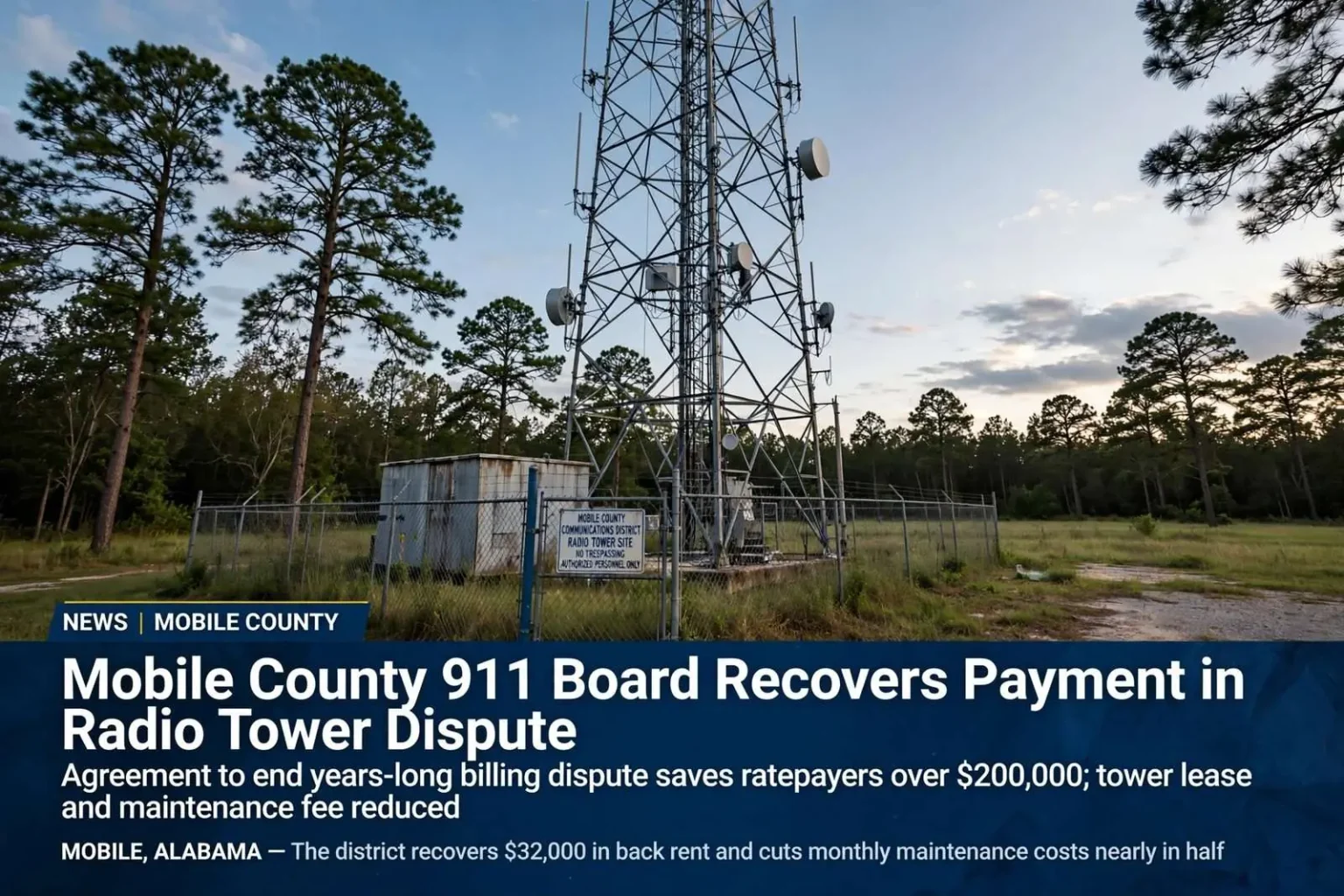
MOBILE, Alabama – The Mobile County Communications District has resolved a billing dispute that officials say could save ratepayers more than $200,000 over the life of a maintenance contract tied to the county’s emergency radio network. The agreement ends a controversy that has occupied the district’s board through a summer of contentious meetings and comes while a much larger review of the county’s radio upgrade program remains underway.
According to details presented at a recent district board meeting, a subcontractor working on the county’s 911 radio system had been using an antenna on a county-owned radio tower without paying for it since 2009. The arrangement came to light this summer during a meeting in which commissioners, already questioning the cost of the district’s radio program, voted to investigate the roughly $40 million contract awarded to overhaul the district’s radio infrastructure. That larger contract remains suspended while the review continues, leaving the district’s upgrade plans in limbo even as its day-to-day dispatch operations carry on.
During that same meeting, one commissioner questioned why the subcontractor had been allowed free use of space on a tower owned by the county, noting that other local governments typically charge companies as much as $400 for similar access. Tower space is a genuine commodity in the radio business: agencies and carriers lease antenna positions on towers for recurring monthly fees, and the practice of colocation – multiple users sharing a single tower – is a standard way for public agencies to offset their own operating costs. A county tower hosting paying tenants can generate revenue that reduces the burden on the emergency communications budget.
The commissioner also raised concerns about a separate provision requiring the district to pay the subcontractor more than $22,000 a month to maintain radio equipment. Combined with the free antenna use, the arrangement added up to a one-sided deal in which the county both gave the company valuable tower space at no charge and paid it a substantial monthly sum for upkeep, a combination that drew pointed questions from commissioners once it surfaced in the contract documents.
The resolution: back rent and a lower rate
The district’s attorney told commissioners this week that the subcontractor removed its equipment from the tower and paid the district more than $32,000 to cover the retroactive cost of using the antenna space dating back to 2009. The company also agreed to reduce its monthly maintenance charge by nearly half, from roughly $22,400 to about $12,000, for the remainder of its contract, which runs through October 2016. Officials said the combined effect – the recovered back payments and the reduced monthly obligation – could save ratepayers more than $200,000 over the remaining life of the agreement.
“The service won’t change, the parameters won’t change,” the attorney said of the new terms. “The only change is lowering the monthly obligation.” That assurance was aimed at addressing the practical worry underneath the dispute: that renegotiating the contract mid-stream could disrupt maintenance of the radio equipment that police, fire and EMS agencies across the county depend on. By holding the scope of service constant while cutting the price, the district preserved its operations while correcting what commissioners saw as an outsized cost.
The subcontractor’s president told commissioners his company had operated under a verbal understanding with the district for years and was not aware the arrangement conflicted with district policy until it was raised by commissioners. He said the equipment was removed promptly once the issue was identified, and the company’s willingness to pay the retroactive amount and accept the reduced rate resolved the matter without litigation. For the district, the outcome offered a measure of closure on one piece of a much broader set of questions about how its radio program has been managed.
Before the county acquired the tower in 2009, it had been owned by the MOWA Band of Choctaw Indians, and the subcontractor had managed it on the tribe’s behalf. The company’s president pointed to that history in explaining how the informal arrangement took root: when the county took over the tower, the subcontractor’s existing role on the site carried over without a formal lease or payment schedule being put in place. The tower in question is located in the northern part of Mobile County, where it serves as one of the nodes in the network of sites that keeps emergency radio traffic moving across the county’s large rural stretches.
Why the radio system matters
The communications district at the center of the dispute oversees emergency dispatch services across Mobile County, handling the 911 traffic that connects residents to police, fire and medical help. Funding for the district comes largely from the E-911 fees attached to telephone service, which means the agency’s budget is supported directly by the phone bills of county residents – the same ratepayers that officials cite when arguing that every dollar of savings in the radio program flows back to the public.
Radio infrastructure is among the most expensive and least visible parts of that mission. Towers, repeaters and mobile radios form the backbone that allows a sheriff’s deputy on a rural road and a Mobile firefighter downtown to communicate with dispatch and with each other, and agencies across the country have spent heavily in recent years upgrading aging analog systems to digital networks with wider coverage and better interoperability. Mobile County’s roughly $40 million overhaul contract is its own entry in that national trend, which is why commissioners have treated the review of the award with such urgency.
The company’s president added that after working with the district for a year and a half, his firm now has a clearer picture of the actual costs involved in servicing the county’s radio equipment, which allowed it to offer the reduced rate. That explanation reframed the earlier price not as padding but as a conservative initial estimate, though commissioners’ scrutiny has already changed the dynamic of the relationship between the district and its contractors.
What comes next for the district
Officials say the recovered funds and reduced fees will help offset costs as the broader radio system upgrade investigation continues. The suspension of the $40 million overhaul contract means the district must balance two competing demands: completing a review thorough enough to satisfy commissioners’ concerns about how the award was structured, and keeping the county’s existing emergency communications network running without interruption while the future of the upgrade remains undecided.
That balancing act is familiar to emergency communications agencies everywhere. Radio systems cannot simply be switched off while their replacement is debated, and deferred maintenance on an aging network carries its own risks. The district’s resolution of the tower dispute removes at least one cost and one controversy from the ledger while the bigger questions – how the overhaul contract came to be priced as it was, and when or whether the suspended award will move forward – await the outcome of the investigation.
The episode has also changed how the district does business. Commissioners’ willingness to question standing arrangements, from free tower use to monthly maintenance rates, signals a new level of contract oversight that vendors and subcontractors working with the district will have to navigate. For ratepayers, the immediate result is concrete: more than $32,000 returned for years of unpaid antenna space, a maintenance bill cut by more than $10,000 a month, and projected savings of more than $200,000 through the end of the contract in October 2016.
For the agencies and residents who rely on the system every day, the changes will be invisible by design. Dispatch calls will route the same way, radios will work the same way, and the towers scattered across the county – including the northern Mobile County site at the center of the dispute – will carry the same emergency traffic they always have. What changes is the price the public pays for that reliability, and the example set for how the district’s remaining contracts will be scrutinized as the wider investigation of the radio program continues.
The scrutiny has reached beyond the tower dispute itself. Since commissioners voted to investigate the overhaul contract, the district’s meetings have drawn more attention from the public and from the local governments that appoint representatives to the board, with each new revelation feeding questions about the process that produced the $40 million award. Contract suspension reviews of this kind typically involve a line-by-line examination of pricing, subcontractor arrangements and the documentation behind the award, work that can take weeks or months depending on the records involved.
The MOWA Band of Choctaw Indians, the tribe that owned the northern Mobile County tower before the county acquired it in 2009, is a state-recognized tribe with members concentrated in Mobile and Washington counties, and its history in the region reaches back centuries before the modern county boundaries were drawn. The tower’s passage from tribal ownership to county control in 2009 was the administrative hinge point of the entire dispute: the subcontractor’s informal management role predated the county’s ownership, and the missing formal lease is what allowed free antenna use to continue for years afterward.
For other public agencies watching the case, the lesson is procedural housekeeping. Tower leases, even small ones, need to be put in writing when property changes hands, and recurring service contracts need periodic comparison against market rates. The $400-per-month figure the commissioner cited for comparable tower space is modest on its own, but multiplied across years and paired with an inflated maintenance rate, small oversights can compound into six-figure costs for agencies funded directly by the public.
Whether the district’s upgraded radio program moves ahead on the original contract or a restructured one, the board now has a clearer picture of its own costs than it did a year ago – and, following this week’s settlement, a smaller bill for keeping the county’s emergency network running while it decides.