2009 Tourist Spending Offered Hope for Baldwin County Schools
A profitable 2009 summer tourist season on Pleasure Island offered a potential boost to Baldwin County school revenue as the system faced a $56 million shortfall and possible support-staff layoffs.
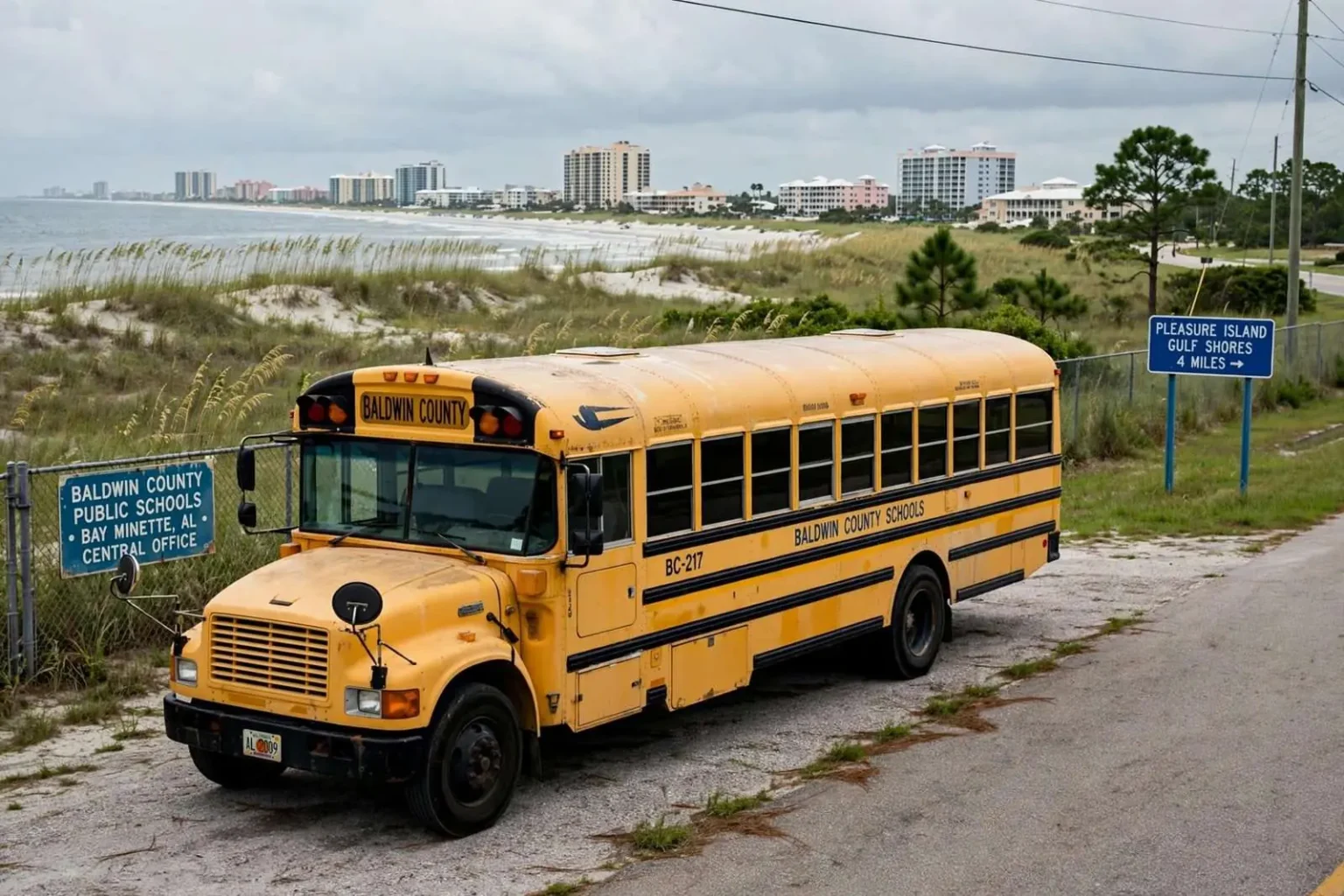
A stronger summer tourist season on Pleasure Island offered a potential source of relief for Baldwin County schools in 2009 as the system faced a major budget shortfall.
The Alabama Gulf Coast Tourism and Visitor’s Bureau reported a roughly 2 percent increase in tourist expenditures for June. Local sales-tax revenue tied to visitor spending could eventually help the school system, officials said.
Schools Faced Significant Financial Pressure
Baldwin County schools were confronting a reported $56 million budget shortfall and had announced a reduction-in-force policy. Nearly 200 school support employees could lose their jobs by the end of August. School spokesman Terry Wilhite said more than 90 percent of district revenue came from state and local sources. He noted that sales revenue takes time to reach school coffers but welcomed the increase in spending.
The summer of 2009 was a strange season for Baldwin County’s economy. The national recession had cut into household budgets everywhere, yet the beaches of Gulf Shores and Orange Beach were holding their own — a pattern familiar to Gulf Coast tourism officials, who have long noted that drive-market vacations actually strengthen in hard times, as families swap long-distance trips for a week at the closest beach. The 2 percent rise in June tourist expenditures was modest, but in a year when nearly every other economic indicator was pointing down, it mattered. Pleasure Island — the resort strip at the county’s southern tip — anchors a tourism economy that runs on condo rentals, restaurants, amusement attractions, and the retail spending of hundreds of thousands of summer visitors.
Why would a tourism rebound matter to classrooms? Because of how Alabama funds its schools. The state’s education budget is fed primarily by sales and income taxes rather than property taxes, a structure that makes school funding unusually sensitive to economic cycles. When shoppers stop spending, education revenue falls almost immediately. Baldwin County’s own budget, similarly, draws on local sales tax collections, and the county’s summer crowds represent a meaningful share of the calendar’s revenue. Every dollar spent in Gulf Shores souvenir shops and Foley restaurants is, eventually, a fraction of a dollar in a school account.
Anatomy of a $56 Million Shortfall
The scale of the Baldwin County problem in 2009 was among the largest of any district in Alabama. A $56 million shortfall against the system’s annual budget reflected a collision of forces: the national recession dragging on state tax collections, proration — the state’s mechanism for cutting already-appropriated school funding mid-year — squeezing budgets across Alabama, and years of enrollment growth in one of the fastest-growing counties in the state. Baldwin’s classrooms had been expanding for a generation, as families moved across Mobile Bay for the county’s schools, its suburbs, and its quality of life. Growth brings revenue, but it also brings construction costs, new hires, and fixed obligations that do not pause for a downturn.
The reduction-in-force policy the board announced was the visible edge of the crisis. Nearly 200 support employees — the aides, custodians, cafeteria workers, clerical staff, and bus drivers who keep a school system running — faced the loss of their jobs by the end of August. Support positions are typically where budget cuts land first, because state law and accreditation standards protect classroom teachers more firmly. But the human cost was real: in a county where the school system is one of the largest employers, nearly 200 lost jobs ripple through the same local economy that the tourism season was trying to lift.
Why Sales Taxes Are a Slow Lifeline
Wilhite’s caution about timing — that sales revenue takes time to reach school coffers — reflected the mechanics of tax collection. A dollar spent at the beach in June is collected by the merchant that month, remitted to the state or county in subsequent months, distributed according to formula, and only then appropriated into school budgets. The lag means a strong summer does not rescue a fall budget; it steadies the following year’s planning. Officials in 2009 were not promising relief by August — they were pointing to a trend line that, if it held, would make the next round of budgeting less painful than feared.
This article records the 2009 outlook and does not state the later effect of tourism receipts, whether the layoffs occurred or the district’s subsequent budget actions.
Tourism as Baldwin County’s Engine
The Alabama Gulf Coast Tourism and Visitor’s Bureau, which tracked the June figures, serves the coastal resort communities whose economies depend almost entirely on visitor spending. Gulf Shores and Orange Beach together draw millions of visitors in a normal year, their high-rise condominiums and beach houses filling from Memorial Day through Labor Day, with the peak weeks of July representing the season’s make-or-break period. The industry supports thousands of jobs in the county and generates the lodging and sales tax receipts that fund beach renourishment, tourism promotion, and — through the general funds that also support schools — public services across the county.
The 2009 season’s resilience had a specific texture. Visitors were still coming, but they were spending differently: shorter stays, fewer paid activities, more meals in condos. A 2 percent gain in expenditures reflected that balance — more people or steadier demand, offset by thinner spending per visitor. For budget planners watching from the county seat in Bay Minette, the figure was reason for measured optimism, not celebration.
How Baldwin County Schools Fit the Region
The Baldwin County Public Schools system is one of Alabama’s largest, spanning the entire county from Fairhope and Daphne on the Eastern Shore, through Robertsdale, Foley, and Summerdale in the agricultural center, down to the beach communities at the southern end, and out to Bay Minette in the north. Its footprint covers one of the fastest-growing counties in the state, and its enrollment had climbed for decades as the county’s population boomed. A system that size cannot respond quickly to budget shocks: contracts, schedules, staffing plans, and state reporting obligations all move on annual cycles, which is why a springtime shortfall announcement translated into personnel decisions that had to be made before the school year began in August.
The district’s dependence on state and local revenue — the more than 90 percent figure Wilhite cited — left little room for maneuver. Alabama districts have minimal local property-tax flexibility by national standards, and when the state’s education budget shrinks, counties absorb the blow directly. That structural reality is what made a beach-town statistic newsworthy for school administrators: in Alabama’s funding system, the beach and the classroom are connected by law and arithmetic, not metaphor.
Recession-Era Alabama Context
The 2009 shortfall played out against a broader state backdrop. Alabama’s education budget had been cut repeatedly through the recession years, with proration orders reducing district allocations mid-year and forcing layoffs and program cuts statewide. Districts across Alabama — from Birmingham to Huntsville to the coast — announced similar reduction-in-force plans, and the Baldwin County figure of nearly 200 support jobs ranked among the larger single-district totals. Against that landscape, any positive revenue news carried weight, and a summer tourism season outperforming the recession qualified as exactly that.
The episode also foreshadowed a debate that would continue in Baldwin County for years afterward: how a fast-growing county funds fast-growing schools. Growth in enrollment and growth in tourist spending both generate revenue, but neither moves at the speed of the obligations they create, and the 2009 budget crisis made the gap between them plain. The summer’s stronger visitor spending could not, by itself, close a $56 million hole — but for officials staring at a fiscal cliff, it was the difference of direction that mattered: the trend line was finally pointing the right way.
The People Behind the Reduction-in-Force
Policy language like “reduction-in-force” conceals the human arithmetic underneath. Support employees in a school district are the people who make a normal school day possible: the paraprofessionals who work one-on-one with special education students, the bus drivers who run the county’s long rural routes, the cafeteria staff who serve thousands of meals a day, the secretaries who answer the phone when a parent calls, the custodians who open the building before dawn. Cutting nearly 200 of those positions in a county where schools are among the largest employers means cutting nearly 200 household incomes — many of them in the same communities that were counting on the summer tourist season to lift the local economy.
The end-of-August deadline in the announcement reflected the school calendar’s unforgiving rhythm. Staffing plans must be finalized before classrooms open; a district cannot carry employees it cannot pay through a school year it is unsure it can fund. The board’s decision, made in the middle of summer, put hundreds of families through weeks of uncertainty during the very season the tourism numbers were giving the county its best economic news of the year.
Tracking a Gulf Coast Recovery Signal
Why did a 2 percent monthly increase deserve attention at all? Because in recession-era 2009, the sign of the number mattered more than its size. Economists monitoring Gulf Coast tourism had watched bookings soften, discretionary spending shrink, and conventions cancel through 2008 and early 2009. A June that came in above the prior year — even by two points — suggested the drive-to beach market was absorbing the downturn better than feared, and that Alabama’s beaches were competing successfully for the vacation dollars families were still willing to spend.
The bureau’s monthly expenditure reports are the industry’s scoreboard, compiled from lodging collections and sales data across the coastal communities. When those reports move, budgets across Baldwin County move with them — not just schools, but municipal services, road projects, and the seasonal employment base that thousands of residents depend on. The June figure was thus read locally the way a harvest report is read in a farm county: as the year’s central economic fact, still accumulating.
The Waiting Game of School Finance
What made the summer of 2009 so tense for Baldwin County’s schools was the mismatch between when money arrives and when decisions must be made. Budgets for the coming school year had to be built on projections; proration could strike mid-year; and the tax receipts from June’s tourists would not appear in usable form until months after the staffing decisions were final. Officials were, in effect, reading tea leaves — welcoming a positive trend they could not yet bank, while proceeding with cuts they could not yet reverse.
That tension defines school finance in sales-tax states, and Alabama may be the purest case in the nation. The structure ties a community’s commitment to its schools directly to its willingness to spend — at the beach, at the mall, at the grocery store — and ties a school district’s stability directly to the wider economy’s mood. In Baldwin County in 2009, all of those connections were visible at once: a recession squeezing the state budget, a tourism season holding the line, a school system cutting to fit its shrinking revenue, and officials expressing hope that the one number moving in the right direction — tourist spending, up 2 percent in June — would keep moving until the next budget year arrived.
The 2009 outlook recorded here ends where the news of that summer ended: with a shortfall of $56 million, nearly 200 jobs at risk, a tourism engine running slightly ahead of the year before, and a community waiting to see whether the beach could, in time, help carry its classrooms.