

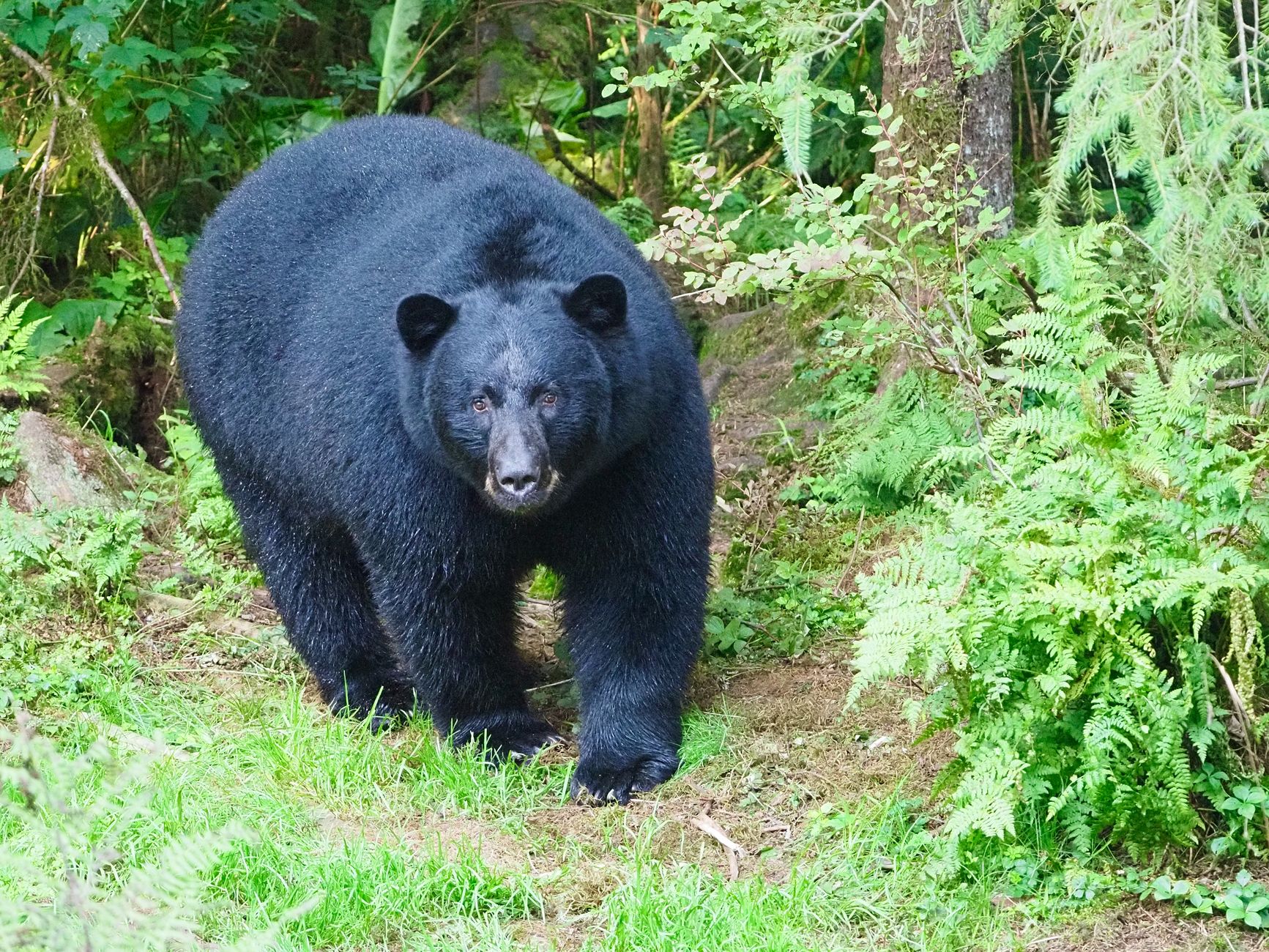
Fontaine Radcliff Howard grew up on Mobile Bay and calls herself a “Bay Rat.” She has spent decades photographing wild animals, from the black bears of rural south Alabama to wild horse herds across the country, and has published four books along the way. The latest, It’s a Wild Life, is a large-format, limited-edition book, signed and numbered, released in October 2025. She is already working on another book about America’s wild horses.
What drives her work is less about inspiration than passion, the kind that keeps a photographer waiting in the woods for days in hopes of one frame.
A Childhood on the Eastern Shore
Howard was born on Mobile Bay. Her father was George Radcliff, a well-known local figure who, with his friend Jimbo Meador, is named in the dedication of Winston Groom’s novel Forrest Gump. Her family moved around when she was young and settled in Point Clear in the early 1970s. There she learned to sail, water-ski and even barefoot ski.
She came by it honestly. Her father skied professionally at Cypress Gardens in Florida and is reported to have been the third person in the world to water-ski barefoot. He also played polo, and with Kenny McLean, Herndon Radcliff and Ed Bernard he started the Point Clear Polo Club. Alabama author Watt Key wrote about him in a 2015 magazine profile titled “Let George Do It.” George Radcliff also owned the Bay Boosters Club, a waterfront bar on Fowl River with its own dock. It hosted water-ski shows and was one of the few places around where a customer could legally buy a drink on a Sunday.
Growing up on the bay made her curious about wildlife. She watched horses, dolphins, jumping mullet and diving pelicans, and she saw the jubilees that sometimes occur along the Eastern Shore on summer nights. During a jubilee, low-oxygen water pushes flounder, shrimp and crabs into the shallows, and neighbors wake each other up to go gather them.
Sunsets, Horses and the Woods
In high school, long before digital cameras and social media, she photographed the Point Clear sunset almost every afternoon. Family and friends noticed her pictures, and she kept at it, turning the camera on more of the natural world.
She also loved horses. She learned to play polo but preferred trail rides through the woods with friends. Her father, brothers and extended family were all outdoorsmen, and hunting trips with them taught her how to move through the woods and how wild animals behave.
Her teenage years included time in Mobile, Point Clear and Delray Beach, Florida. Her father later bought a Point Clear home from the M.D. Anderson family. When oil was found on family land in Celeste, a rural community north of Mobile, he sold the house back to the Andersons and moved the family there.
The Black Bears of Celeste
That land is in one of the parts of Alabama with the most black bears, and Howard started quietly watching and filming them. Her first tries were disappointing.
“It was the early 90s, and the cameras I used were loud and noisy. The photos didn’t turn out well at all,” she says. “The camera would shoot 36 frames at a time, and the result was just a big, black blob. That’s when I invested in a telephoto lens that could capture images in low light. Everything changed. I could see all the details, the eyes, the nose, and the ears of the black bears.”
After years of watching them, she knows the bears well. “Black bears move their cubs around to several dens, or nests, as I call them,” she says. “I know where these nests are and can usually capture photos of them in the wild from long distances with a telephoto lens. Now and then, I go with a biologist to tag them, and I get to hold the cubs.”
The Oil Spill and Her First Book
For several years Howard did promotional photography for Gulf Coast restaurateur and author Lucy Buffett. In 2010 the Deepwater Horizon oil spill shut the coast down. Howard was living on Cotton Bayou in Orange Beach, and with the beaches effectively closed, she went to work for Crowder Gulf, a disaster-recovery company helping with the cleanup.
“While I was working on the oil spill, I observed the wildlife struggling,” she says. “It wasn’t just the birds you saw covered with oil, but the dispersant that was used to dissolve the oil caused the oil to drop to the sea floor, impacting the bottom fish as well. I was watching the wildlife, and could see that the birds were confused when they saw the sheen on top of the water. I thought we were about to lose our way of life on our coast.”
She photographed the recovery throughout the cleanup. When the beaches reopened, Lucy’s brother Jimmy Buffett played a concert in Gulf Shores to show the coast was open again. With Lucy Buffett’s encouragement, Howard decided to put her photographs in a book. Spirit of the South came out in 2010.
“It wasn’t just a wildlife book. It was a coastal lifestyle book,” she says. “We came close to losing everything that I hold dear, and I wanted to emphasize our way of life.” Along with Gulf wildlife, it included the Blue Angels, margaritas and beach life. Lucy Buffett wrote the foreword. The first 1,000 copies sold out before they were printed, and four more printings brought the total to 5,000. “I did it all myself: photos, quotes, design, marketing, book signings, and took and fulfilled each order,” she says.
Four Books
Her books so far:
- Spirit of the South (2010): A book about coastal life, made in the aftermath of the oil spill.
- Spirit of the South II (2012): More wildlife and more inland photography, including the wild horses of Cumberland Island and the bears of Celeste.
- Wild South (2017): A third wildlife collection, after which she took a break from publishing.
- It’s a Wild Life (2025): A large, limited-edition art book, signed and numbered.
“I was beginning to get burned out. Putting together a book is a lot of computer work,” she says of the break after Wild South. She kept traveling and shooting, though. “People told me you would never be able to photograph the elusive Bobcats of Central Florida, but I did. It’s not glamorous, and most people aren’t cut out for the isolation involved, which may take days and weeks to accomplish.”
About the new book she says: “I decided to go large. This is a limited-edition, signed, and numbered art piece. It’s a commitment.”
How She Works in the Field
Howard travels with her English Cocker Spaniel, Bear. She tells her husband, Sandy Howard, where she is headed, though she often has no cell service once she gets there. She brings an e-bike so she can cover ground quickly and quietly while looking for tracks and scat. She prefers wilderness areas to hunting land, and she says Bear is very protective of her.
“Capturing images in the wild is always fluid, always changing. There is nothing glamorous about it, so I try to treat myself to something nice and frilly after a long shoot,” she says. She’ll sleep at a campsite or in her car for a night or two if needed, but “I prefer a hotel room and a hot shower these days.”
She has also had some close calls. She free-dives and likes to photograph manatees. When she was five months pregnant with her second son, Rad, a 14-foot hammerhead shark came at her in the water at Perdido Key and beached itself before it reached her. “That got my attention,” she says. “The whole time this was taking place, Sandy was yelling, ‘Where’s your camera! Where’s your camera?’ I think I’m a shark magnet. I don’t tempt them anymore.”
Chasing Wild Horses
Wild horses are her next book. She has photographed the herds on Cumberland Island off Georgia, at Chincoteague in Virginia and at Carova Beach on North Carolina’s Outer Banks, where she shot some of her images with just a cell phone. “I’ve photographed most of the wild horses in America, but still have a few more to complete in Nevada, Utah, and Wyoming,” she says.
She spent two months planning a trip to photograph the Salt River wild horses near Mesa, Arizona, and timed it for monsoon season because of the light. She and Bear drove three days to get there, staying in dog-friendly hotels. “You never know what you’re going to get,” she says. “These horses eat grasses from the river bottom, and snorkel for food.”
Her favorite trip so far was photographing grizzlies in Alaska. “Every adventure is different,” she says. “You just never know, and my approach is, ‘As long as it takes.'”
Howard shares photos from her travels on her Spirit of the South Facebook page.