
On the Causeway, The Bluegill Earns Second Place and No Apologies
A spring 2008 lunch at The Bluegill on the Causeway turned up a respectable gumbo, a properly grilled grouper filet and a plainspoken verdict on where the restaurant ranks among its neighbors.
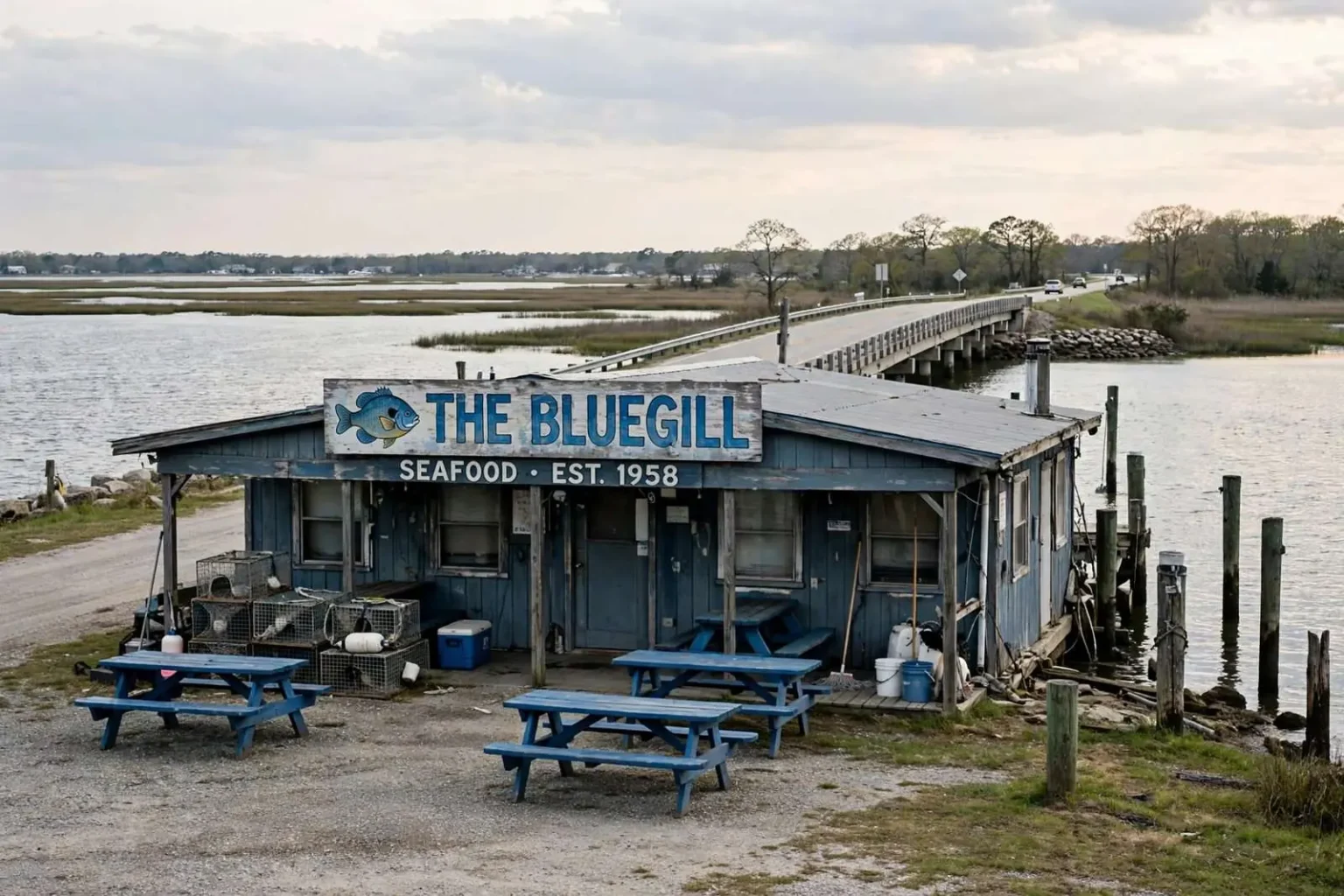
Of all the seafood houses strung along the Causeway, the low-slung strip of highway that carries traffic across the head of Mobile Bay, The Bluegill has never been the one that shouts. It opened in 1958. It sits east of the building that once housed Cock of the Walk, since recycled to other purposes. It does not dress itself up. And in the spring of 2008, that unpretentiousness was precisely what a local dining critic, who wrote under a pen name and paid his own checks, said he liked most about it. His verdict, delivered after a weekday lunch, was neither a rave nor a dismissal. It was something more useful: a careful ranking, argued in detail.
The Causeway itself is half the experience. The old highway crosses the northern end of Mobile Bay on a narrow ribbon of fill, with water on both sides and restaurants perched along it like boats at anchor, each claiming a view of the same bay. Mobile residents have treated the strip as both a shortcut to the Eastern Shore and a destination in its own right for generations, and its restaurants — some magnificent, some forgettable, most rebuilt at least once after storms — have been ranked, argued over and defended at a thousand supper tables.
The gumbo: good, with a to-do list
He began with a cup of gumbo, and he began with a concession. The Bluegill’s gumbo was not the best in the Mobile area, he wrote, but it was the best on the Causeway. The texture was good. The flavor was fine. That was the praise.
Then came the notes for the kitchen. He wanted the chunks of tomato and the strips of bell pepper gone. He wanted more okra. He wanted the onion to melt down into the roux rather than float through the bowl as short slices. These are not small quibbles in a region where gumbo is argued over the way other places argue over barbecue, and the critic’s implication was clear enough: the bones of a very good gumbo were already there, waiting for a cook willing to simplify. Along the upper Gulf Coast, a gumbo’s standing in a kitchen’s regard is measured by exactly such details — what goes in, what stays out, and how long the roux was allowed to work before anything else joined it.
The critique also reflected the critic’s settled preferences, built from decades of Gulf Coast tables. In the Creole-and-Cajun tradition that Mobile absorbed from Louisiana, okra and filé are the thickeners that give a gumbo its body, tomato is a matter of lineage rather than necessity, and onion belongs to the base, dissolved beyond recognition. A cook who follows those habits can win arguments that no amount of decoration will settle.
A grouper filet that did its job
For an entree he ordered the luncheon grilled fish. He was told it was grouper and had no reason to doubt it. The filet arrived generously sized for a lunch portion, properly seasoned and properly grilled, and he pronounced it just right for a light midday meal. Grouper is the standard by which Gulf Coast fish houses are measured, and serving it correctly — seasoned, grilled, unmasked by sauce — is the simplest test of a seafood kitchen’s confidence.
The plate came with new potatoes, cole slaw and corn on the cob. He skipped the corn. The slaw he called very good, though he ranked it behind the version at Ed’s, which he considered the best on the Causeway. The boiled new potatoes drew the sharpest words on the plate: bland and mediocre. His fix was borrowed from Deanie’s, the Bucktown institution on the south shore of Lake Pontchartrain, where potatoes are boiled in crab boil rather than plain water. Season them that way, he argued, and the side would go from filler to something worth eating.
The suggestion was characteristically practical. Along the Louisiana shore, boiling potatoes in seasoned crab boil is standard practice, and the habit travels well: the same spiced water that flavors the day’s shrimp can flavor the starch beside it, at no additional cost. A restaurant that serves a Gulf of Mexico fish with unseasoned potatoes, the critic implied, was leaving an easy win on the table.
A word about the bread
The critic noticed that The Bluegill’s menu advertised Gambino’s bread for its po-boys. He had not tried one, but he offered the recommendation he offered nearly every restaurant that served the sandwich: switch to Leidenheimer. The New Orleans bakery’s long loaf, with its brittle crust and soft interior, was his standard, and he believed a bread change alone would improve the po-boy experience.
The preference is a matter of engineering as much as taste. A po-boy — the New Orleans-born sandwich that Gulf Coast kitchens adopted wholesale — succeeds or fails on whether the bread holds up under dressing, gravy and fried seafood without collapsing or turning to leather. Leidenheimer, baking in New Orleans since the 19th century, built its reputation on exactly that balance, and generations of Gulf Coast restaurants have built their sandwich menus on its loaves.
Half a parking lot, and a ranking
What seemed to puzzle him most had nothing to do with the food. The Bluegill’s parking lot was only half full at lunch, while a neighboring restaurant packed them in. He had eaten at the neighbor and, by his own account, could not construct a single original theory as to why it drew the crowd, since he believed the better lunch was to be had next door. The observation captured a truth every Causeway operator knows: visibility, waterfront positioning and habit draw crowds as powerfully as kitchens do, and the busiest building on the strip is not always the best one on it.
Asked to rank the Causeway, he put The Bluegill second overall. First went to the restaurant in the old Pier 4 building. Third went to the place with the better slaw. It is the kind of hierarchy that residents of Mobile and Baldwin counties have been constructing and defending for generations, usually over a table and never quietly. Rankings of Causeway restaurants circulate through the two counties the way high school football rivalries do, complete with lore about which place had the best view before which storm, and which kitchen has slipped since the founding family stopped running it.
The ranking itself was generous by the critic’s standards. Second place on a strip that includes some of the best-known seafood rooms on the upper Gulf Coast is a standing compliment, and his reasoning — the best gumbo on the Causeway, a grouper filet done properly, slaw a close second — made the case in specifics rather than atmosphere.
Two small disappointments
Two small disappointments closed the review. No long-neck Barq’s was to be found, a running complaint of his, so he settled for iced tea, unflavored. The root beer in the stubby glass bottle is a Gulf Coast table ritual, and its absence from a seafood house’s cooler registered with him the way a missing condiment registers with a devoted customer — as a small failure of local memory.
And he noted, without enthusiasm, that The Bluegill offered live music on Friday, Saturday and Sunday evenings. Those, he said, were the three nights no one would find him there. The critic’s evening preferences were well established in his column: he dined early, quietly and in daylight hours, and a weekend stage in the room was, for him, a disqualification rather than an amenity.
The Bluegill is still standing on the Causeway today, live music and all, which suggests the crowd eventually found its way across the parking lot. More than a half-century after it opened, the restaurant has outlasted neighbors, storms and a dozen successors on the strip, and it remains one of the places Mobile’s two counties point to when they explain the Causeway to newcomers. A weekday critic’s second-place ranking, for a room that has been feeding the Bay for more than fifty years, reads in retrospect like a fair bill of health — the gumbo could be simplified, the potatoes seasoned, the bread upgraded, and the crowd would keep coming either way.
The Bluegill’s longevity on the strip is itself part of its story. Restaurants on the Causeway live hard lives: the highway is the region’s busiest two-lane crossing, storms and floods have damaged the strip repeatedly over the decades, and the dining public’s tastes shift with every new generation of Eastern Shore subdivisions. A room that opened in 1958 and is still serving in the same spirit — plain food, waterfront setting, no pretense — has survived by knowing exactly what it is.
That identity also explains the critic’s fondness for the place. A reviewer who pays his own checks and writes under a pen name is in the business of sorting honest kitchens from decorated ones, and The Bluegill’s lack of theater left him nothing to penalize. The flaws he found were kitchen flaws — gumbo composition, unseasoned potatoes, sandwich bread — the kind that can be fixed by a cook paying attention, rather than defects of concept. That is about as good as a Causeway review gets short of a rave.
For readers building their own Causeway rankings, the review supplied a working method as much as a verdict: start with the gumbo, judge the fish on whether it tastes like the Gulf, check the sides for care, and only then weigh the view. By that method, The Bluegill finished second on the strip and won the gumbo, which — in the long argument that never ends along the head of Mobile Bay — is a claim most Causeway restaurants would trade their parking lots to make.


