
At The Royal Scam, Downtown Mobile Found Its Best Bowl of Shrimp Etouffee
A spring 2008 lunch at the Royal Scam on Royal Street produced the best shrimp etouffee in Mobile, a standout salad, and a lesson in the difference between a dark roux and a blonde one.
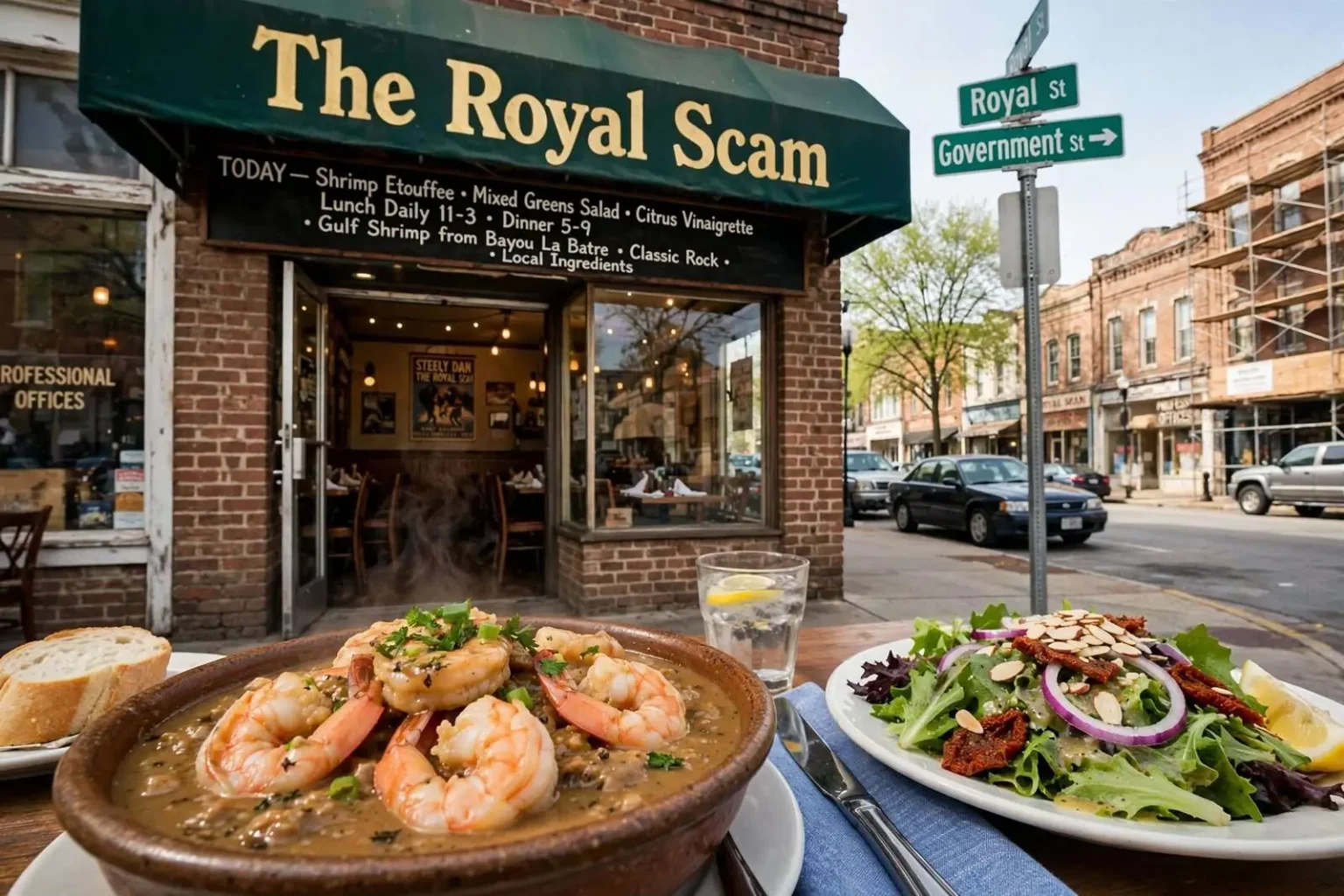
MOBILE — Tucked onto Royal Street near Government, in the heart of the old downtown business district, a small restaurant called The Royal Scam was quietly building a reputation in the spring of 2008 as a place where the kitchen took Gulf Coast cooking seriously. Despite the name, there was nothing fraudulent about it. The room was modest, the lunch menu deliberately short, and the evening card considerably broader. What a first-time visitor noticed immediately was the welcome: guests were greeted and served promptly, and the staff gave every appearance of believing that customers mattered.
The address itself said something about where downtown Mobile stood at the time. Royal Street south of Government had long been a canyon of banks, title offices and shuttered storefronts that emptied out every evening. By 2008, the slow crawl of restoration work on the historic commercial blocks around Bienville Square and the lower Dauphin Street corridor had begun to bring office workers, residents and a trickle of evening traffic back to the old district. A handful of independent kitchens and bars had opened in renovated storefronts, and lunch — still the anchor of downtown commerce — was where most of them made their daily case.
The restaurant took its name from rock and roll rather than larceny: the title of a Steely Dan album, a nod that matched a soundtrack of classic rock and laid-back Gulf Coast afternoons. For downtown office workers tired of chains and cafeteria lines, the combination of a short, focused menu and a room that took service seriously was a genuine novelty on that stretch of Royal Street.
A salad worth writing about
The decision about lunch was settled the moment a server mentioned the day’s special: shrimp etouffee. What arrived first, though, was a starter that outshone almost anything else being served at midday in Mobile at the time. This was not the perfunctory wedge of iceberg lettuce that so often passed for a lunch salad. It was a generous plate of good greens, garnished with onion, sliced almonds and what appeared to be dried tomatoes, dressed with just the right measure of a light citrus vinaigrette.
It was, by one careful account of the meal, the best lunch salad to be had in the city. That may sound like faint praise applied to a low bar, but anyone who ate regularly in downtown Mobile in those years knew the bar was genuinely low. The standard lunch salad in most nearby establishments was iceberg, a pale tomato wedge and a crouton, delivered without comment. A kitchen that bought mixed greens, took care with a vinaigrette and garnished the plate with intent was announcing something about its priorities before the main course arrived.
The attention to detail mattered in another way too: it signaled that the kitchen was not treating the lunch crowd as an afterthought to the dinner business. In smaller restaurants, midday service is often run on autopilot — reheated specials, a stripped-down staff, and whatever the walk-in cooler happens to offer. The Royal Scam’s opening move suggested the same crew was cooking at noon as at night.
The etouffee: good, and good for Mobile
The etouffee followed almost immediately, steaming in its bowl. It looked right and it smelled right, but the verdict on any dish rests on the tasting, and here the kitchen delivered. The gravy was thick, and it carried an abundance of good-sized shrimp rather than the stingy scattering that often turns up in a lunch portion.
It was not the finest etouffee anyone had ever eaten — the standard on the northern Gulf Coast has always been set by kitchens across the Mississippi line and beyond — but it was, without much argument, the best in Mobile. Mobile diners have never lacked for opinions on the subject: the city sits at the edge of Louisiana’s crawfish and shrimp country, and generations of transplanted Cajuns, Coast families and commercial fishermen have kept local expectations high. For a downtown lunch spot to be called the best in the city was no small thing.
The one reservation concerned the roux. It ran too dark, and it carried a faint suggestion of tomato. Etouffee can properly be built on either a mahogany roux or a blonde one, but for this diner the blonde was the only correct answer, both for its color and for the flavor it lends the dish. The distinction sounds academic until it lands on the palate: a blonde roux keeps the dish in the pale, buttery register that lets the shrimp come through, while a dark roux pulls it toward the deeper, nuttier profile that belongs to gumbo.
The verdict
Was the Royal Scam a good restaurant? Yes. Would it earn return visits? Also yes — there were other dishes on that expanded dinner menu still to be tried. The single complaint had nothing to do with the food. The chairs were high and uncomfortable, with no standard-height option available to a diner who wanted one. In a room that otherwise got the fundamentals right, it was an odd omission, and an easy one to fix.
The shrimp, it should be said, were the real measure of the bowl. Mobile sits within easy truck distance of the docks at Bayou La Batre and Bon Secour, where Gulf white and brown shrimp come ashore through a commercial fleet that has worked the local bays for generations. A kitchen five minutes from Government Street has no excuse for serving imported, grade-labeled shrimp in an etouffee, and the abundance of firm, sweet, properly sized Gulf shrimp in the Royal Scam’s gravy suggested the kitchen knew exactly where its product came from. That kind of sourcing discipline shows up in the bowl before any diner reads a menu description.
Spring 2008 was also a moment when eating out downtown said something about the local economy. Gasoline prices were climbing toward records, the national economy was sliding toward recession, and restaurants everywhere were bracing for thinner traffic. A room that filled at midday with office workers and stayed busy into the evening was doing more than serving good food; it was evidence that downtown Mobile’s revival could survive a downturn, and that the investment downtown merchants had made in the district could hold its own against the sprawl of strip centers out the airport boulevard and along the Eastern Shore.
The furniture gripe was more than a footnote. Small restaurants that furnish rooms on tight budgets often buy tall bar-height seating to squeeze in more tables, and diners who come for a long, comfortable meal remember the pinch in their knees longer than the food. A room that pampers guests at the table and punishes them in the chair was a strange inconsistency for a place that otherwise seemed to think through every detail of the experience.
The broader verdict, though, was about what the Royal Scam represented. A small, independent kitchen could open in a previously sleepy commercial block, serve a short menu executed with care, greet every customer promptly, and thrive against the chains — that was the quiet argument the restaurant was making with every lunch service. Downtown Mobile in 2008 was betting on exactly that kind of business as it worked to rebuild a district that for decades had rolled up its sidewalks at five o’clock.
A snapshot of downtown dining in 2008
For readers coming to this account years later, the piece is a snapshot of downtown Mobile’s dining scene in 2008, a period when Royal and Dauphin streets were slowly filling in with independent kitchens and the argument over what constituted a proper etouffee was very much a live one.
The timing was more pivotal than anyone could have known. Within a few years, the lower Dauphin Street corridor would fill in with bars, music venues and late-night kitchens, anchored by the entertainment district the city established to draw crowds back downtown. Dauphin Street would become the region’s de facto nightlife strip, and the lunch counters and short-menu kitchens that pioneered the earlier revival would find themselves part of a busier, louder and more crowded neighborhood than the one they opened into.
The Restaurant Scam era also sat just before a wave of change that reshaped the local plate altogether. Mobile’s food scene in the years that followed grew more ambitious and more diverse, with chefs across the city revisiting Gulf seafood, regional rice and gravy cooking, and the Cajun and Creole traditions just across the state line. The old arguments — dark roux or blonde, tomato or no tomato, crawfish or shrimp — remained, but they were being had in more kitchens, by more cooks, than ever before.
What the Royal Scam lunch demonstrated was simple enough to state and hard to pull off: that a small restaurant could beat the city’s larger and better-funded kitchens at their own game by getting the fundamentals right. Good greens at the start of the meal. A bowl of etouffee with plenty of shrimp and a proper gravy. Prompt, attentive service in a modest room — and a reason to come back the next day, which is the only test a lunch spot ultimately has to pass.
The reviewer’s closing hope was a simple one: a blonde roux waiting on the next visit.