

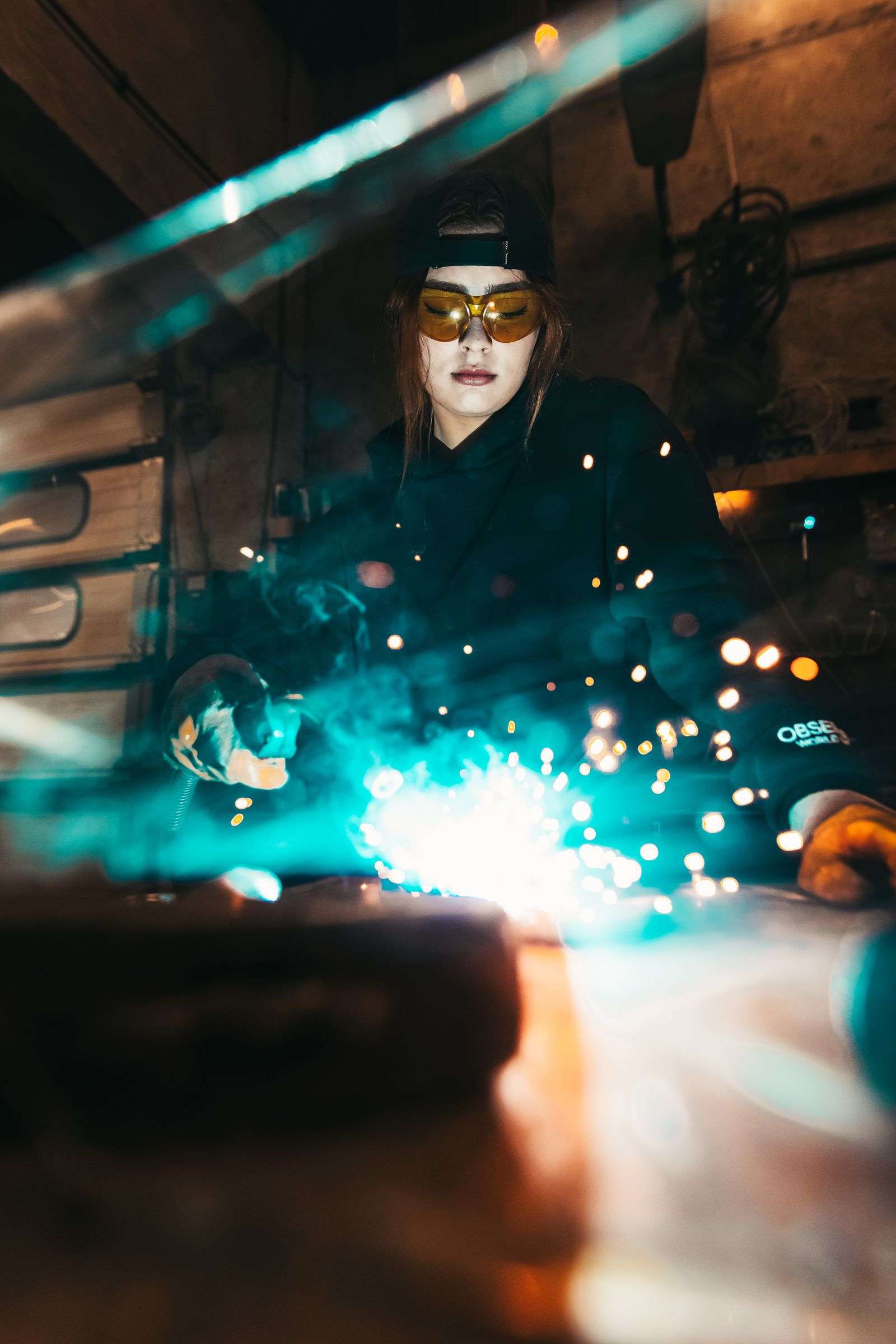
Eleven women got a hands-on look at the welding trade during Coastal Alabama Community College’s second annual Women in Welding event, held July 15 at the college’s Thomasville campus. The one-day course was built to give participants a taste of the skilled trade and walk them through basic welding fundamentals — the kind of introduction that turns curiosity about a career into a concrete plan. For a college that trains welders across a wide swath of west and south Alabama, the event is also a statement about who belongs in the trade: anyone willing to strike an arc.
The second annual edition builds on a format that worked the first time: trade the lecture hall for the welding lab, put real equipment in real hands, and let the participants find out for themselves whether the sparks feel like work or like a calling. Welding programs across the country have found that outreach days aimed at women do exactly that — many women have never been encouraged to consider the trades, and a single day with a torch can change the trajectory.
Learning the fundamentals
Throughout the day, attendees practiced core techniques under the direction of welding instructor Jeff McCutcheon, with help from several of the program’s current students. The format put novices alongside students who were a semester or two down the same road, which lowers the intimidation factor that comes with trying any skilled trade in front of strangers. Participants learned the basics of safe equipment handling, struck their first arcs and worked on the fundamental techniques that every welder builds from — the same material a first-semester student would encounter, compressed into a single day.
Welding students Asyha Jones, Autumn Allday and Isabella Sims worked alongside participants as assistants during the event, guiding them as they tried out welding skills for the first time. For the three assistants, the day was a kind of teaching exercise in itself, and a visible answer to the question the event exists to ask: what does a woman look like in a welding program? Like a student in a jacket and helmet, helping the next one get started — and in a field where women remain a small share of the workforce, every visible example matters.
From one day to a career
McCutcheon said the impact of the one-day session was immediate, with several attendees already moving toward enrolling in the program. “After the course was over, five of the women are now trying to enroll for the full-time fall 2026 semester,” he said. “It was an awesome experience.” A five-for-eleven conversion rate is the kind of outcome outreach events dream of, and it suggests the day did more than entertain — it identified real future welders among the eleven who showed up.
The women who took part in this year’s event were Tracey Brown, Taniqua Mitchell, Shundra Lanier, Dyshawn Champion, Kendaisha Horn, Kara Dearman, Adrienne Scott, Tashawna Brown, Nicole Mallory and Niyah Dean. Some came with an eye on a career change, some on a first career, and some simply to see whether the trade that anchors so much of the regional economy was for them. By the end of the day, the answer for at least five of them was yes.
Why welding matters in west Alabama
Welding is one of the most consistently in-demand skilled trades in Alabama and across the Gulf South. Fabrication shops, shipbuilders, pipefitters and heavy industry all draw on the skill, and employers across the region regularly report difficulty filling positions. Community colleges like Coastal Alabama are the training pipeline for that demand, and welding programs fill their lab seats with students headed to work that pays well and cannot be shipped overseas — the weld on a vessel or a pipeline has to be made where the metal is.
The Thomasville campus sits in a part of the state where those skills are close to home for the industries that anchor the regional economy. A certified welder trained in Thomasville can find work within commuting distance of the communities most of these students come from, which makes the program’s economic case in a rural region especially strong: train locally, earn locally, and keep the talent in the region.
Women in the trades
The numbers behind an event like Women in Welding are well known in workforce circles: women make up a small fraction of American welders, and the gap starts long before the job application — in who is encouraged to consider the trades, who sees themselves represented in a welding lab, and who knows someone in the field. Events like this one attack that gap at the source, by putting women in the lab, in the gear, and in front of an instructor and student assistants who look like they belong there.
The trade itself offers women the same things it offers anyone: steady demand, solid wages, and work with visible results at the end of the day. Employers, for their part, have learned that a wider hiring pool is a necessity in a tight labor market, and many actively recruit from programs that graduate women welders. The arithmetic is simple — a trade that ignores half the population cannot fill its open positions.
A program with momentum
The second annual event marks a pattern, not a fluke. First-year outreach events succeed on novelty; second-year ones prove there is demand and institutional commitment. Coastal Alabama’s choice to run the Women in Welding day again, on the Thomasville campus with the program’s own instructor and students leading, signals that the college sees the format as part of its recruiting strategy — find the people a day like this reaches, and start them on a path that five of this year’s eleven are now walking.
For the participants, the day compressed a big decision into a manageable one. Nobody has to commit to a career over a brochure; but after a day of striking arcs, watching a bead lay down clean under the guidance of students like Asyha Jones, Autumn Allday and Isabella Sims, the question “could I do this?” becomes “when do I start?” For five of the eleven women, the answer is the fall 2026 semester — full-time, in the program, learning the trade for real.
Inside the one-day format
A one-day welding course has to be built carefully. Safety comes first — protective gear, ventilation, and the lab discipline that governs everything else — and then the fundamentals: how the equipment works, how to hold the torch, how to strike and maintain an arc, and how to read the weld you just made. Instructor Jeff McCutcheon structured the day around those core techniques, with enough repetition for each participant to move past the awkward first attempts and feel the craft begin to make sense.
The current students who assisted made the difference between a demonstration and an experience. When a first-timer’s bead runs crooked, an assistant who made the same crooked bead a few semesters ago can explain the fix in a way that encourages rather than discourages. That peer-to-peer teaching is a feature of the college’s program generally, and on outreach days it shows prospective students exactly what enrollment would look like — small classes, close instruction, and classmates who help.
What comes next for the participants
For the five women pursuing enrollment for the full-time fall 2026 semester, the next steps are the ordinary machinery of community college: apply, place, register, and arrange financial aid if needed. Full-time welding programs move students from the fundamentals they touched on July 15 into the deeper curriculum — multiple processes, joint configurations, blueprint reading and certification testing — over a series of semesters that end with credentials employers recognize.
The other six participants leave with something valuable too: an informed no or a not-yet. Outreach days are as much about clarity as they are about recruiting, and every woman who left the Thomasville campus on July 15 now knows what a welding lab feels like, what the work demands, and where the path leads — knowledge that tends to circulate through families and churches and workplaces in towns like Thomasville.
The bottom line
Eleven women, one day, one instructor, three student assistants and five probable enrollments add up to a small event with an outsized return. Coastal Alabama Community College’s second annual Women in Welding day did what the best workforce programs do: it shortened the distance between curiosity and commitment, and it did so in a trade that southwest Alabama’s economy runs on.
The names on this year’s roster — Tracey Brown, Taniqua Mitchell, Shundra Lanier, Dyshawn Champion, Kendaisha Horn, Kara Dearman, Adrienne Scott, Tashawna Brown, Nicole Mallory and Niyah Dean — now share something more than a day in the lab. Whatever each of them does next, the region’s welding shops, fabrication yards and industrial employers are the ultimate beneficiaries of a program that keeps widening the doorway into the trade. If the third annual event draws even more women to the Thomasville campus, this year’s five enrollments will be the reason — visible proof that the sparks are worth striking.