

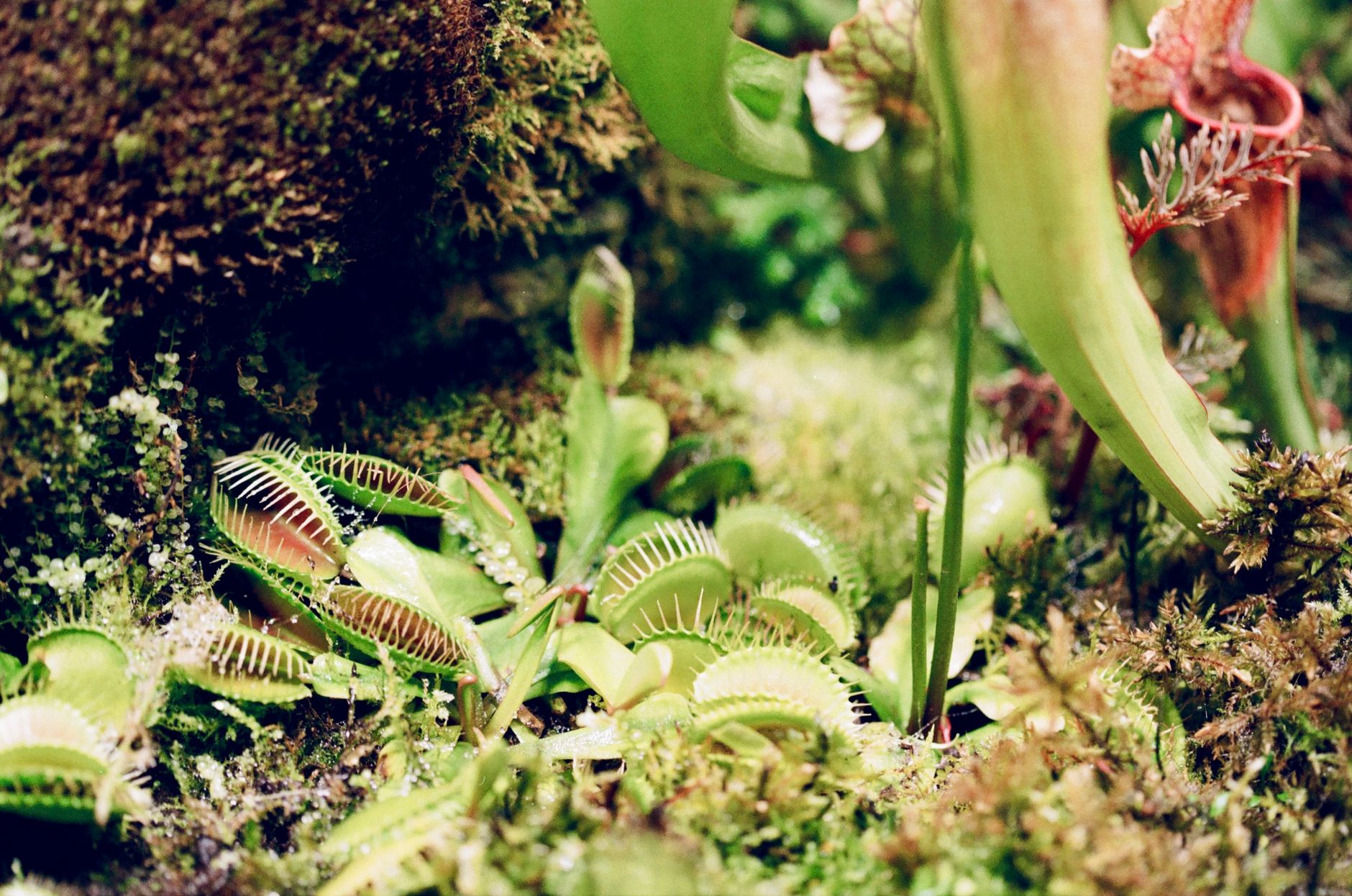
A school bus or two parked outside the Weeks Bay Visitor Center on Scenic 98 is a common sight, and it usually means much more than a day out of class. Inside the Weeks Bay National Estuarine Research Reserve, students haul up nets full of fish and shrimp, spot dolphins and bald eagles, peer at plankton under microscopes and learn about carnivorous plants that eat insects. For some of them, the experience can change the direction of their lives, just as it once did for the reserve’s own manager.
Ten Thousand Acres of Old Coastal Alabama
The Visitor Center, a sand-colored building that stretches out like open arms on the south side of Scenic 98 near Fairhope and Magnolia Springs, is the front door to roughly 10,000 acres. Some of that acreage is forest, some is marsh and wetland, and some lies completely underwater in Weeks Bay itself.
Weeks Bay is a small, shallow estuary fed by the Fish and Magnolia rivers, where fresh water mixes with salt water from Mobile Bay. Estuaries like it serve as nurseries for many of the fish, shrimp and crabs that support the Gulf Coast’s seafood industry and recreational fishing, which is one reason protecting them matters well beyond their boundaries.
The reserve offers a glimpse of what the Alabama coastline looked like before widespread development, and it has been officially protected since 1986. Reserve manager Angela Underwood says the area is remarkably biodiverse, meaning a relatively small area supports an extraordinary range of plant and animal species.
“People talk a lot about tropical rainforests in terms of biodiversity, but pitcher plant bogs like the one we have here rival them in a lot of ways, just on a smaller scale,” Underwood said in 2024.
How the Reserve Came to Be
Congress created the National Estuarine Research Reserve System to protect representative estuaries along America’s coasts for research, education and stewardship. Thirty such reserves have been established, and Weeks Bay became the 16th in 1986. It operates as a partnership between the National Oceanic and Atmospheric Administration (NOAA) and the State of Alabama, and is administered by the Alabama Department of Conservation and Natural Resources’ State Lands Division.
The designation followed a grassroots campaign led by noted local conservationist Arthur C. “Skipper” Tonsmeire III. He is credited with persuading The Nature Conservancy to purchase the initial tracts of land for the reserve, as well as a much larger undeveloped area that became the Bon Secour National Wildlife Refuge along the Fort Morgan peninsula.
Field Trips That Leave a Mark
Visiting students get a crash course in that history, then head outdoors for hands-on lessons on land, in the air and in the water.
“Many of these students may not go outside often or never have been on a boat or in the bay,” Underwood said. “Some are scared at first, but it’s exciting to watch as they pull up nets full of fish, crabs, and shrimp. The students just fall in love with it and really enjoy it.”
On most days, groups see dolphins in the bay, a first for many, and they often spot a bald eagle or two overhead. They also learn that plankton is very real, not just a character on SpongeBob SquarePants. These tiny organisms form the base of the marine food chain and, as Underwood puts it, “also look like tiny aliens under a microscope.”
The reserve’s education coordinator works with teachers ahead of each visit to tailor the program to what students are already studying, and suggests ways instructors can take lessons outdoors back home.
“There’s a lot of research that shows that just being outside, even if it’s a reading class or a math class, can calm students and help them focus better,” Underwood said.
A Career Sparked by Carnivorous Plants
Underwood knows firsthand how a moment of discovery can redirect a career. While pursuing a master’s degree in biology at Auburn University, she unexpectedly developed a passion for carnivorous plants, and that interest drew her to Weeks Bay. She joined the reserve as an Education Assistant in 2008 and rose through the ranks to become manager around 2022.
“Pitcher plant bogs are also called carnivorous plant bogs,” she explained. “There are plants in them that have evolved to attract and capture and digest prey items, mostly insects.” Not every insect is a victim, though; some have adapted to live inside the plants without being eaten.
According to Underwood, south Alabama is a hotspot for carnivorous plants. Species found in the region’s bogs include:
- Pitcher plants, whose tube-shaped leaves trap insects.
- Sundews, sometimes called flypapers, with sticky hairs that can prove fatal to tiny insects.
- Bladderworts, which capture prey using tiny trap doors.
“A lot of people ask about Venus flytraps, but they are found only in areas of North and South Carolina,” she said.
Fire as a Tool for Healthy Habitat
Stewardship Coordinator Eric Brunden pilots the reserve’s 45-foot pontoon boat on educational tours, but much of his work involves research and land management, including planning and overseeing controlled burns.
Wildfires once swept through the coastal landscape with some regularity, keeping it in balance, he explains. Without fire, some tree species take over and shade out other plants that are important to the ecosystem’s overall health. Many of the Gulf Coast’s most diverse habitats, including longleaf pine forests and pitcher plant bogs, depend on periodic fire to stay open and sunlit.
“I would like to do a time-lapse video next time we burn,” Brunden said. “People who are unfamiliar with fire ecology may not understand the benefits. A time-lapse video would show how verdant and lush the habitat returns. It’s just amazing.”
What Visitors Can Enjoy
The reserve welcomes around 10,000 visitors a year on average, and they come for many reasons:
- Boardwalks and nature trails. Regulars stroll the peaceful, winding boardwalks and trails, some bringing their dogs.
- Visitor Center exhibits. Displays include mounted specimens of local wildlife and some live residents, such as Checkers the corn snake.
- Birding. The diversity of native plants attracts hundreds of bird species, with even more passing through during spring and fall migration.
- School and group programs. Tailored field trips give students hands-on experience in estuarine science.
Anyone planning a trip should check the reserve’s current hours and program offerings before visiting.
Appreciation First, Protection Second
For Underwood and her staff, every visit is a chance to build the kind of connection that leads people to care about the coast.
“We want them to be able to look around and appreciate what they’re seeing,” she said, “because until they can do that, they’re not going to want to protect it.”
As Baldwin County continues to grow rapidly, places like Weeks Bay take on added importance, both as working laboratories for scientists and as reminders of the natural coast that drew so many people here in the first place.