Coal ash pond at Plant Barry raises environmental concerns along the Mobile River
A 20-million-ton coal ash pond at Alabama Power's Plant Barry sits beside the Mobile River, raising fears of a catastrophic release during a major.
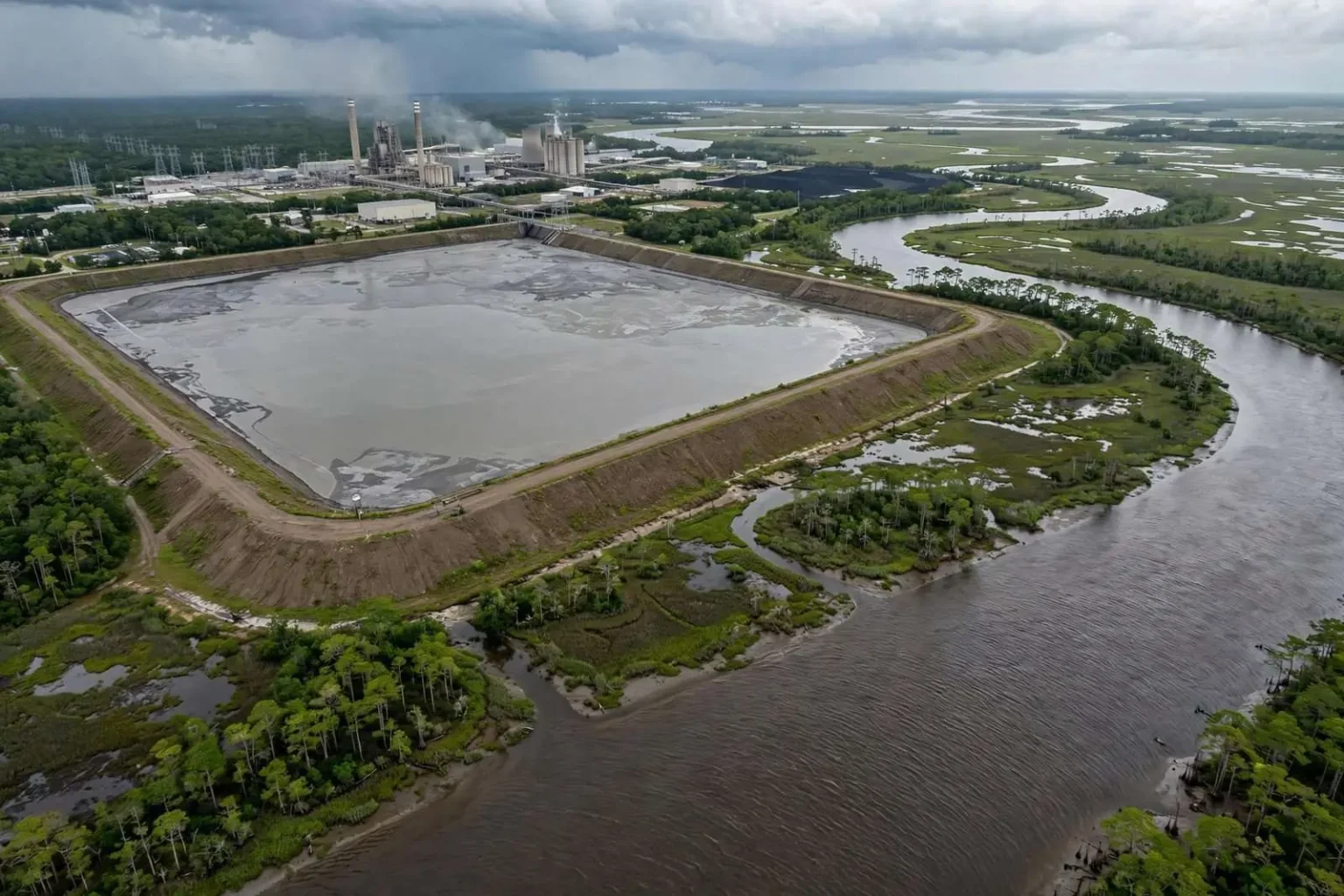
MOBILE, Ala. — A massive coal ash pond at Alabama Power’s Plant Barry sits just feet from the Mobile River, holding roughly 20 million tons of contaminated residue behind an earthen dam, and environmental advocates warn that a failure during a major hurricane or storm surge could be devastating for the river, Mobile Bay and the local economy. The pond, located at the plant in northern Mobile County, ranks among the largest coal ash impoundments in the Southeast, and its proximity to one of the region’s most important waterways has made it a flash point in the broader debate over how Gulf Coast utilities store the byproduct of decades of coal-fired electricity generation.
Casi Callaway, executive director of the conservation group Mobile Baykeeper, has been among the most prominent voices sounding the alarm about the site. Callaway said the sludge in the pond contains known carcinogens, and that a large release into the Mobile River would be a catastrophe for the area’s ecology and for the regional economy that depends on clean water. She has compared the potential volume of a release to many times that of the 2010 BP Deepwater Horizon oil spill, which poured millions of barrels of crude into the Gulf of Mexico and crippled fishing and tourism across the Gulf Coast for months.
What is coal ash and why is it stored this way
Coal ash is the fine residue left behind after coal is burned to generate electricity. The material concentrates a range of heavy metals and other contaminants found naturally in coal — including arsenic, lead, mercury, selenium and chromium — which can pose serious risks to human health and aquatic life if they escape into groundwater or surface water. Utilities across the country have historically mixed the ash with water and pumped the slurry into large surface impoundments, or ponds, where the solids settle out over time. That approach was cheap and convenient for plants built beside rivers, which needed water for cooling and used barges or rail lines to bring in coal.
Plant Barry, which sits along the Mobile River in the community of Bucks north of downtown Mobile, generated electricity for decades as a workhorse of the Alabama Power system. Like many coal plants of its era, it relied on an unlined earthen impoundment to hold its ash. Over years of operation, those deposits accumulated into the millions of tons that are stored on the site today. The dam that contains the pond is built of compacted earth rather than concrete, a design that is common but that critics argue deserves special scrutiny in a region prone to hurricanes, torrential rainfall and saturated ground.
The concerns are not hypothetical. In December 2008, the failure of an ash pond dike at the Tennessee Valley Authority’s Kingston Fossil Plant in East Tennessee released more than a billion gallons of coal ash slurry into the Emory and Clinch rivers, burying hundreds of acres, destroying homes and contaminating waterways in one of the worst industrial environmental disasters in American history. The Kingston cleanup stretched on for years and cost well over a billion dollars. For Gulf Coast residents, the memory of that spill — combined with the region’s own experience of catastrophic storms — frames the debate over every aging impoundment that remains in service near a major river.
The Mobile River’s importance to the region
The stakes in Mobile are unusually high because of where the water goes. The Mobile River flows south from the confluence of the Tombigbee and Alabama rivers, winds through the Mobile-Tensaw Delta, and eventually empties into Mobile Bay, one of the most productive estuaries on the Gulf Coast. The bay and the delta support commercial and recreational fishing for shrimp, oysters, blue crabs and finfish, recreational boating, and a tourism economy tied to beaches and waterfront communities on both sides of the bay. The Port of Mobile, one of the busiest deepwater ports on the Gulf, sits downstream of the plant as well.
Contaminants released into the river would not stay put. Heavy metals bound up in coal ash can move with the current and settle into sediments, where they can persist for years and work their way into the food chain. Oysters and other filter-feeding organisms are particularly vulnerable to contamination, and closure of harvest areas would strike directly at the livelihoods of commercial fishermen and at restaurants and seafood dealers across the coast. A major release during flood conditions could also push contamination into the vast wetlands of the Mobile-Tensaw Delta, an ecological treasure that shelters hundreds of species of birds, fish and other wildlife.
The timing question weighs heavily on local advocates. South Alabama’s hurricane season regularly brings the threat of storm surge pushing up Mobile Bay and into the rivers, and the region has taken direct hits from storms including Hurricane Frederic in 1979, Hurricane Ivan in 2004, Hurricane Katrina in 2005 and Hurricane Sally in 2020. Even storms that make landfall far to the west or east can dump extreme rainfall on the Mobile area, swelling rivers and saturating levees and dams. An earthen structure holding back millions of tons of soupy ash, just feet from a tidal river, faces its greatest test in precisely the kind of weather the Gulf Coast can count on experiencing again.
The cleanup order and the fight over method
Alabama Power has been ordered to close the ash pond and clean up the site, ending the practice of storing coal ash in an unlined impoundment in contact with groundwater. That directive stems from a wave of federal and state requirements that followed the Kingston disaster and years of litigation over coal ash storage nationwide. In 2015, the U.S. Environmental Protection Agency issued its first comprehensive federal rules governing coal combustion residuals, requiring utilities to assess the stability of their impoundments, monitor groundwater around them, and eventually close ponds that failed to meet the new standards. Utilities in the Southeast subsequently announced multibillion-dollar programs to close dozens of ash ponds across the region.
The dispute in Mobile County is less about whether the pond must be closed than about how. Alabama Power’s preferred method is to consolidate the ash within the existing footprint, cap it in place with a cover system, and manage it as a contained landfill under state oversight — an approach the utility says is protective, proven and far less disruptive than hauling the material away. Environmental groups, including Mobile Baykeeper, have pushed instead for excavation, which would remove the ash from the floodplain of the Mobile River entirely and move it to a modern, lined landfill engineered to keep contaminants out of groundwater. Groups point to utilities in neighboring states that have committed to digging up ash ponds near rivers and relocating the material, and they argue that leaving millions of tons in place beside a tidal waterway invites trouble for generations.
Complicating the debate is the fact that excavating and transporting 20 million tons of ash would be an enormous undertaking, involving years of truck or rail traffic, and would cost far more than capping the material on site. Utilities that chose excavation elsewhere have generally done so under regulatory pressure, litigation settlements or state rules that required it. In Alabama, the state environmental agency has approved closure plans that allow ash to remain in place where groundwater standards can be met, a stance that has drawn legal challenges from conservation organizations who say the standards are not being met and that monitoring data shows contamination moving away from unlined ponds.
What the utility says and what residents can watch
Alabama Power maintains that the Plant Barry structure is safe and reliable, and the company has said its closure plan will meet or exceed all regulatory requirements. Utility engineers have pointed to decades of stable operation, routine inspections and monitoring of the dam, and they note that modern capping systems are designed to isolate ash from rainwater — the main mechanism by which contaminants would otherwise move. The company has also emphasized that the pond is being closed under permits and oversight by state and federal regulators, who have the authority to reject plans that fall short.
For residents of Mobile County and the Gulf Coast, the practical questions center on water quality, emergency planning and the long-term stewardship of the site. Groundwater monitoring reports filed under the federal coal ash rule are public records, and conservation groups urge citizens to follow them. Officials also encourage families in flood-prone areas to keep routine emergency plans current, since the same storms that stress industrial infrastructure also threaten homes. Beyond that, community members can participate in public comment periods when closure permits and modifications come before the state environmental agency, and can follow the work of local organizations that track the issue.
The ash pond at Plant Barry is unlikely to disappear from public attention any time soon. The cleanup will take years, the legal and regulatory arguments will continue to play out, and every hurricane season will bring a fresh reminder of what is at stake along the Mobile River. What happens to those 20 million tons — whether they stay behind their earthen dam or are carried away to lined storage — will shape the health of Mobile Bay and the fortunes of the communities around it for decades to come.